



- Area: 3300 m²
- Year: 2016
-
Manufacturers: ASI Architectural, Abet Laminati, Amkel, Architectural Surfaces, Armstrong Ceilings, +10


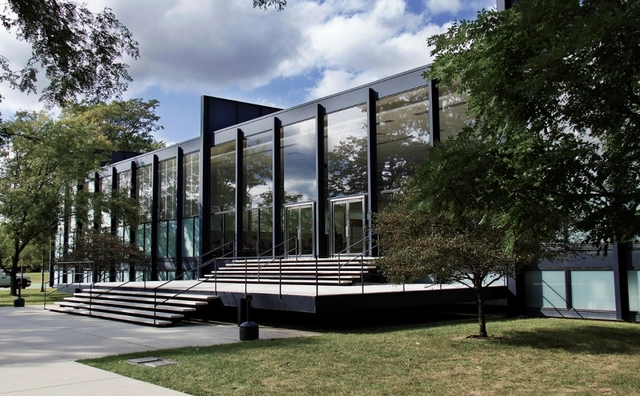
Illinois Institute of Technology (IIT) invites applications for the position, Dean of the College of Architecture (www.iit.edu/arch).
Located on the historic IIT campus in Chicago, the College of Architecture (IITCoA) is one of the world's most renowned architecture schools. Building upon its unique legacy as a center of rigorous thinking and making, IITCoA is focused on the future of practice and scholarship in an increasingly interconnected and urbanized world. With more than 500 students and 80 faculty members from around the world, IITCoA directly embodies the potentials of the contemporary metropolis. Basing its pedagogy on the synthesis of practice and research, IITCoA offers a full range of academic programs, including B.Arch., M.Arch., M.L.A., Dual M.Arch./M.L.A., M.S., and Ph.D. degrees.

It may be the single most important architectural detail of the last fifty years. Emerging bravely from the glassy sea of Madison Avenue skyscrapers in midtown Manhattan, the open pediment atop Philip Johnson and John Burgee’s 1984 AT&T Building (now the Sony Tower) singlehandedly turned the architectural world on its head. This playful deployment of historical quotation explicitly contradicted modernist imperatives and heralded the mainstream arrival of an approach to design defined instead by a search for architectural meaning. The AT&T Building wasn’t the first of its type, but it was certainly the most high-profile, proudly announcing that architecture was experiencing the maturation of a new evolutionary phase: Postmodernism had officially arrived to the world scene.

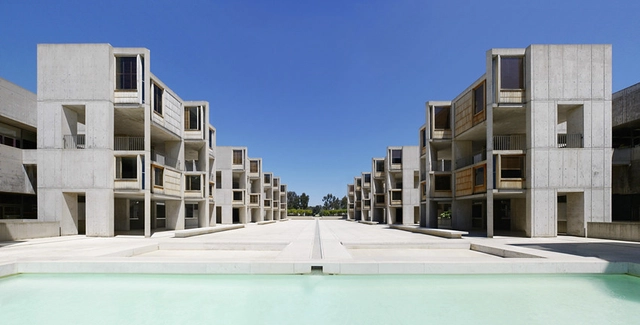
This article was originally published on August 27, 2017. To read the stories behind other celebrated architecture projects, visit our AD Classics section.
In 1959, Jonas Salk, the man who had discovered the vaccine for polio, approached Louis I. Kahn with a project. The city of San Diego, California had gifted him with a picturesque site in La Jolla along the Pacific coast, where Salk intended to found and build a biological research center. Salk, whose vaccine had already had a profound impact on the prevention of the disease, was adamant that the design for this new facility should explore the implications of the sciences for humanity. He also had a broader, if no less profound, directive for his chosen architect: to “create a facility worthy of a visit by Picasso.” The result was the Salk Institute, a facility lauded for both its functionality and its striking aesthetics – and the manner in which each supports the other.[1,2]

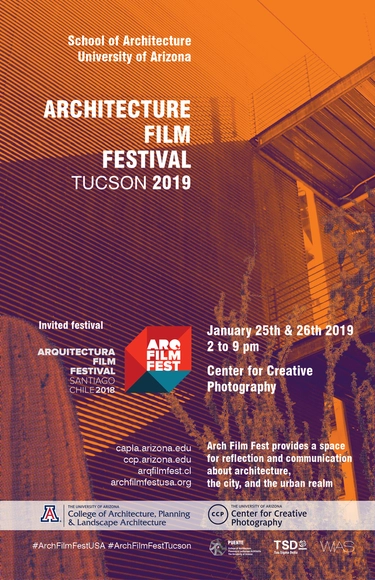
Film has the power to bring people together – or tear them apart, spur conversation, and transform ideas. It is in anticipation of this that the School of Architecture of the University of Arizona College of Architecture, Planning and Landscape Architecture presents “Architecture Film Festival Tucson 2019” in conjunction with invited festival Arquitectura Film Festival SANTIAGO 2018. The Chilean festival was founded in 2012 as the first of its kind in Latin America. Its Director, Miguel Contreras, will travel to Tucson for the two-day 2019 festival which will celebrate architecture and urbanism around the world and present an opportunity for discussion of issues in contemporary design.





_Ken_West_Photography_05_85Union.jpg?1537967883&format=webp&width=640&height=580)

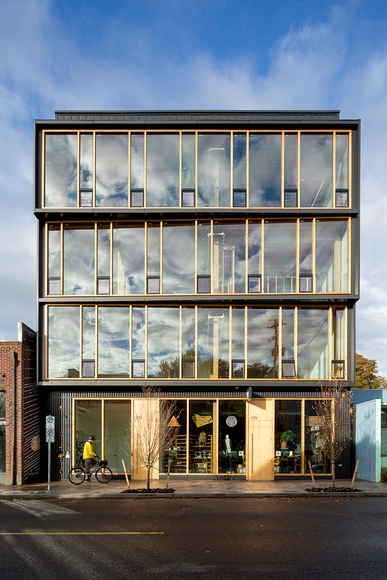











































_Ken_West_Photography_06_85Union.jpg?1537968004 "© Ken West Photography")
_Ken_West_Photography_08_85Union.jpg?1537967931 "© Ken West Photography")
_Ken_West_Photography_07_85Union.jpg?1537967912 "© Ken West Photography")
_Ken_West_Photography_04_85Union.jpg?1537967849 "© Ken West Photography")
_Ken_West_Photography_05_85Union.jpg?1537967883)