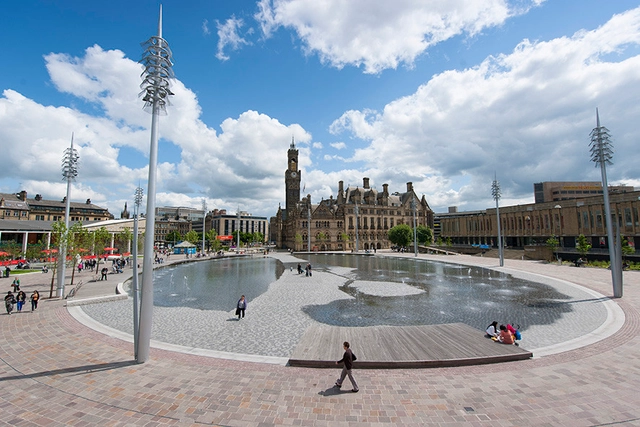
Rethinking the Urban Landscape, a (free!) exhibition curated by The Building Centre and Landscape Institute, presents a case for a landscape-first approach to city design and regeneration. The show, which is on view at The Building Centre in London until end of February and then tours, focuses on six problematic areas - from environmental issues to financial planning - and shows international projects that, due to the early procurement of landscape architects, deliver unique solutions.
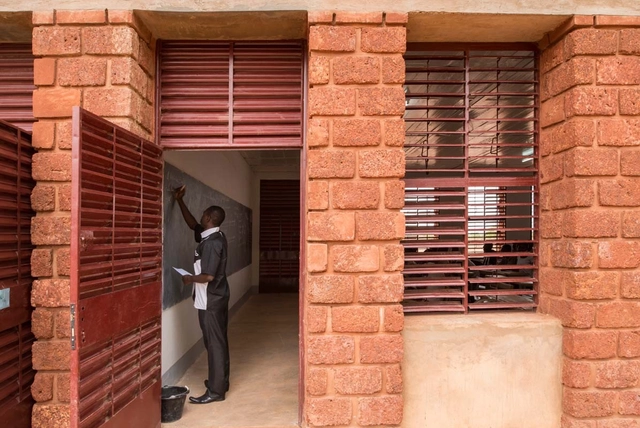
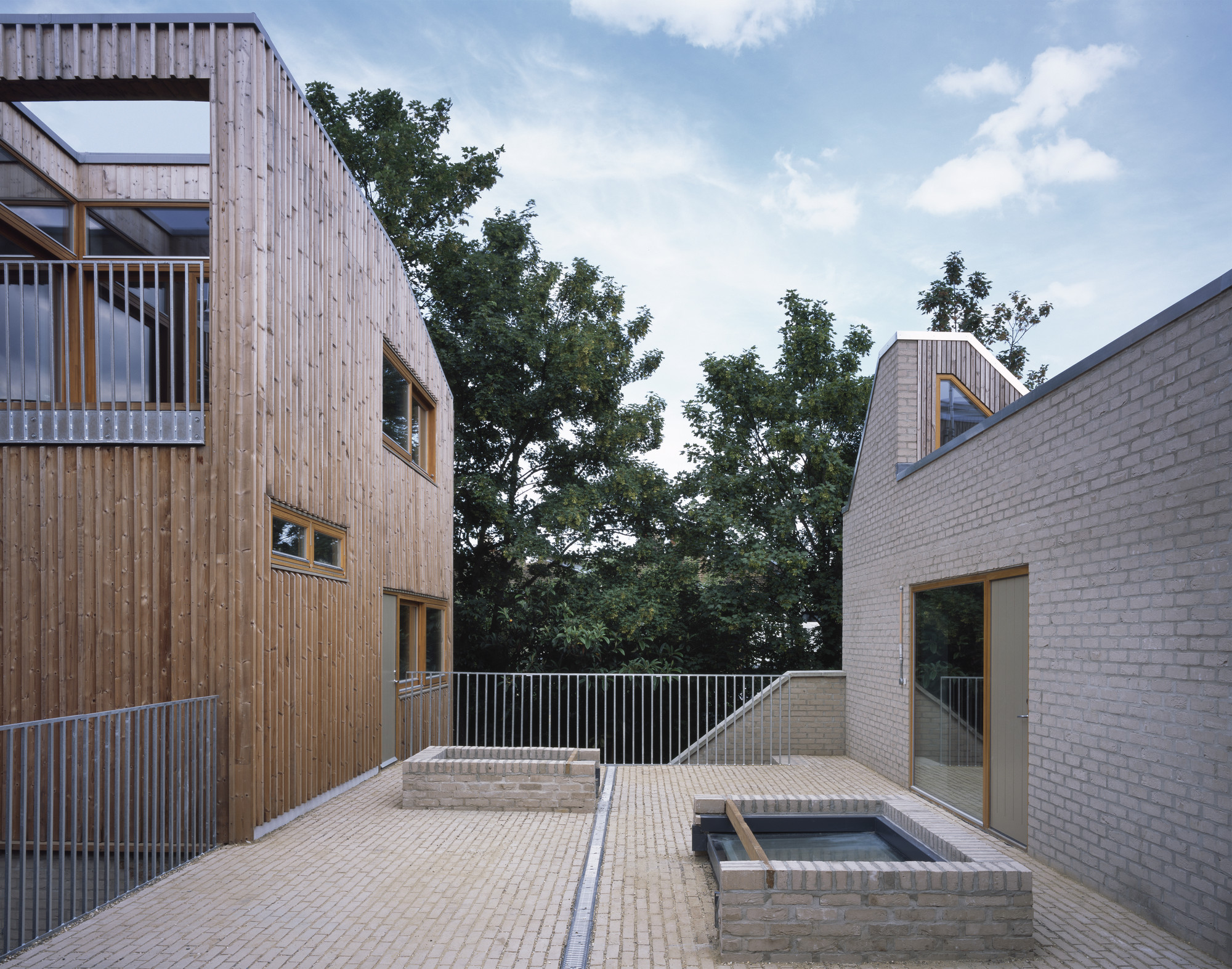
Through January 31, The Building Centre is hosting Upright and Educated, a photographic exhibition documenting the work of UK charitable organization Article 25 in Burkina Faso. Captured by award-winning photographer Grant Smith, the images chart the construction and use of a school in Gourcy, in the country's north.
Founded in 2006, Article 25 worked with local builders, craftspeople, and fellow UK charity Giving Africa to construct Bethel Secondary School, allowing up to 1100 children access to enhanced education and vocational training facilities. Learn more about the project and view selected images from the exhibition after the break.
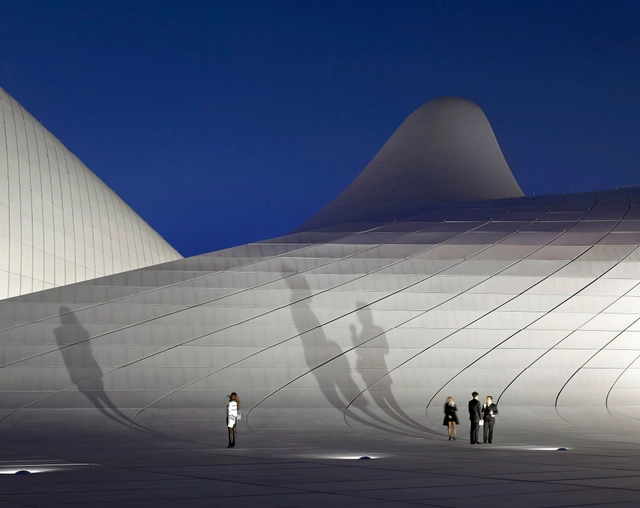
Modern times have seen the rise and proliferation of architectural media, allowing people to remotely experience spaces and buildings without ever physically entering them. As such, the importance of the architectural image has never been greater.
Opening on January 15 at London’s Sto Werkstatt and organized in conjunction with Arcaid Images, Building Images celebrates the "power and impact of photography on the way we sense and experience spaces." Described by Arcaid Images co-founder Lynne Bryant as having "long been the means of communicating architecture," photography is a medium that has grown inseparable from the notion and creation of the architectural image. Learn more and view selected images from the exhibition, after the break.
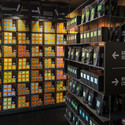
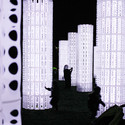
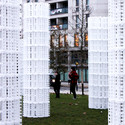
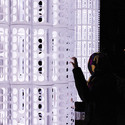
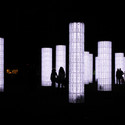
LIKEarchitects' Christmas installation, Frozen Trees, has found a new home in London's Victory Park in East Village. Originally created by LIKEarchitects in 2011 and displayed on Lisbon's D. Pedro IV Square, the installation will now light up the holiday period in one of London's newest public spaces, on the site of the former Olympic Village, as its 1,296 Rationell Variera plastic bag dispensers from IKEA gently glow through the night.
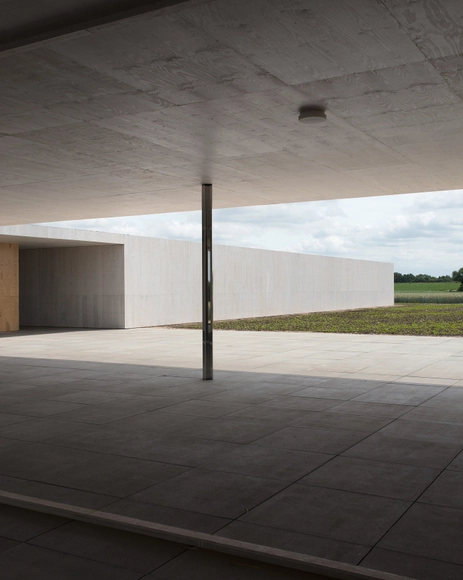
On the surface, Mies van der Rohe's minimalist linear designs have little in common with the kitsch of vernacular architecture in the German countryside. Enter Joachim Brohm, who rose to prominence in the 1980s as one of the first European architecture photographers to work in colour, and now in a current exhibition draws an unexpected parallel between van der Rohe's designs for the unrealized Krefeld Golf Club in Germany and the rudimentary constructions of vernacular post-war architecture.
In "Vernacular & Modern," the latest exhibition at London's Grimaldi Gavin gallery, two of Brohm's photo series are juxtaposed to create a new narrative on architectural context. In Typology 1979, Brohm documents a series of vernacular houses in Ruhr, Germany; while in Mies Model Study, Brohm enters the temporary installation of van der Rohe's unbuilt golf club through a life-size model. Together, the two series contrast the highly aestheticized minimalist world of Mies van der Rohe with highly functional buildings of necessity in the German countryside.
The Royal Institute of British Architects (RIBA) has announced a major retrospective of the work of celebrated Scottish architect Charles Rennie Mackintosh, with an exhibition to be held at the RIBA's Headquarters in London from February to May 2015. Having shown talent as a draughtsman from a young age, Mackintosh started his architectural apprenticeship at the age of just 16, and the exhibition features over 60 original drawings, watercolours and perspectives spanning his entire career from the late 19th century until his death in 1928.
Read on after the break for more on the contents of the exhibition
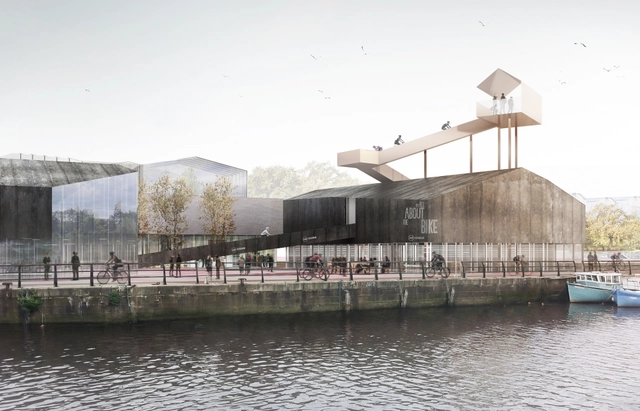
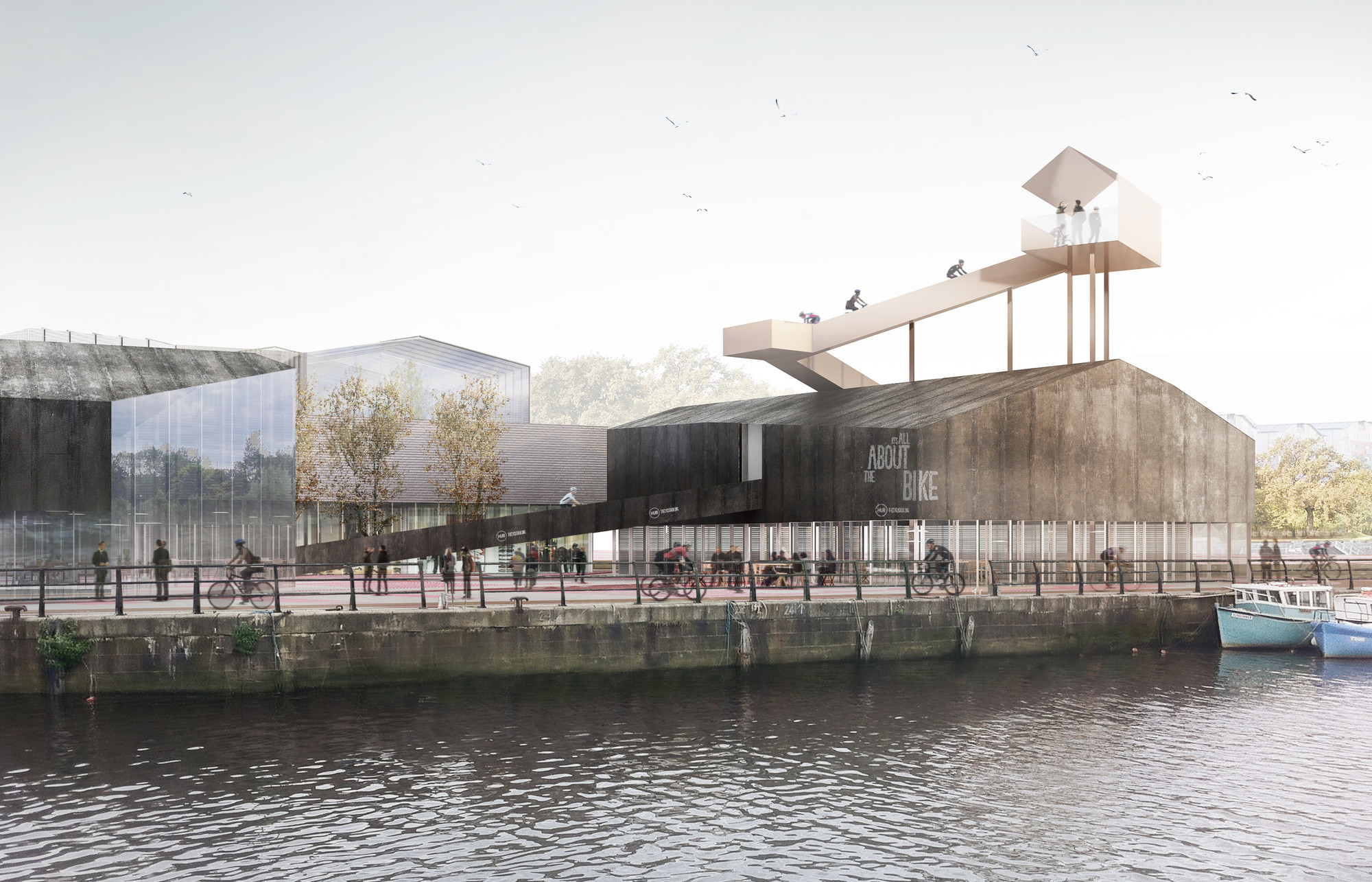
As part of the Newcastle-upon-Tyne's Malmo Quay development masterplanned by URBED, AWP Office for Territorial Reconfiguration has designed a cycle hub and community hall with a gradually ascending ramp that leads to a lookout platform with views of the surrounding Newcastle Quayside and Ouseburn Valley. Though this distinctive ramp and lookout will be a landmark at a prominent location on the Tyne river, AWP states that "by revealing a new perspective of the city and the Valley, the cycle hub will become a landmark celebrated precisely for the view it creates," rather than merely for its striking appearance above the roofline of the cycle hub below.






.jpg?1421189427 "© Grant Smith")
.jpg?1421189433 "© Grant Smith")
.jpg?1421189422 "© Grant Smith")
.jpg?1421189447 "© Grant Smith")




.jpg?1420846842&format=webp&width=640&height=580)
.jpg?1420846880 "Courtesy of Tim Greatrex")
.jpg?1420846785 "Courtesy of Tim Greatrex")
.jpg?1420846934 "Courtesy of Tim Greatrex")
.jpg?1420846940 "Courtesy of Tim Greatrex")
.jpg?1420846842)

_Tim_Crocker5.jpg?1417758145&format=webp&width=640&height=580)
_Tim_Crocker2.jpg?1417758137 "© Tim Crocker")
_Tim_Crocker5.jpg?1417758145)














_The_Hunterian__Univeristy_of_Glasgow.jpg?1417407266&format=webp&width=640&height=580)
_RIBA_Library.jpg?1417407299 "Design for a house for an art lover, 1901. Image © RIBA Library")
_Eric_De_Mare_-_RIBA_Library_Photographs_Collection.jpg?1417407302 "Glasgow School of Art. Image © Eric De Mare - RIBA Library Photographs Collection")
_Glasgow_School_of_Art.jpg?1417407398 "Windy Hill, perspective drawing in ink, 1900, by Charles Rennie Mackintosh. Image © Glasgow School of Art")
_The_Hunterian__University_of_Glasgow.jpg?1417407247 "Daily Record, ink and watercolour by Charles Rennie Mackintosh. Image © Hunterian, University of Glasgow")
_The_Hunterian__Univeristy_of_Glasgow.jpg?1417407266)