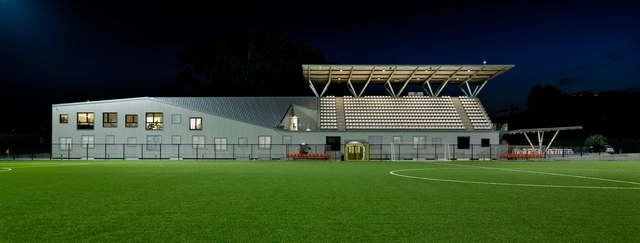
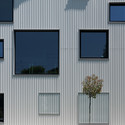
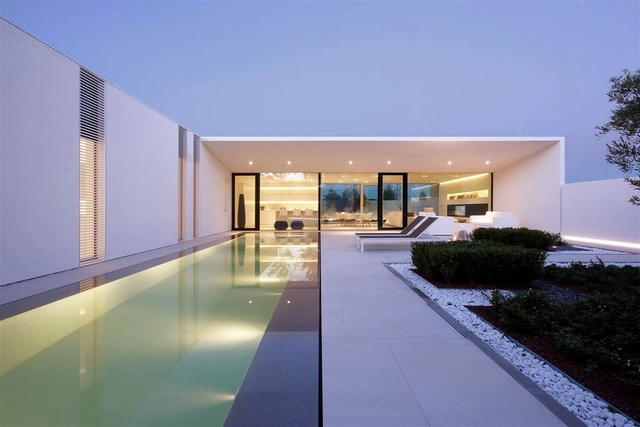
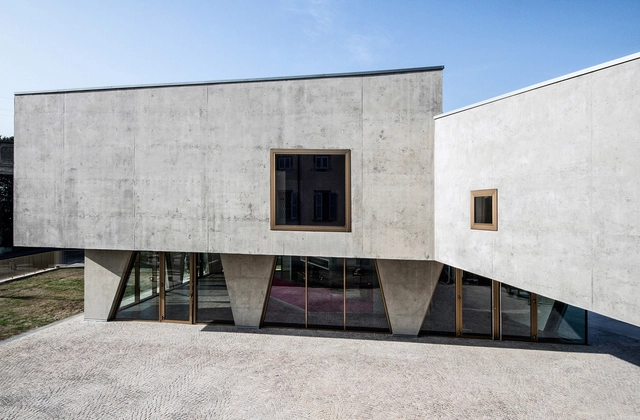
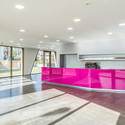
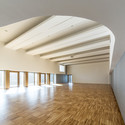
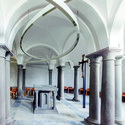
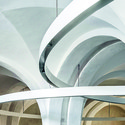
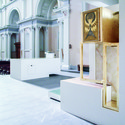
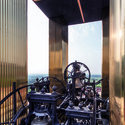
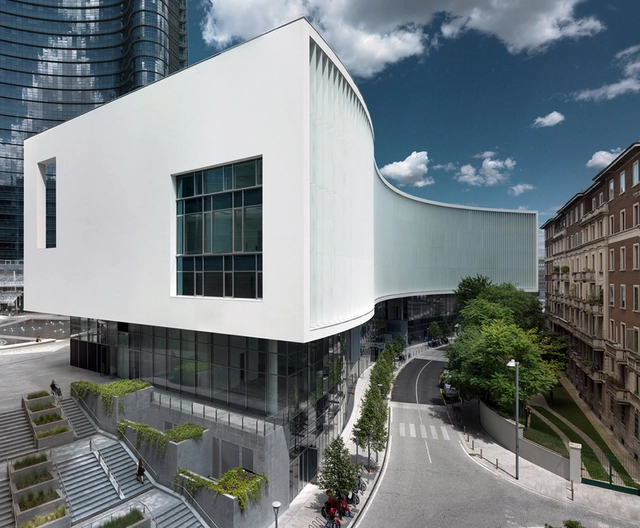
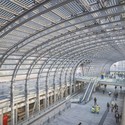
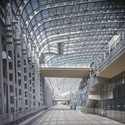
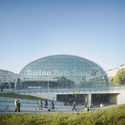
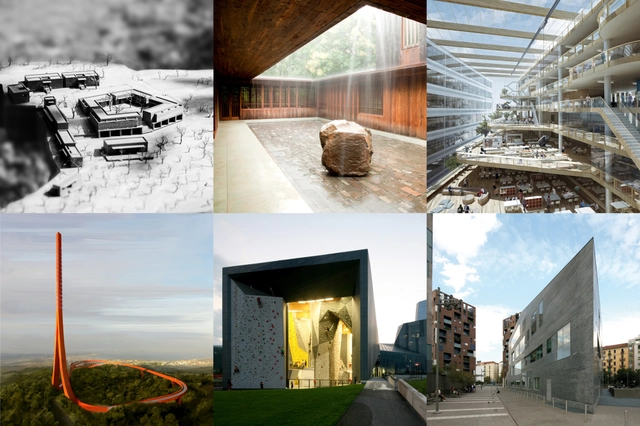
Recent work from panel members. Image Courtesy of Greenhouse Talks
Greenhouse Talks, an auxiliary public lecture series to the 2014 Venice Architecture Biennale, will take place on Thursday, June 5th and Friday, June 6th between 9:00 and 11:00am. During each session, an international panel of professionals - including the founder of MAD Architects, Ma Yansong, and the director of AMO, Reinier de Graaf - will discuss a topic pertaining to Rem Koolhaas' chosen theme for the Biennale: Fundamentals. The first day of discourse will focus on the future of the architectural profession, investigating the potential influence of the market crisis and the intersection of architecture with other disciplines. The second will reflect on the representation of architecture, considering the Western practice of exhibiting architecture projects in museums, institutes, and biennial events and what this practice's adoption might mean for the East. For the full list of panel members and event details, read on after the break.
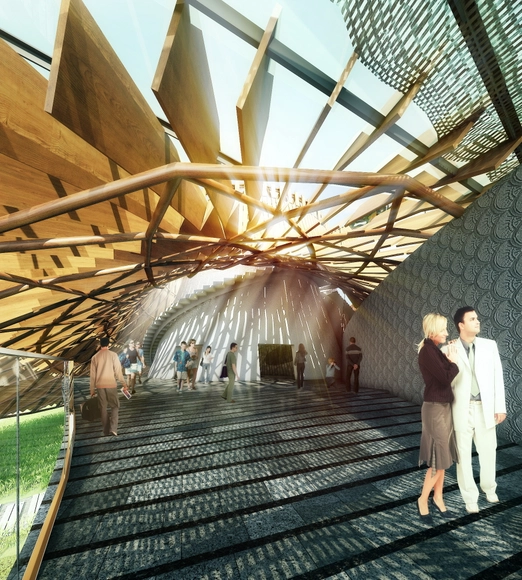
The honor of designing Thailand’s pavilion for the 2015 Milan Exposition has officially been awarded to The Office of Bangkok Architects (OBA). The firm’s winning design incorporates the Expo’s theme of “Feeding the Planet, Energy for Life” with the agrarian and religious qualities that define the Kingdom of Thailand. Located centrally on the Expo’s main avenue, the pavilion will be adjacent to a canal that will be used as a part of the exhibition, relating back to Bangkok’s informal title as the “Venice of Asia.”
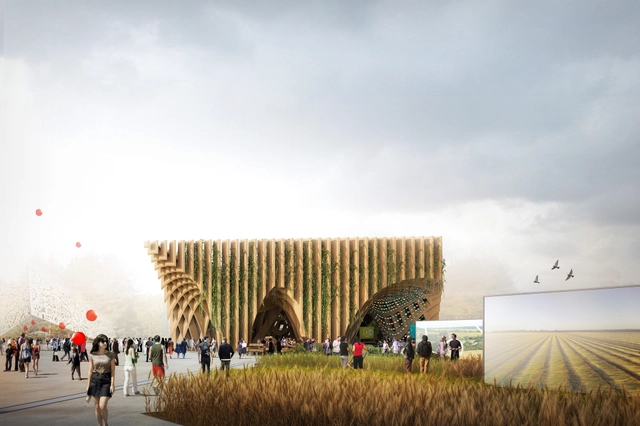
Paris-based X-TU has envisioned a more cohesive, sustainable market where food is not only grown and harvested, but sold and consumed on the spot. Serving as the French pavilion for the 2015 Milan Expo, X-TU’s competition-winning scheme will celebrate the country’s “rich genetic heritage” and future in innovative food production with a timber “fertile market” that supports the growth of the produce it sells.
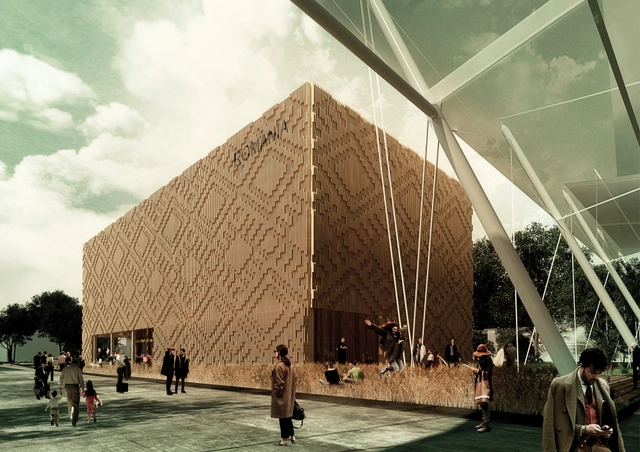
Placing sixth in the competition to design the Romanian Pavilion for the 2015 Milan Expo, Collective East Architects offered a “simple and powerful landmark” that focuses on the history of Romania’s agriculture. Serving as an “attractor and orientation mark,” the structure was conceived by repeating a traditional Romanian pattern that “transformed the pavilion into a sculptural object with a powerful national identify.” From a distance, the facade appears “introverted and impenetrable;” as viewers move closer, the building begins to expose its contents, revealing a level of detail one would expect in a “jewelry museum.”
Placing fifth in the international competition to design the Austrian Pavilion for the 2015 Milan Expo, Paolo Venturella’s concept is designed as an extruded version of the Austrian mountain house that connects two major programs: an exhibition space and “big green-house.” To the north, the elevated exhibition space is shielded by a fabric sheathing which diminishes as it moves towards the greenhouse, south, where visitors are presented with a fresh vegetable garden, bar and restaurant that serves traditional cuisine.
Tsinghua University, alongside New York-based Studio Link-Arc, has been announced as winners of a competition to design the Chinese Pavilion at the 2015 Milan Expo. Expanding on the Expo’s overarching theme, “Feeding the Planet - Energy for Life,” the pavilion’s “Land of Hope” is centered on the idea that “hope can be realized when nature and the city exist in harmony.”
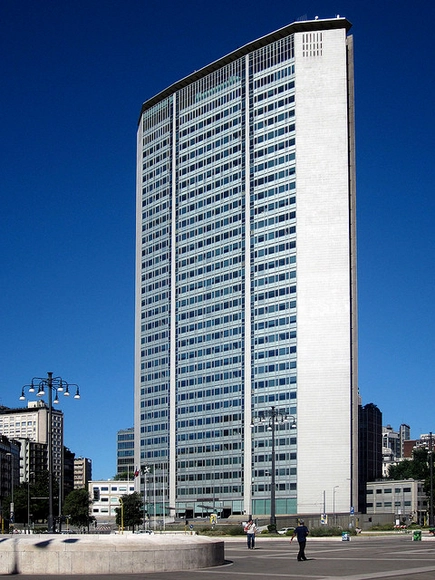
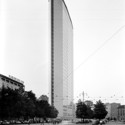
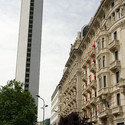
In contrast with its traditional Milanese surroundings, the Pirelli Tower is one of the earliest examples of Modernskyscrapers in Italy. Affectionately called "Il Pirellone” (The Big Pirelli), the 127 meter tower stood as Italy’s tallest building from 1958 to 1995. The design of the structure, led by architect/designer Gio Ponti and engineer Pier Luigi Nervi, featured a tapered plan—as opposed to the conventional rectilinear volume which was prevalent in America—encouraging greater creative freedom during a time when skyscrapers typically lacked experimentation.





.jpg?1398820300 "© Marco Alberi Auber")