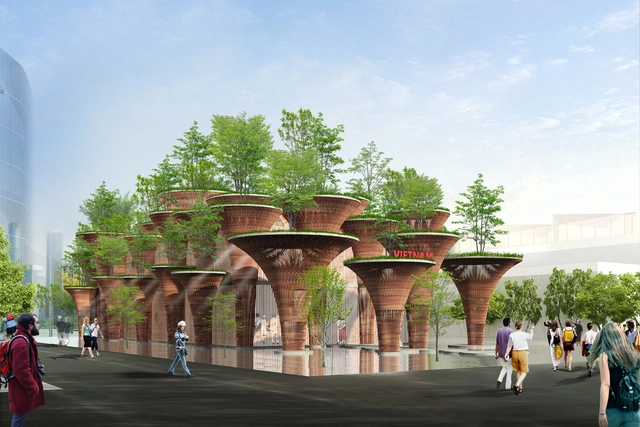
Vo Trong Nghia has unveiled designs for the Vietnamese pavilion at the 2015 Milan Expo. Inspired by the lotus, the pavilion features a number of bamboo clad, umbrella-like structures supporting trees above a pool of water, in a composition reminiscent of their Kontum Indochine Cafe.
"The Lotus is Vietnam’s national flower, a symbol of purity, commitment and optimism for the future," say the architects. "Growing from the muddy ponds it rises above the surface to bloom with remarkable beauty. The flower is proof that patience can turn difficulties into advantages."
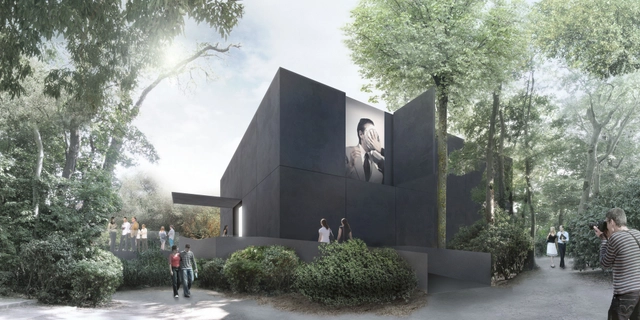
Australia’s new pavilion for the 2015 Venice Art Biennale will be, in the words of featured artist Fiona Hall, “a minefield of madness, badness, and sadness in equal measure.” Designed by firm Denton Corker Marshall, (who also designed the Stonehenge Visitor Centre), the project will replace the 25 year old temporary pavilion designed by Phillip Cox and will be the first building constructed on the Giardini in two decades.
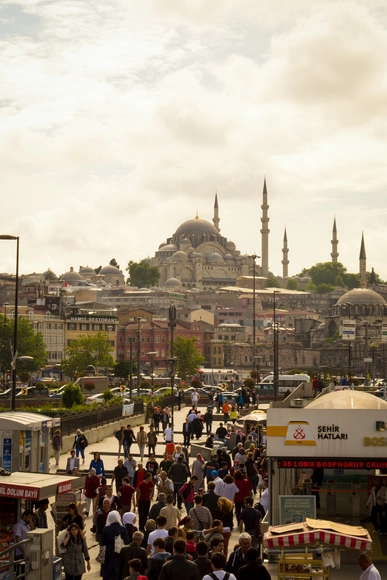
MAXXI and Insula architettura e ingegneria with Based Architecture present “Cose Turche”, a conversation of six voices about Istanbul, aimed to recognize and trace the pulsating identity of a metropolis, which in its present metamorphosis is able to tell us about significant pieces of third millenium urban culture.
Recently some of Istanbul public spaces as Gezi Park, Taksim square with Ataturk Cultural Center by Hayati Tabanlioglu and Third Bosphorus Bridge became symbol and central places of an intense debate still open, which assumed a global broader connotation.
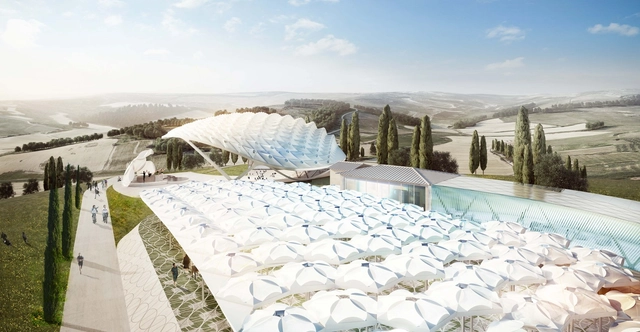
An aerial view of the park's canopies. Image Courtesy of Asymptote Architects
Asymptote Architecture has been commissioned to design a park with a collection of cultural buildings on the outskirts of Peccioli, Italy. Called the “Parco Degli Angeli," Italian for Park of Angels, this urbanized complex will be carefully grafted into the picturesque Tuscan countryside to create a dialogue with the surrounding farmland and historical sites. The park will include museums, interactive sculpture installations, and an amphitheater that can host 800 people.
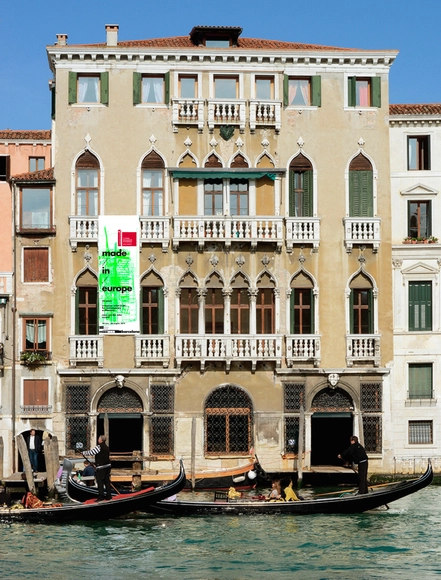
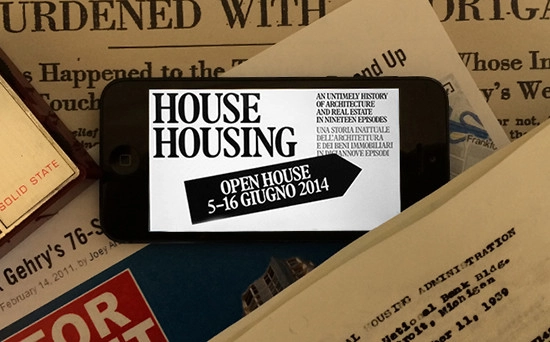
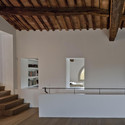
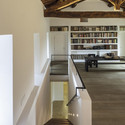
House Housing is the first public presentation of a multi-year research project conducted by the Temple Hoyne Buell Center for the Study of American Architecture at Columbia University. Situated in the Casa Muraro in Venice and staged as an open house, the exhibition responds unsolicited to the proposal by Rem Koolhaas, curator of the 14th International Architecture Exhibition, that architecture focus on its "fundamentals."
From the Organizers. Europe is currently experiencing a paradigm shift from national to urban identities. As its boundaries become increasingly blurred, each city is claiming an identity of its own. Europe is predominantly urban, and the condition of the European city is related to a stratification of architectures, functions and events which, palimpsest-like, shape a compact, complex understanding of the urban experience that embraces its architectonic heritage, industrial development, social housing, archaeological sites, modern infrastructure and the cities rebuilt after WW2.
The globalisation process began with the emigration of artists and architects during WW1, and continuing with the exodus due to the rise of the Nazi Party in Germany and the start of WW2. In this sense, Europe acted as a transmission device, the key node in a complex process of emission and assimilation. Today we live in a liquid reality whose theme is permeability, a reality in which professionals and intellectuals can move across porous borders.
House Housing: An Untimely History of Architecture and Real Estate in Nineteen Episodes is the first public presentation of a multi-year research project conducted by the Temple Hoyne Buell Center for the Study of American Architecture at Columbia University. Installed in the second-floor apartment of Columbia’s Casa Muraro in Venice and staged as an open house, the exhibition responds unsolicited to the proposal by Rem Koolhaas, curator of the 14th International Architecture exhibition, that architecture focus on its “fundamentals.” House Housing replies by considering architecture’s economic fundamentals, which locate housing at the center of the current economic regime, with the United States as an influential node in a transnational network.
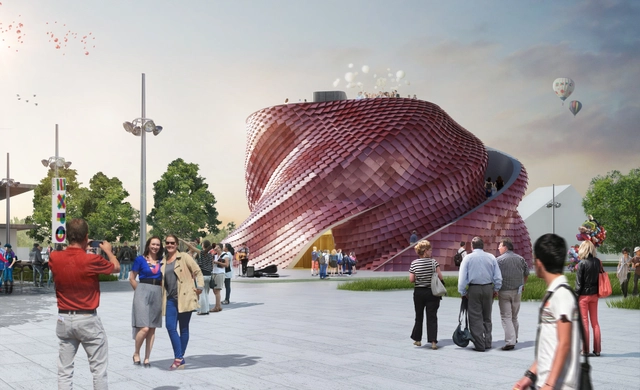
Daniel Libeskind has unveiled designs for Vanke’s first ever overseas pavilion for the 2015 Milan Expo. Clad in a self-cleaning, air purifying, metalized tile, which was designed by Libeskind in collaboration with the Italian company Casalgrande Padan, the “red serpentine-like” structure reinterprets the traditional Chinese Shitang (dining hall).



















.jpg?1401639706 "© Andrea Martiradonna")