
-
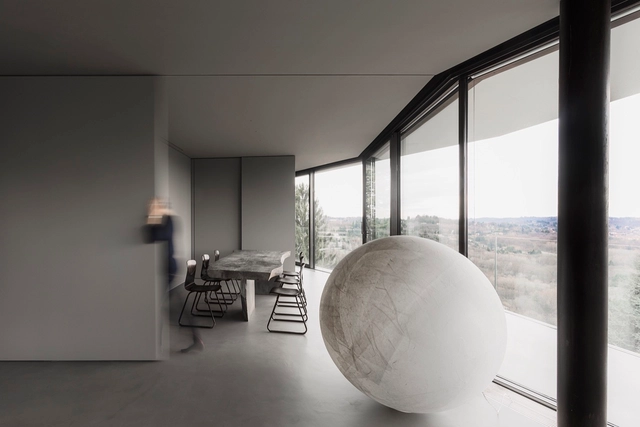
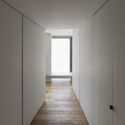
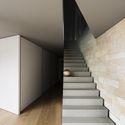
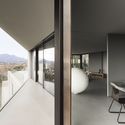
Architects: duearchitetti
- Year: 2016


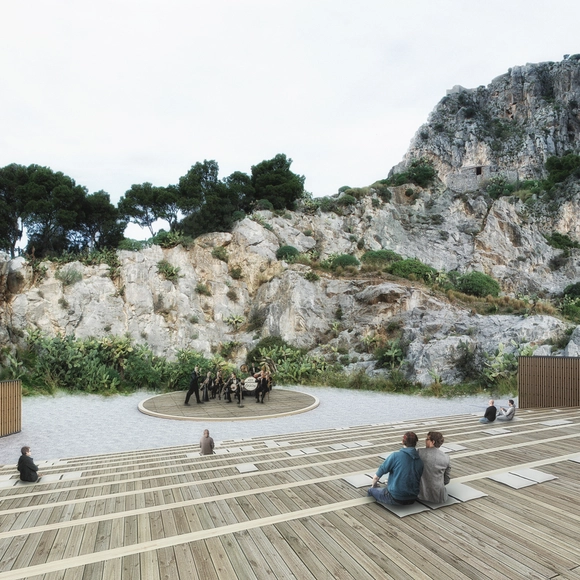
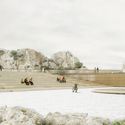
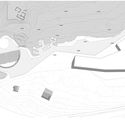
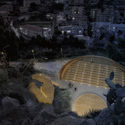
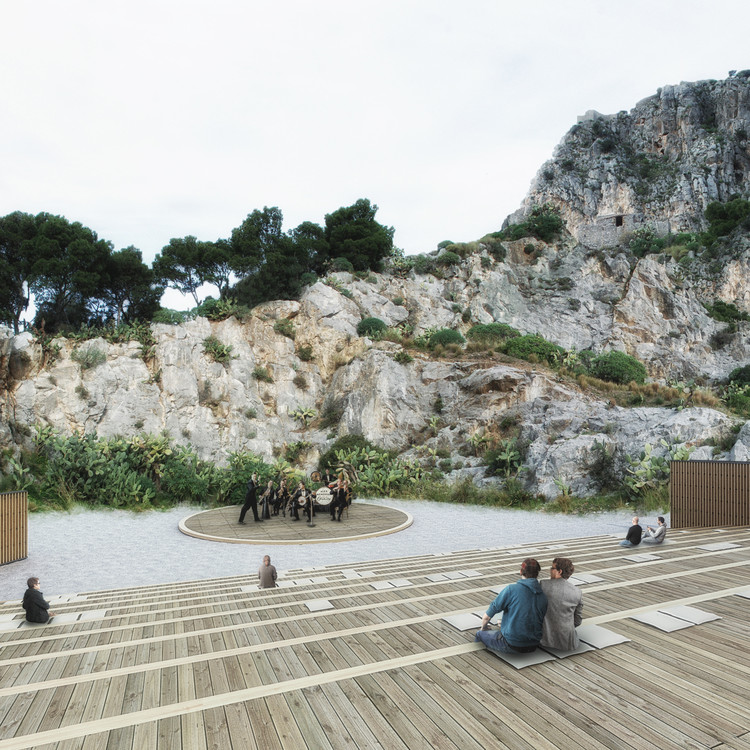
A proposal from AM3 Architetti Associati with Cannone Architetti uses the flow of the natural landscape to create a theater cut into a cliffside in Cefalù, Italy. Situated at the base of the Rocca di Cefalù, the new theater had to respect the importance of both the historical, man-made structures and the greatness of the cliffs and rocky outcrops. The first prize winning design plays with the existing naturally occurring amphitheater, "S. Calogero cavea", adding a series of lightweight interventions to create a new cultural attraction.

Park Associati has revealed their plans for a new landmark business center in central Milan. A series of differentiated volumes make up the complex, one of which rises far higher and has been articulated as a "lantern," illuminating the skyline. The plan for the Pharo Business Center focuses on visibility and accessibility, taking advantage of the site's prominent position.
.jpg?1467895226&format=webp&width=640&height=580)

Works of India is an archive of drawings, sketches, artefacts, models, tools and pictures collected and made during two and a half years of life and work. The collection arises as necessity to document the relation between human, natural and built landscape to portray a frame for a way of life in India.
The selected material articulates in six environments which reflects upon the relation between man and nature, god and matter, a certain sacrality which is embedded during the act of creation and a sort of deep rooted understanding in the way of making and building.

On May 28, Beirut-based firm 109 Architectes unveiled Notes on a Tree at the 2016 Venice Biennale of Architecture. The interactive installation is part of the GAA Foundation’s annual “Time – Space – Existence” exhibition and commemorates Lebanon’s lost public spaces.
Notes on a Tree tackles the role of the architect in countries like Lebanon, where developers often dictate urban planning. The firm uses its own projects as examples of successes and disappointments in preserving public space, which is symbolized by specific trees. Some trees were saved and some were lost, but each one represents a community’s history and collective memory.

“Contested Fronts” is an exploration of architecture’s role for commoning practices in ethnically and socially contested spaces. It focuses on the agencies of architecture’s ad-hoc technologies that contribute into conflict transformation by advocating reconciliation processes to go hand in hand with urban reconstruction processes. “Contested Fronts” introduces three levels of frontiers’ investigation where architecture claims an active role: geopolitical, disciplinary and everyday urban politics’ frontiers. To do so, it concentrates on the agencies of ad-hoc technology’s materiality and use that encourage the emergence of collectives, with their members coming from areas across divides. Ad-hoc technology has to do with means of spatial engagement, of cartographic representation and of visual communication. It assists tactful organization of physical spaces and of events.
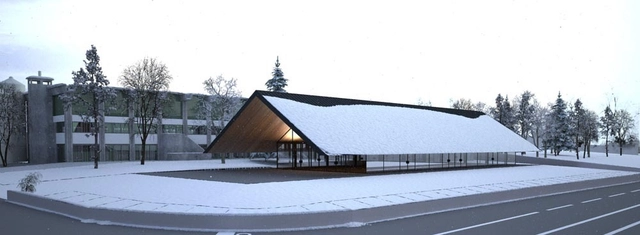
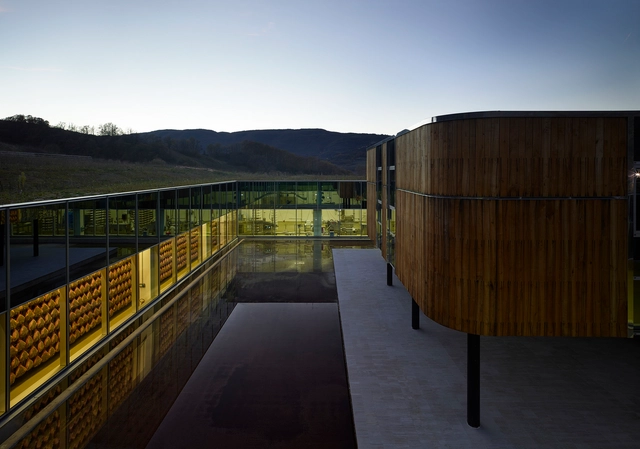
Milan studio Piuarch unveiled their design for the new Latteria Sociale Valtellina cooperative dairy in the Italian Alps. The competition, commissioned by the Latteria, sought to renovate the old building and expand it to include a sales outlet, restaurant, conference room and small museum. Piuarch's winning design builds on the economic and historic context of the area and surrounding landscape.
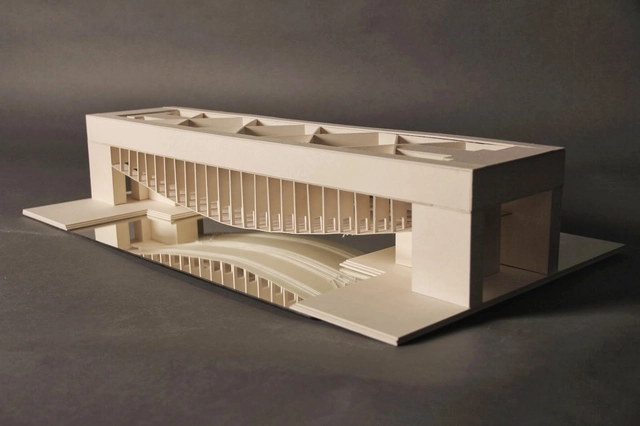
The city of Venice has been caught in a tug of war between progress and traditionalism for many years, and particularly since the construction of a railroad viaduct in 1846 linked the island city to the Italian mainland for the first time in its history.[1] Over a century later, the Venetian government commissioned Louis Kahn to design a new Palazzo dei Congressi for the city; his proposal, while paying respect to the histories of both the Republic of Venice and a unified Italy, could not escape similar controversy.








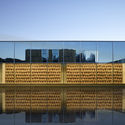
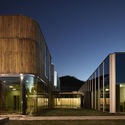
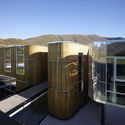

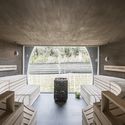


.jpg?1467895698 "© Centrofotografico")
.jpg?1467895495 "© Centrofotografico")
.jpg?1467895428 "© Centrofotografico")
.jpg?1467895756 "© Centrofotografico")
.jpg?1467895226)