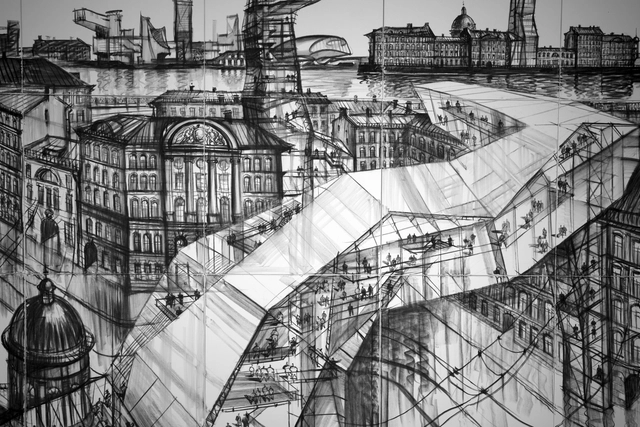
Sergei Tchoban "Old New Above" (Detail), 2019 Charcoal on canvas Foto: Greg Bannan
In the twentieth century the world was in movement. Cars replaced the horse carriages and sound took cinema by storm. The rhythm of the printing press (Karl Lemke) was brimming, railroad bridges were crossing over the pulsating cities and Free Dance stood for releasing of the mind, body and soul. The modern man was seeking out the beat of his time. Architects, like Mies van der Rohe reacted to it with the invention of the open room layout – for light, air and movement. Moholy-Nagy designed an object out of the light movement called the Light-Space Modulator. What has happened since then? The great dream of movement has been fulfilled. Yet it appears more and more and differently as imagined, a virtual one.
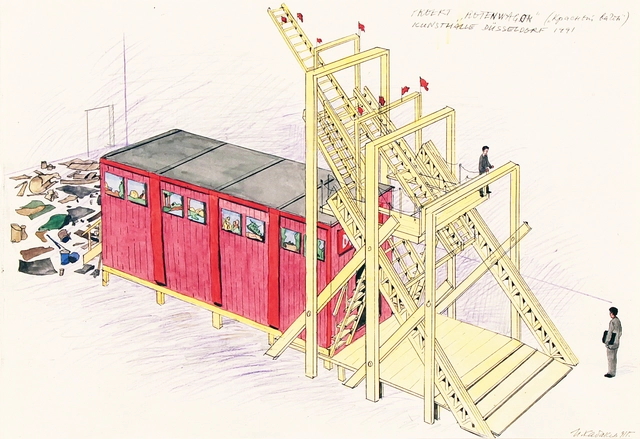
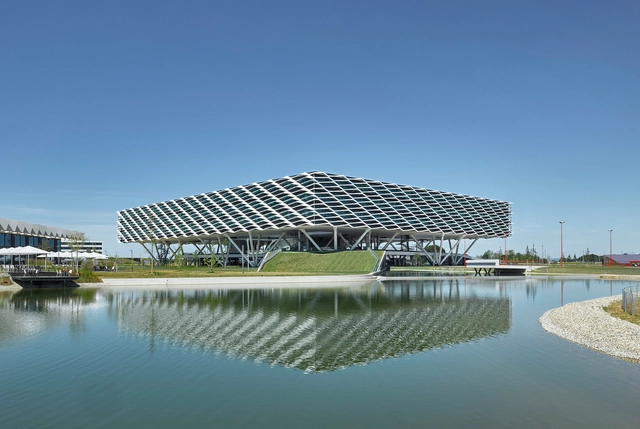
The nexus between architecture and installation art has long been a topic worthy of exploration. Installation transforms space and interacts with the audience; it must be designed, constructed and installed and therefore relies on architectural components.