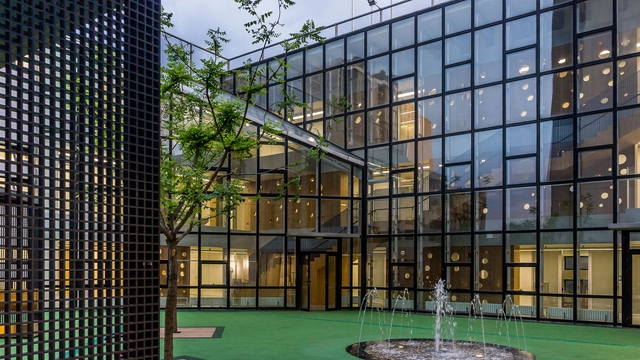
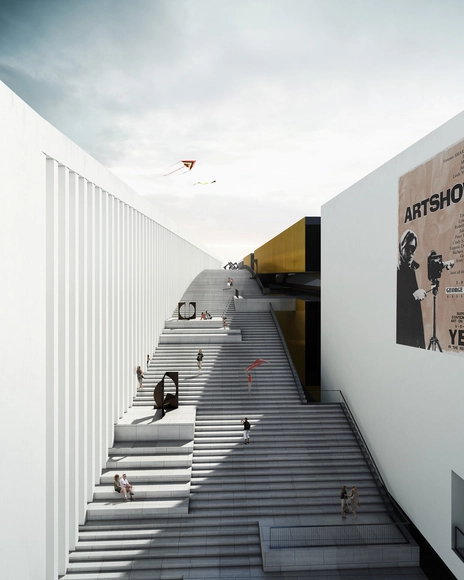
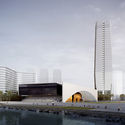
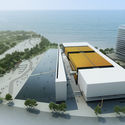
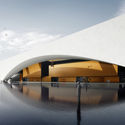
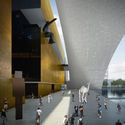
Beijing Institute of Architectural Design's (BIAD) 2A2 Design Department has unveiled their proposal for the Culture and Arts Center serving the newly developed Shekou Sea World area in Shenzhen. The design takes a rare attempt to optimize the interaction between commercial and cultural spaces, by taking advantage of the surrounding seascape.
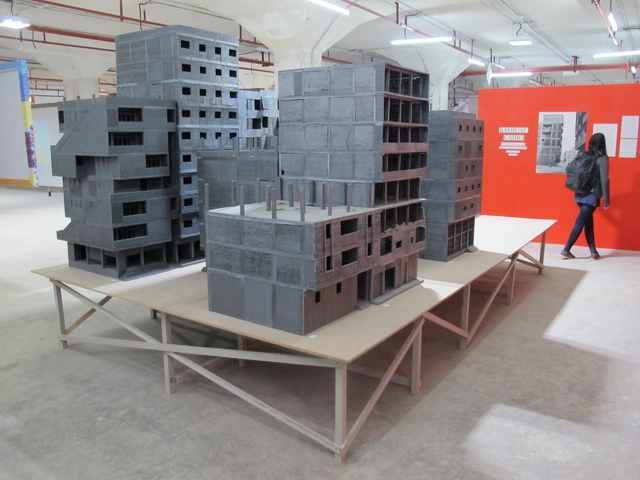
The 2015 Shenzhen Biennale of Architecture and Urbanism exhibits, makes, and discusses architecture that reflects the reuse and rethinking of existing buildings, the re-imagination of our cities, and the remaking of our daily lives by design. It is be a biennale of fragments, not abstract plans; of collage, not grids; of tactical urbanism, not top-down strategies.
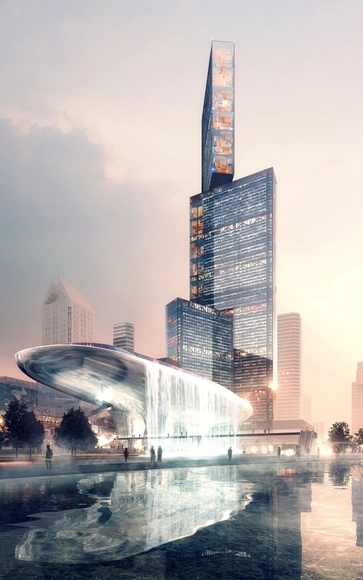
British firm PLP has unveiled their design for a large complex at the heart of the Pearl River Delta in China. The master plan comprises four buildings: the Platform for Contemporary Arts, the Lizhi Park Tower, the Concourse, and the Nexus - a 600-meter tall office and hotel tower that will be the masterplan's centerpiece and the region's tallest skyscraper.
The countryside carries so much emotional weight and nostalgia through thousands of years of time. Currently, more than 100 villages disappear every day in China. On the other hand, the rise of city living standards and GDP require a more suitable tourist experience in the surviving villages. How can we combine the inheritance and preservation of villages with a countryside tourism business model? To provide a better ecosystem for lodge and inn, farm, organic agriculture and handmade crafts is the challenge that we are facing now!
Makers are the group of people who are leading us towards a future lifestyle. They make the impossible possible. Makers are affecting every field of our life, from the internet, design, products, finance, interaction, community, biology, science and all other aspects to provide us a better living quality and a whole new experience. Thus, once the countryside meets the makers, tradition meets innovation; nostalgia meets the crowd fund. What kind of spark will that make?
Videos
Courtesy of Schmidt Hammer Lassen Architects and Gottlieb Paludan Architects
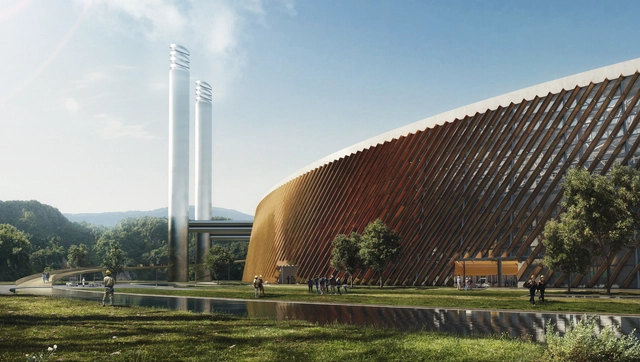
Schmidt Hammer Lassen Architects and Gottlieb Paludan Architects have won an international competition to design the world's largest waste-to-energy plant on the outskirts of Shenzhen, China. The new "Shenzhen East Waste-to-Energy Plan will be capable of incinerating 5000 tonnes of waste per day - "one third of the waste generated by Shenzhen's 20 million inhabitants every year," according to the team. In addition to incinerating waste and generating power, the plant will serve as a place to teach residents about its purpose.
schmidt hammer lassen architects has won an international competition to design a new home for the West Shanghai Workers’ Cultural Palace. This project has been a widely popular destination for Shanghai’s Labor Union workers and local community since it opened in 1959. The new proposal will include a theater, cinema, art and exhibition spaces, as well as office, sports facilities, commercial spaces, and a transportation hub -- all settled within the eight hectare site.
Modernism was a stylistic evolution meant to jettison the baggage that had moored culture to habits and historicism. But it was more than an architectural style: it was a new and universal way of life meant to eradicate variability, to relish in the ease of sameness and reproducibility. It’s easy to be seduced by Modernism when you’re talking about motel rooms, or Starbucks, or your shirt size at a favorite store, all instances where replication is reassuring. But the movement’s biggest advocates, governments and developers, pushed the style to its extreme in large housing blocks - a typology long out of fashion in the United States, but which continues to be de rigueur in countries intent on achieving rapid economic expansion and concentrating its populations in urban regions.
Look at an aerial photograph of the periphery of any Chinese city and you will see the monotony of towers that rise out of the ground like modules on a silicon circuit board. Viewing drabness with cautionary eyes, designer Feifei Feng’s project "Urban Playhouse: A Communal Drama in Seven Acts," proposes a series of interventions, or "acts," on a field of four and six-story slab housing buildings in Jinan, China, adding social spaces ("follies") that are intended to regenerate the spontaneity and theatricality of living in close quarters.
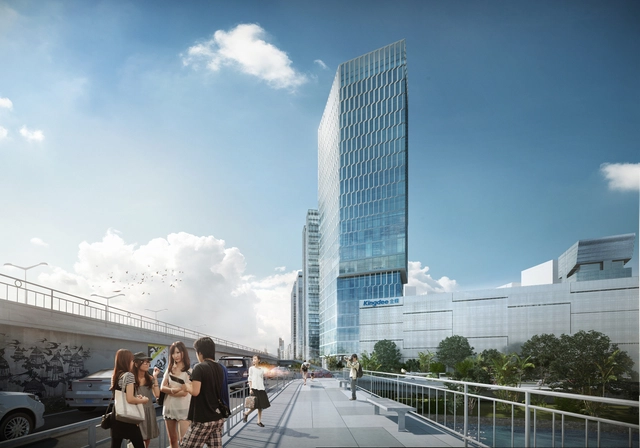
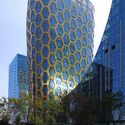
HENN has won first place in the competition to design Kingdee Tower, the headquarters for software company Kingdee in Shenzhen, China. The 44-story glazed tower will be the central building for the new headquarters, rising from an irregular pentagon plan situated between two existing nine-story blocks.



.jpg?1455934616&format=webp&width=640&height=580)


.jpg?1455934616)















.jpg?1454424610&format=webp&width=640&height=580)
.jpg?1454424516 "Courtesy of Architects and Engineers Associates of Southeast University")
.jpg?1454424481 "Courtesy of Architects and Engineers Associates of Southeast University")
.jpg?1454424238 "Courtesy of Architects and Engineers Associates of Southeast University")
.jpg?1454424500 "Courtesy of Architects and Engineers Associates of Southeast University")
.jpg?1454424610)