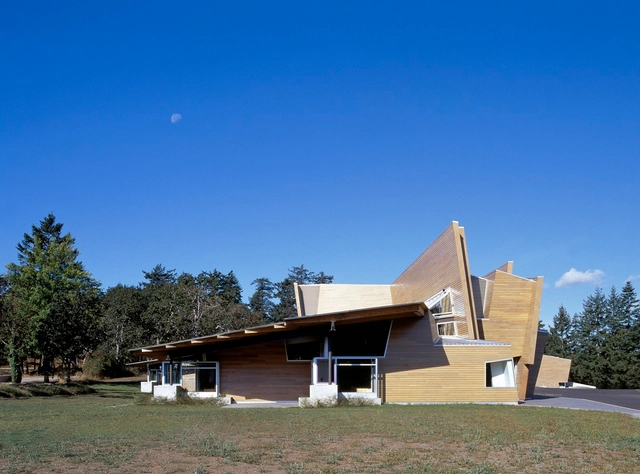
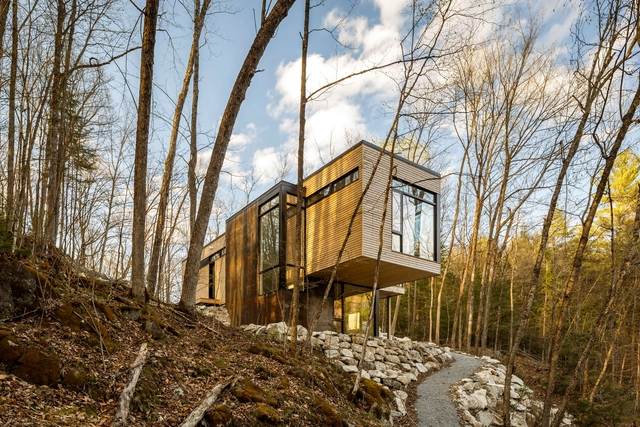
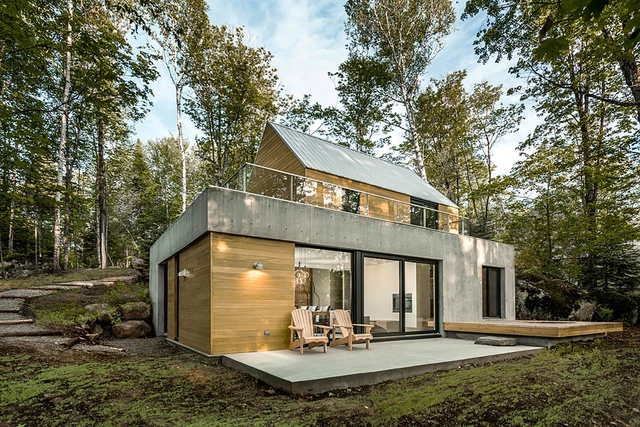
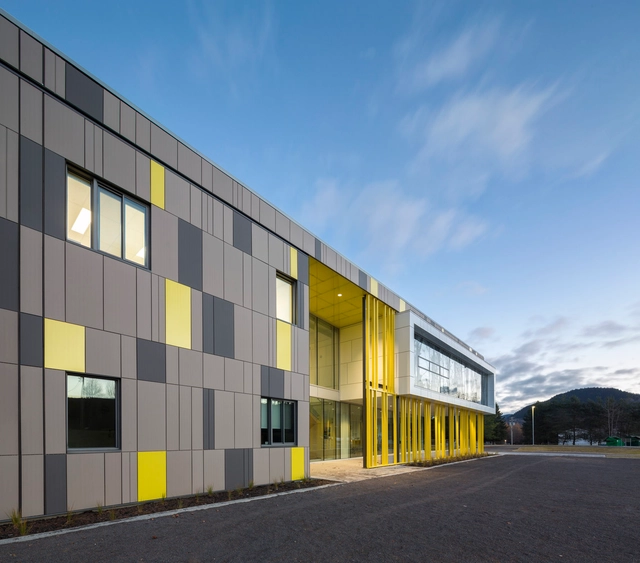
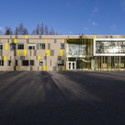
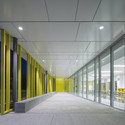
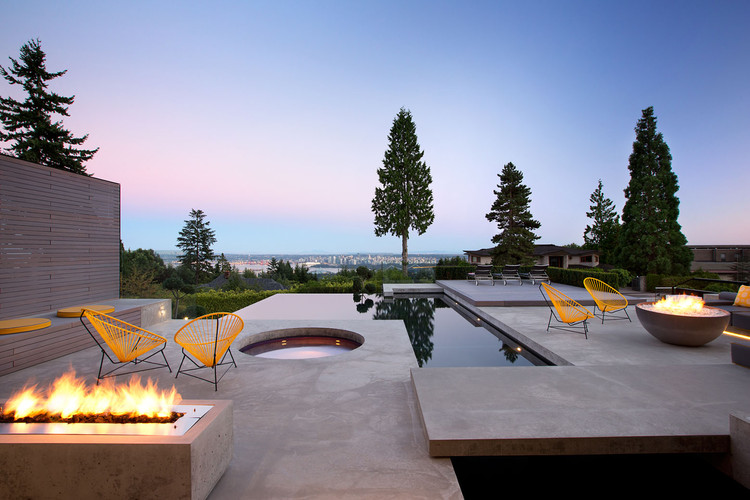
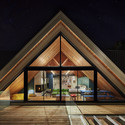
In the struggle against the homogenizing forces of an increasingly globalized architectural culture, the particularized interventions of Patkau Architects in the Canadian southwest proffer a means of resistance, grounded in the immediacy of context and the sacrosanctity of nature. Combining local material palettes with a rich tectonic vocabulary that borrows from the diverging currents of modernity and vernacular practice, the firm’s projects are dynamic and eminently sui generis, the results of an inspired pursuit at the nexus of regionalism, technology, and critical theory.
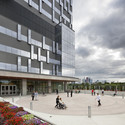
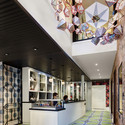
The OntarioCollege of Art and Design University (OCAD U) has commissioned Toronto firm Bortolotto to transform the university’s main office building into the Rosalie Sharp Pavilion. The office will be wrapped in a technologically-responsive layer, transforming it into a multi-use, student work and exhibition space and transforming the corner of Dundas and McCaul streets into an interactive gateway for the campus.
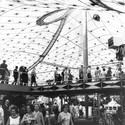
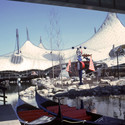
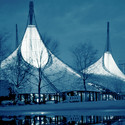
The pivotal turning point in the late Frei Otto’s career – capped by last month’s Pritzker announcement – came nearly fifty years ago at the Expo ’67 World’s Fair in Montreal, Quebec. In collaboration with architect Rolf Gutbrod, Otto was responsible for the exhibition pavilion of the Federal Republic of Germany, a tensile canopy structure that brought his experiments in lightweight architecture to the international stage for the first time. Together with Fuller’sBiosphere and Safdie’sHabitat 67, the German Pavilion was part of the Expo’s late-modern demonstration of the potential of technology, pre-fabrication, and mass production to generate a new humanitarian direction for architecture. This remarkable collection at the Expo was both the zenith of modern meliorism and its tragic swan song; never since has the world seen such a singularly hopeful display of innovative architecture.