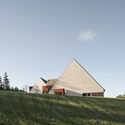
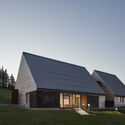
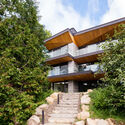
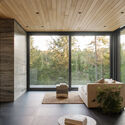
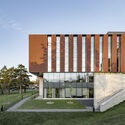
Join us for the opening reception of The Koffler Gallery's latest exhibition, “The Synagogue at Babyn Yar: Turning the Nightmare of Evil into a Shared Dream,” launches on April 17th, Yom HaShoah Eve.
Join editor Alissa North of the John H. Daniels Faculty of Architecture, Landscape, and Design as she discusses her new book Innate Terrain: Canadian Landscape Architecture, a collection of papers written by Canadian scholars and practitioners in the field of landscape architecture. Concerned with the practice and theories of landscape architecture in Canada, the book documents the breadth of contemporary practice from across the country, with each chapter author using works of landscape architecture to theorize a distinct approach practiced by Canadians in their national context. The book’s central argument is that Canadian landscape architecture is distinct because of the unique qualities of the Canadian terrain and the particular relationship that Canadians have with the landscapes of our nation.
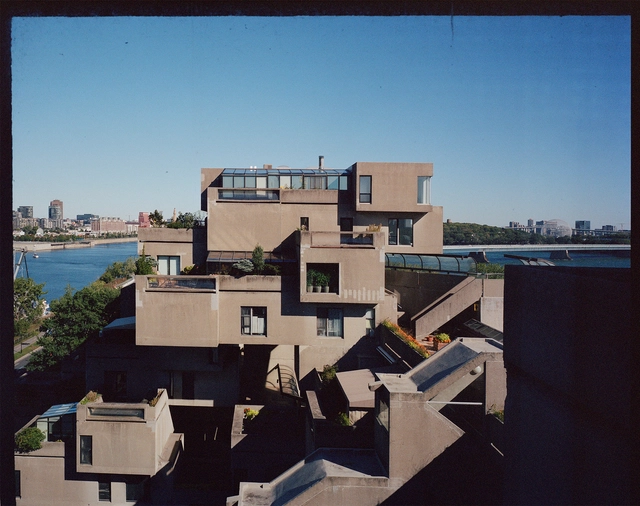
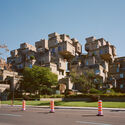
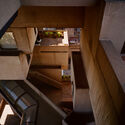
Habitat 67, designed by the Israeli-Canadian architect Moshe Safdie as the Canadian Pavilion for the World Exposition of 1967, was originally intended as an experimental solution for high-quality housing in dense urban environments. Safdie explored the possibilities of prefabricated modular units to reduce housing costs and allow for a new housing typology that could integrate the qualities of a suburban home into an urban high-rise.
Reflecting on the project’s significance in “A look back at habitat ’67” Safdie stated that “Habitat ‘67 is really two ideas in one. One is about prefabrication, and the other is about rethinking apartment-building design in the new paradigm.” [1]