The Chicago Riverwalk is a 1.25-mile trail along the south bank of the Main Stem of the Chicago River, between Lake Michigan and the confluence of branches at Wolf Point. This presentation covers the history of the Chicago Riverwalk project and highlights some features of this unique park—at the bottom of a “canyon” of world-famous architecture.
Density may be the mst universal characteristic of cities, where people, ideas, goods and services come together. This panel discussion addresses challenges—both immediate and ongoing—the coronavirus pandemic will have on the multi-family and mixed-use sites that are hallmarks of urban density. Four esteemed panelists will share informed perspectives on temporarily reprogramming large complexes toward greater public health and safety, along with their predictions of new approaches and priorities that may affect developments still in design and planning stages.
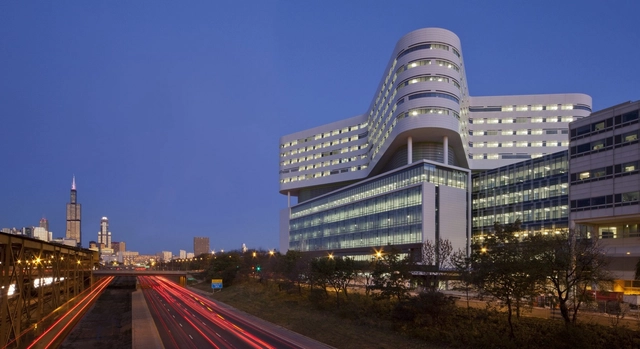
Rush University Medical Center Courtesy of Perkins and Will
Part of the CAC’s “What’s Next” series • Rush University Medical Center is uniquely suited to contain infectious diseases and respond to surges that occur during public health crises. What lessons does it offer for architects of future hospitals?
IIDA Chicago Office Designed by Gensler Photo by Eric Laignel
Part of the CAC’s “What’s Next” series. Going beyond the typical lecture or panel, this workshop lays out clear-cut steps for preparing your office for a returning workforce under social distancing guidelines.
Open work area at Johnson Wax Headquarters, CC license
The office environment, collaborative by nature, presents distinct challenges in a world still recovering from a pandemic. Hear how architects, designers and their clients are exploring creative solutions.
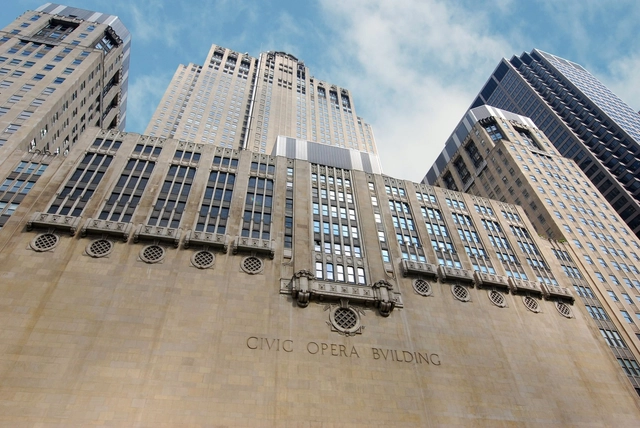
Learn about Art Deco—the opulent architectural style from the 1920s and 1930s—with CAC docent Mike McMains on this live, 45-minute virtual tour in downtown Chicago on May 5 or 10.
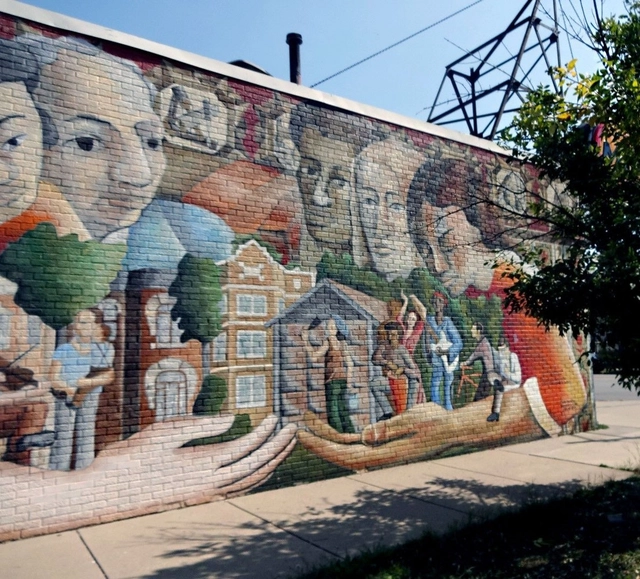
Due to the Great Chicago Fire of 1871, Chicago’s public art legacy is younger than Boston’s or New York City’s. Its vast collection of public art, however, is star-studded, widely varied, endlessly interesting—and still growing. CAC docent Ed McDevitt leads this engaging introduction to some of Chicago’s greatest public art treasures.
How has the quest for Utopia shaped American cities? Join urban planner and professor Alex Krieger as he explores the dreams and ideals that have long influenced our urban settlements, as told in his new book, “City on a Hill.”
The annual Council on Tall Buildings and Urban Habitat's (CTBUH) Tall + Urban Innovation Conference explores and celebrates the very best in innovative tall buildings, urban spaces, building technologies, and construction practices from around the world. Incorporating what was previously known as the CTBUH Annual Awards event, this conference sees the owner/developers, design, and engineer teams for 50+ Awarded projects present in front of an international audience and live juries for winning distinctions across several award categories. Hot topics in the building industry will also be explored through presentations in project rooms.
Chicago presents itself as a broad-shouldered, cold-surfaced, and vascular city plopped in the heart of the American Midwest. All seemingly brought back into scale by its various public transportation and infrastructural systems. Within the confines of the crevasses of the bustling metropolis goes the unseen networks; whether they be physical, non-physical, or emotional habits that the new generation of live/workforce is tuned to.
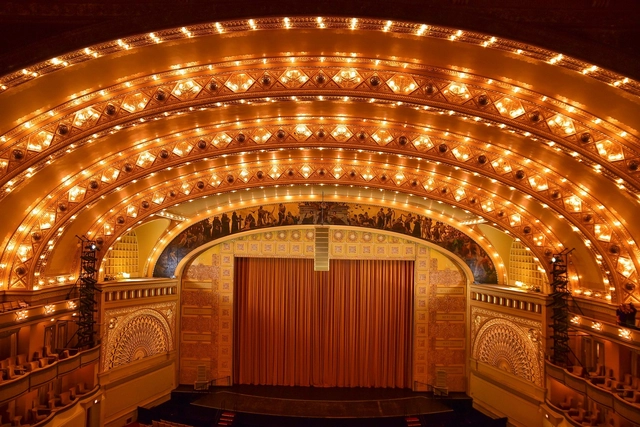
The National Historic Landmark Auditorium Theatre, which officially opened on December 9, 1889, has been a Chicago institution for 130 years. Celebrate this milestone anniversary, and explore Louis Sullivan and Dankmar Adler's masterpiece, at a FREE Open House! Take a historic theatre tour, pose for a picture at a photo booth with an Auditorium Theatre-themed backdrop; sketch and take photos of the theatre; bring the kids for free popcorn and coloring; grab a drink at the bar; and enter a raffle for a chance to win free tickets to a future Auditorium Theatre performance. Photographs, program books, and posters from the theatre’s archives will also be on display.
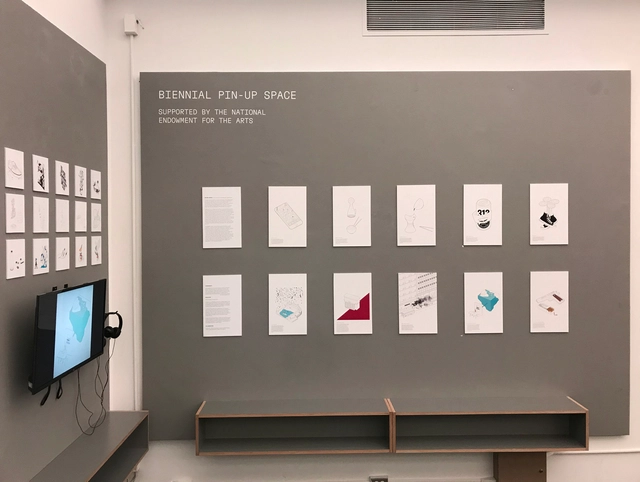
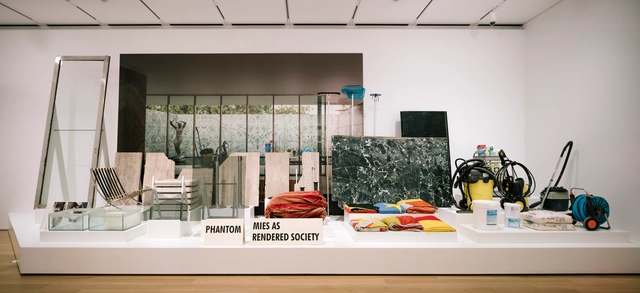
PHANTOM. Mies as Rendered Society is a provocative site-specific intervention developed by Andrés Jaque for the Ludwig Mies van der Rohe–designed Barcelona Pavilion in 2012 and recently reconceived and acquired by the Art Institute of Chicago.
This installation aims to unravel the myth of Mies van der Rohe as a solitary genius. Fundació Mies commissioned Andrés Jaque in 2012 to create a site-specific intervention in Mies’s most famous building, the Barcelona Pavilion. The original Pavilion of 1929 was reconstructed in 1986 with the fundamental addition of a basement. Jaque’s installation focused on this lower level, which was an overlooked yet significant part of the building, introducing new questions for contemporary scholarship about Mies.












_Tom_Harris_Hero_Alt.jpg?1576082429)
_Nick_Fochtman_Hero.jpg?1576081740 "© Nick Fochtman")
_Tom_Harris_Pocket_Park.jpg?1576081846 "© Tom Harris")
_Nick_Fochtman_Facade.jpg?1576081657 "© Nick Fochtman")
_Tom_Harris_Library.jpg?1576082191 "© Tom Harris")
_Tom_Harris_Hero_Alt.jpg?1576106472)



.jpg?1572403446)
.jpg?1572403499 "© James Florio")
.jpg?1572403620 "© James Florio")
.jpg?1572403472 "© James Florio")
.jpg?1572403598 "© James Florio")
.jpg?1572464814)