Romullo Baratto is an architect with a PhD from FAUUSP and Managing Editor of ArchDaily. He previously coordinated the editorial team of the 11th São Paulo Architecture Biennial and served as Managing Editor of ArchDaily Brasil, where he led the platform to win the FNA Award—the first time the honor was granted to a media outlet. He collaborated on the editing of the book "Concrete Jungle", published by gestalten, and has curated architecture exhibitions in Brazil, Chile, Denmark, and Italy, as well as delivered lectures and moderated debates in Spain, the United States, and Portugal. His doctoral thesis investigates the urban landscapes of São Paulo through cinema. His work spans academic research and editorial practice, communicating architecture through texts, interviews, lectures, curatorship, and photography. Follow him on Instagram @romullobf.
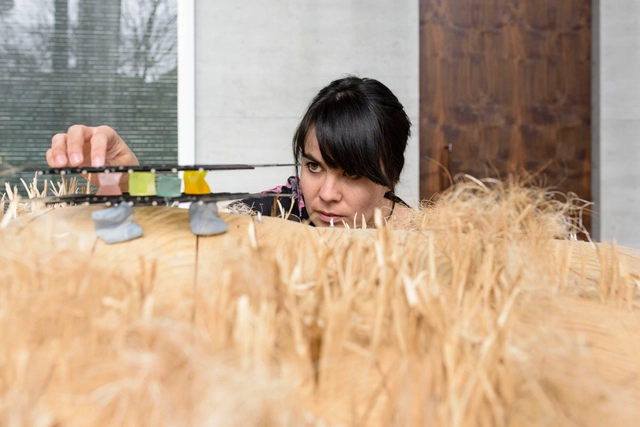
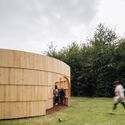
ReSa Architects. Photo by Antonin Kanant and Revati Shah
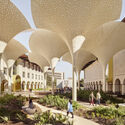
The Lisbon Architecture Triennale announced as the winner of the fifth edition of the Début Award the Indian office ReSa Architects. The office is known for its collective approach to spatial practice, treating architecture as a process of rewriting social and bodily relations. In previous editions, the award recognized the work Vão (Brazil, 2022), Bonell+Dòriga (Spain, 2019), Umwelt (Chile, 2016) and Jimenez Lai, from Bureau Spectacular (USA, 2013).
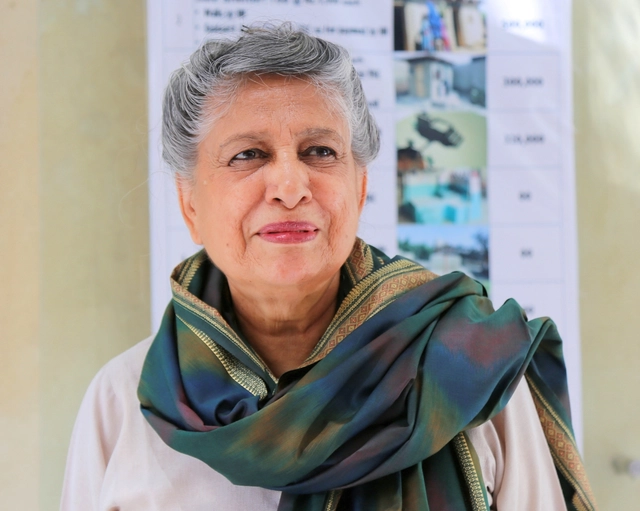
The announcement was made on October 4, during the opening festivities of the Triennale, which in this edition awarded the Lifetime Achievement Award to the architect, Yasmeen Lari from Pakistan, the first person from the global south to receive the honor. Lari joins Marina Tabassum (2022 award winner), Denise Scott-Brown (2019), the duo Lacaton & Vassal (2016), Kenneth Frampton (2013), Álvaro Siza (2010), and Vittorio Gregotti (2007).
Culture is the set of knowledge and practices people use to express themselves and make sense of the world collectively. As Brazilian philosopher Marilena Chauí reminds us, the word derives from the Latin colere, which means "to take care of." In that sense, agriculture means taking care of the soil, while religious cults are the care of the gods. At its core, culture is the creation of symbolic universes, expressed through different languages, including architecture, that weave connections across time. It safeguards the memories of the past while opening new possibilities for the future.
This month, ArchDaily explores The Architecture of Culture Today, asking a central question: How does architecture shape the way culture is produced, consumed, and experienced? This theme examines how architecture both shapes and responds to cultural life — from the permanence of museums, theaters, and libraries to the ephemerality of pavilions, installations, and virtual platforms. It considers the architect's role in curation, scenography, and exhibition design, as well as the portrayal of cultural spaces in film and digital representations.
Architects today work across many worlds: from designing furniture, landscapes, and urban blocks to creating film sets, photographs, and videos. They restore and retrofit old buildings rather than build anew, while also writing, researching, and publishing. Some design virtual spaces for video games or speculate on habitats in outer space and underwater. Others engage directly with society through politics, activism, or community projects. Many experiment with biology, test new materials, and step into the role of scientist. Architects are decolonizing old narratives and decarbonizing the construction industry, and by weaving together personal passions with pressing social and environmental challenges, they are pushing the limits of the profession and expanding its scope.
With so many changes in the profession, especially in recent years, one may ask: How is the role of the architect evolving in response to global crises and shifting societal needs? In what ways can interdisciplinarity expand the scope and impact of architectural practice? And what skills beyond traditional design are becoming essential for architects in today's world?
The Lisbon Architecture Triennale has announced Yasmeen Lari as the recipient of the 2025 Millennium bcp Lifetime Achievement Award. With a career spanning over six decades, the pioneering Pakistani architect has consistently demonstrated how architecture can serve as a tool for social justice, environmental resilience, and inclusive development.
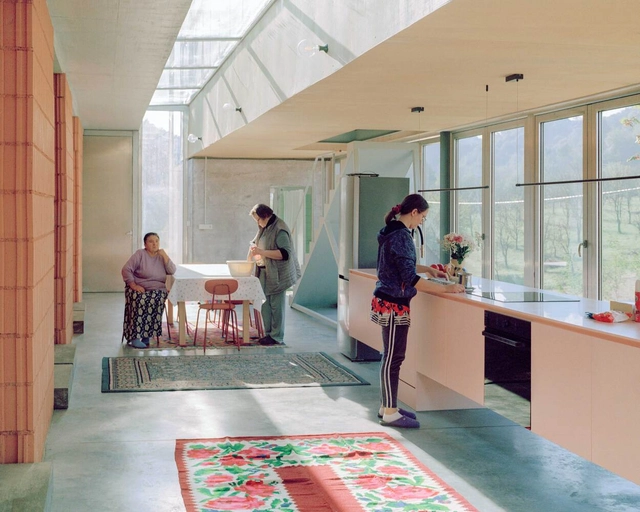
TEN. Image by Maxime Delvaux and Adrien de Hemptinne
The Lisbon Architecture Triennale has revealed the five finalists for the 2025 Millennium bcp Début Award, celebrating emerging practices that are redefining the role of architecture across diverse geographies and realities. Spanning three continents, these studios will present their work during the opening days of the Triennale (October 2–4, 2025), in a public event where the winner will be announced.
Sixteen years ago, we launched the ArchDaily Building of the Year Awards with a simple yet powerful idea: to let our readers choose their favorite buildings from our ever-growing library of projects. Thanks to your engagement, this award has grown into one of the most democratic and influential recognitions in architecture. Year after year, your collective insight has highlighted architectural excellence across cultures, economies, and landscapes worldwide.
This year was no exception. The 75 finalists have already showcased an outstanding range of spatial solutions, reflecting the power of collective intelligence in crafting a snapshot of today's most compelling architecture. Now, it's time to unveil the winners.
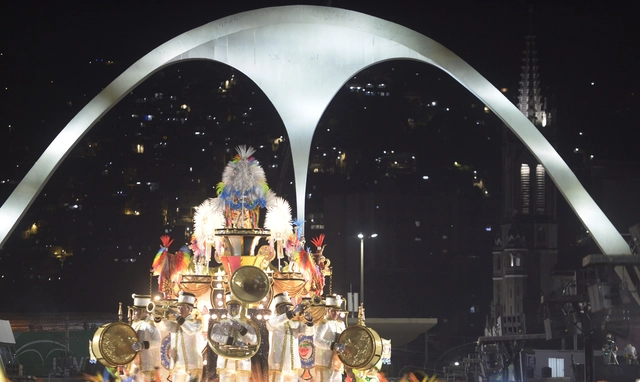
Carnival is one of the biggest cultural expressions in Brazil. Image via Shutterstock
Rio de Janeiro, often called the "Marvelous City," is a vibrant tapestry woven from diverse cultural, historical, and social threads. Its story begins with the indigenous Tupi, Puri, Botocudo, and Maxakalí peoples who originally inhabited the region. The city's name, translating to "River of January," originates from Portuguese explorers who arrived at Guanabara Bay on January 1, 1502, mistakenly believing it to be the mouth of a river.
After two weeks of open voting in the16th edition of the Building of the Year Awards, our readers have meticulously narrowed down a pool of almost 4,000 projects to a select group of 75 finalists spanning 15 categories. This year's awards honor the pinnacle of design, innovation, and sustainability on a global scale, showcasing an exceptional range of projects within the shortlist. As a crowdsourced award, we take pride in affirming that your selections authentically mirror the current state of architecture, and the caliber of this year's finalists further underscores the excellence and diversity prevalent in the field.
Architecture has long been framed as the work of singular visionaries, yet Beatriz Colomina, a leading theorist, historian, and curator, challenges this notion, arguing that architecture is inherently a collaborative endeavor. She critically examines how the myth of the lone genius—almost always depicted as male—has erased the contributions of countless women and entire teams involved in the design process. For Colomina, rethinking architecture means recognizing the complexities of collective work and dismantling the historical biases that have shaped the discipline's narratives.
Videos
Courtesy of Architecture & Design Film Festival
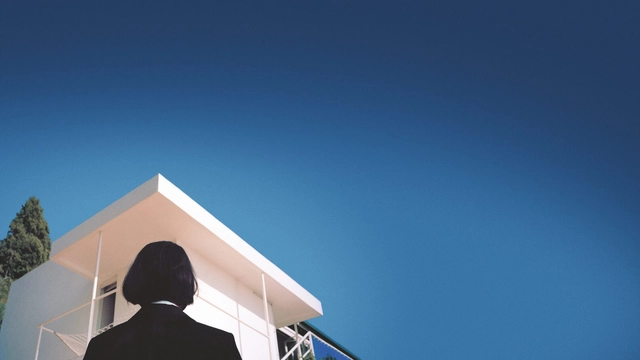
A journey through the legacy of Eileen Gray and her most famous house in the French Riviera, "E.1027 – Eileen Gray and the House by the Sea," by directors Beatrice Minger and Christoph Schaub, invites viewers into the layered legacy of the pioneering Irish architect and her unique vision of modernism. Designed in the late 1920s, the villa not only embodies Gray's architectural genius but also bears the shadow of an uneasy narrative involving Le Corbusier and Jean Badovici. Through their docufiction, Minger and Schaub illuminate Gray's groundbreaking work and critique the prevailing narratives of male dominance in modernist history.
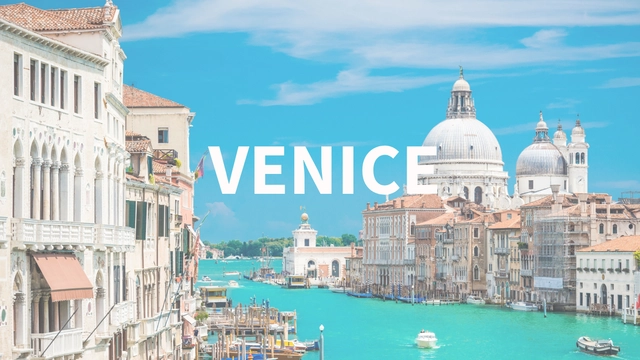
"Every time I describe a city I am saying something about Venice”, said Marco Polo to Kublai Khan in Italo Calvino’s seminal book, Invisible Cities. Once the heart of a powerful maritime republic, Venice indeed houses many cities inside its intricate network of canals, alleys, bridges, and squares. Renowned for its unique architectural beauty, Renaissance history, and cultural significance — and, of course, for being built in the middle of the water — over the past decades, Venice has become one of the most notable victims of overtourism, receiving an estimated 30 million visitors per year.
The figures are astonishing, far outnumbering the 50,000 residents that call Venice home — 120,000 less than its population in the early 1950s, when city dwellers started to drive away, bothered by the permanent noise and overcrowded walkways.
“The human invention par excellence.” This is how French sociologist Claude Lévi-Strauss described the city back in the first half of the 20th century. Although his idea can be seen as outdated by more recent narratives, one cannot deny that cities exist because of human action in the landscape. In that sense, Tokyo is perhaps the “most human” expression one can find, as its metropolitan population of 37 million people assures it the top spot among the world’s biggest cities.
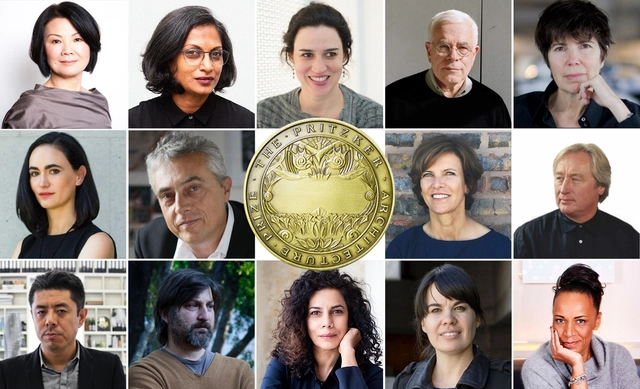
As part of our yearly tradition, we have asked our readers who should win the 2024 Pritzker Prize, the most esteemed accolade in the realm of architecture.
Established by Jay Pritzker and administered by the Hyatt Foundation in the United States, the Pritzker Prize honors living architects, irrespective of nationality, whose architectural contributions "have produced consistent and significant contributions to humanity through the art of architecture."
Cortesia de Programa Rolex de Mestres e Discípulos
Born in Brazil and educated in Paraguay, Gloria Cabral is an architect who early on learned that home can be many places—or none at all. Guided by a comprehensive understanding of the geography, culture, and social conditions of the places she designs, she has left her mark on buildings and artistic installations constructed in various locations, from Assumption to Venice.
Besides her interest in the specificities of the places where she operates, Gloria focuses on resource economy and material reuse — a trending theme that Gloria has championed for over fifteen years. We had the opportunity to speak with the architect about her experiences in Paraguay and Brazil, some of her works involving recycled brick, and her insights into architecture and sustainability.
In a moment in history when some seek alternatives on other planets and others find refuge in virtual worlds, paradoxically, the future seems to be Earth. This may be one of the significant lessons that 2023 has taught architecture. Understanding this also implies becoming aware that our planet is depleting before our eyes—and a generous portion of this responsibility belongs to the production chains involved in architecture and construction.
If there is still something that can be done to mitigate the climate and environmental crisis in which we find ourselves, it will necessarily involve a revision of all the paradigms that define the industry. It is necessary to change focus and seek other narratives on which to sustain the ways of making architecture on a planetary scale. These ideas resonated in many voices this year, and, at the same time as the possibility of a future for the planet was debated, equal attention was given to the scale, values, and local cultures. The selected interviews here tell stories about the community, environment, cities, practices, and new narratives for architecture in 2023 and beyond.
As tragic as they may be, crises often foster adaptability and resilience. In architecture, they challenge professionals to adapt their production to smaller and less frequent orders. That is the case of Diogo Aguiar Studio, a Portuguese studio based in Porto founded in 2016, in the recovery from a profound economic crisis, which, since its emergence, has been forced to reinvent ways of operating within the field of architecture.
Interested in varied scales and typologies, the studio works between the fields of architecture and art, carrying out small-scale architectural projects and spatial installations, temporary or not, for public spaces. Formed by Diogo Aguiar, Daniel Mudrák, Adalgisa Lopes, João Teixeira, Cláudia Ricciuti, and Marta Bednarczyk, the studio bases its practice on the belief that "there are no small projects and, above all, that there are no smaller projects." The ability to respond inventively to diverse demands and contexts earned the studio a place on ArchDaily's 2023 Best New Practices list.
Architect, researcher, and architectural theorist Anthony Vidler passed away last night, on October 20, 2023, at the age of 82, according to Princeton University School of Architecture. Vidler had a distinguished career at the prestigious institution, where he served as the inaugural director of the Doctoral Program in History and Theory. His passion for architecture, nurtured in Essex, England, led him to earn both an undergraduate and a master's degree in architecture at the University of Cambridge. Later, he obtained a doctorate in Architectural History and Theory from Delft University of Technology. His influential career spanned over 50 years, leaving a profound impact on architectural research and education.
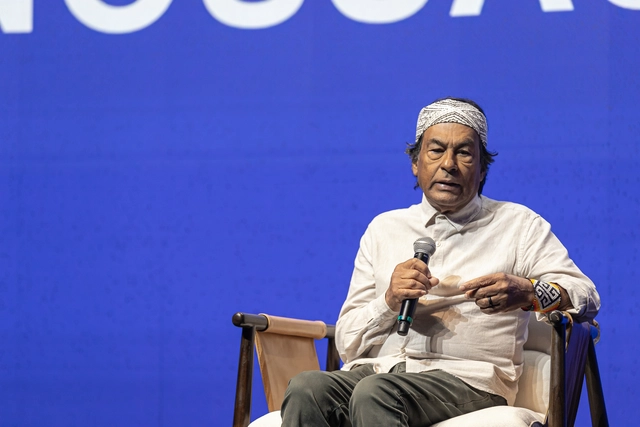
Krenak has a unique talent for transforming his life experiences into profound concepts, which he conveys through oral and poetic language. His worldview blurs the boundaries between landscapes, human beings, animals, rivers, and mountains. He strongly advocates for a reassessment of our lifestyle, emphasizing the importance of 'breaking up the ground to allow the channeled waters to resurface.' On September 5th, he participated in a discussion in São Paulo during the Archtrends Summit 2023, organized by Portobello. During this event, he shared his insights on topics such as cities, forests, and the future of our planet.