Architect, researcher, and editor based in Istanbul with a master’s degree in Alternative Architectural Practices. Pursuing a second bachelor’s degree in Sociology to further explore the evolving relationship between cities and their inhabitants.
As the architecture community looks ahead to the announcement of the 2026 laureate of the Pritzker Architecture Prize, anticipation once again gathers around what is widely regarded as the profession's highest honor. Founded in 1979 by Jay Pritzker and administered by the Hyatt Foundation, the prize recognizes a living architect whose body of work demonstrates a consistent and significant contribution to humanity and the built environment.
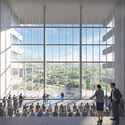
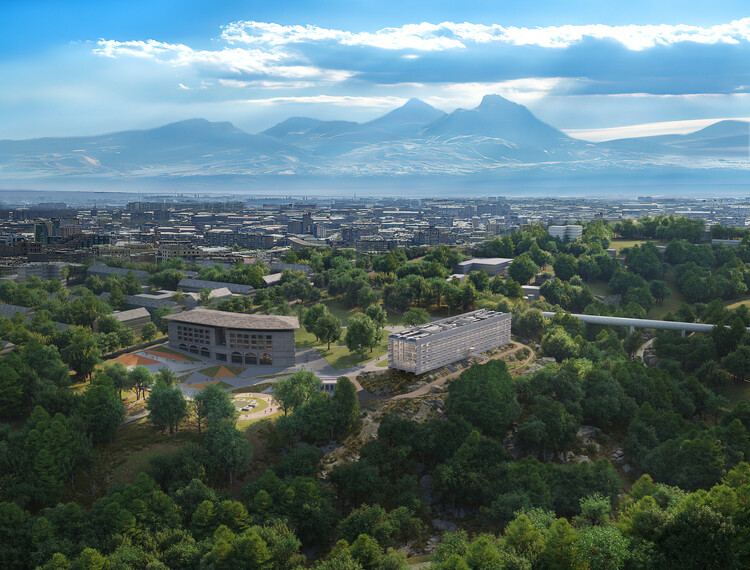
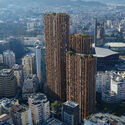
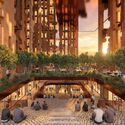
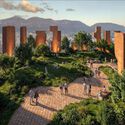
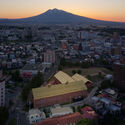
MVRDVhas started construction on the EU TUMO Convergence Center, a new educational and research facility in Yerevan, Armenia. Located in Tumanyan Park, the five-story building will expand TUMO's campus, providing spaces for free technology and creative education for teenagers and adults, alongside research and co-working areas for technology and design companies. Positioned on a hilly outcrop above the Hrazdan River Gorge, the project responds to the surrounding topography while establishing visual connections with the city, the gorge, and Mount Ararat. Construction officially commenced on 24 February, with local and international representatives in attendance.
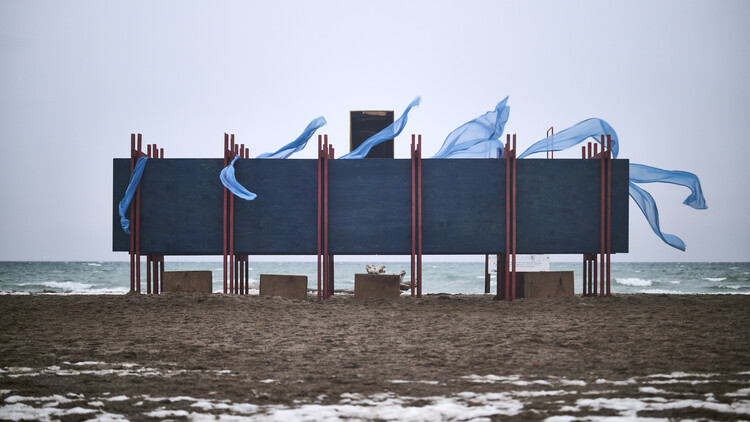
The annual Winter Stations design competition returns to Toronto for its twelfth edition, once again transforming the lifeguard stations of Woodbine Beach into temporary works of public art. On view from February 16 to March 30, 2026, this year's exhibition is organized under the theme Mirage, inviting participants to examine perception, illusion, and the shifting boundaries between what is seen and what is constructed. Selected from more than 300 international submissions, three winning proposals from Canada, the United States, and a Germany–Ukraine collaboration are presented alongside two installations developed by university teams. Installed along the frozen shoreline of Lake Ontario, the projects reinterpret seasonal infrastructure as platforms for spatial experimentation during the winter months.
Today, 20 February, the United Nations marks World Day of Social Justice under the theme "Renewed Commitment to Social Development and Social Justice." This year's observance takes place in the aftermath of the Second World Summit for Social Development in Doha and the adoption of the Doha Political Declaration, renewing the commitments first articulated in the 1995 Copenhagen Declaration: poverty eradication, full and productive employment, decent work for all, and social inclusion as interdependent pillars of development. At a moment defined by widening inequalities and accelerating environmental and technological transitions, the 2026 commemoration calls for translating political affirmation into measurable, cross-sectoral implementation.
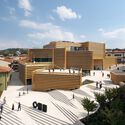
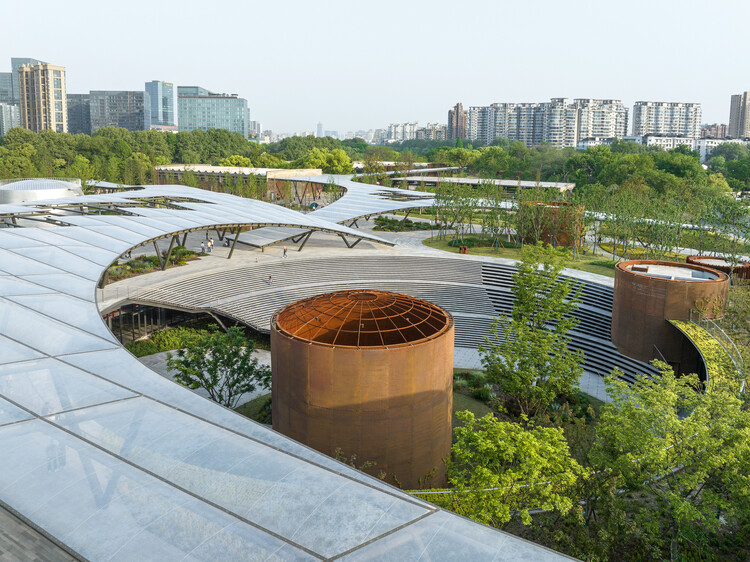
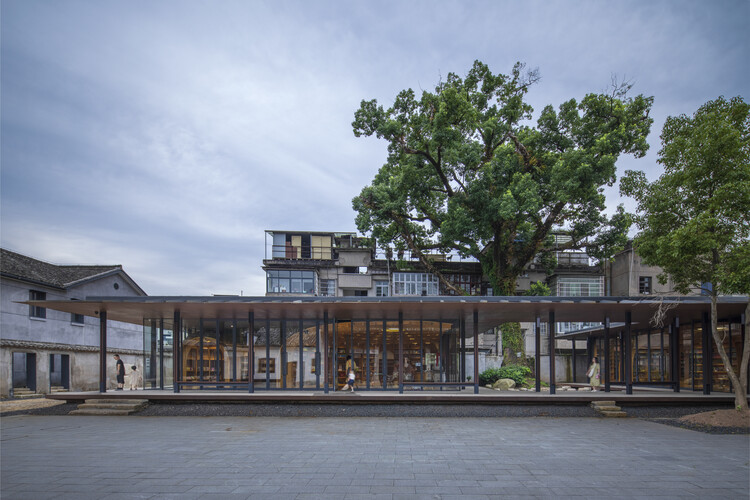
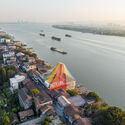
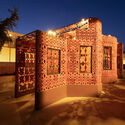
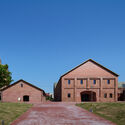
Songyang Culture Neighborhood by Liu Jiakun, the 2025 Pritzker Architecture Prize laureate. Image Courtesy of Arch-Exist
This week's news brings together developments in professional recognition, cultural programming, and large-scale urban strategy, reflecting the multiple scales at which architecture shapes contemporary discourse. As the field anticipates the next Pritzker Architecture Prize announcement, conversations around authorship, civic responsibility, and long-term impact unfold alongside the American Institute of Architects' 2026 Honorary Fellowship appointments, situating individual achievement within broader institutional frameworks. At the same time, updates from Riyadh to London foreground the role of architecture in both enabling new cultural platforms and safeguarding post-war heritage. Complementing these narratives, the reassignment of the 2029 Asian Winter Games and progress on expansive public landscapes highlight how cities are aligning infrastructure delivery, environmental resilience, and territorial planning with long-term economic and social agendas.
Videos
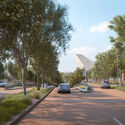
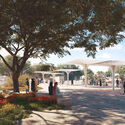
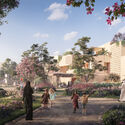
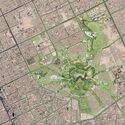
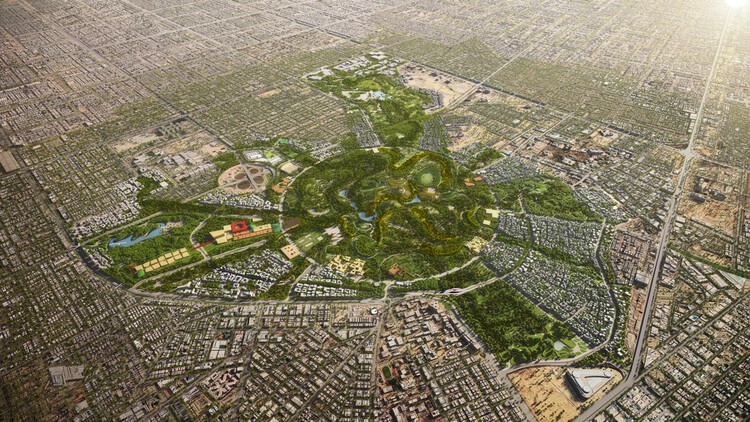
King Salman Park, Riyadh, Saudi Arabia. Image Courtesy of King Salman Park Foundation & Omrania
Construction continues on King Salman Park in Riyadh, a 16.9-square-kilometre public landscape taking shape on the grounds of the city's former airport. Led by Omrania as lead design consultant, in collaboration with Henning Larsen for master planning and urban design, the project reimagines the centrally located site as a large-scale green and cultural district. Conceived as a new civic core for the capital, the park combines ecological restoration, public programming, and mixed-use development. Initial phases are expected to open in late 2026, with substantial completion targeted for 2027, following a phased construction schedule currently underway.
As the building industry continues to account for a significant share of global carbon emissions, digital platforms are increasingly being developed to support carbon reduction across different stages of the design and construction process. These initiatives range from material-focused knowledge databases to project life-cycle guidance and early-stage embodied carbon assessment tools. While differing in scope and methodology, they commonly aim to improve access to technical knowledge, clarify responsibilities across the value chain, and facilitate more informed decision-making in the built environment. Recently, Henning Larsen launched OpenDetail, joining related efforts by Grimshaw and MVRDV to address decarbonization through shared digital infrastructure.
The American Institute of Architects (AIA) has elevated 78 architects to its College of Fellows, recognizing members whose work has demonstrated a sustained impact on the discipline and on society. Fellowship is described as one of the Institute's highest honors and is conferred upon architects who have advanced design excellence, strengthened professional practice, expanded architectural education, or contributed to public service. Selected by a nine-member Jury of Fellows chaired by Sanford Garner of RG Collaborative, this year's cohort reflects a wide range of geographic and professional backgrounds, with honorees representing firms, public agencies, and academic institutions across the United States.
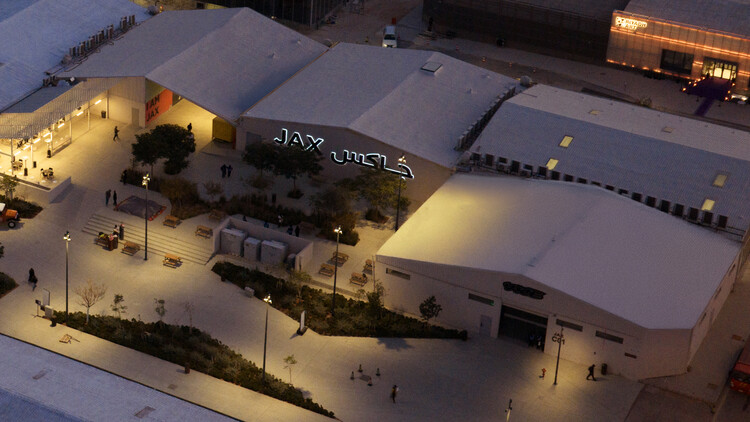
The third edition of the DiriyahContemporary ArtBiennale opened on January 30, 2026, and will remain on view through May 2, 2026, in Riyadh, Saudi Arabia. Organized by the Diriyah Biennale Foundation, the Biennale takes place at JAX District, a former industrial area in Diriyah near the UNESCO World Heritage Site of At-Turaif. Titled "في الحِلّ والترحال" / In Interludes and Transitions, the exhibition is led by Co-Artistic Directors Nora Razian and Sabih Ahmed, while Milan-based architect Sammy Zarka contributed as the Associate Architect and Exhibition Designer. The exhibition scenography is designed by Formafantasma, and the event brings together more than 65 artists from over 37 countries, including more than 25 newly commissioned works.
Rojkind Arquitectos, in collaboration with artist Pedro Reyes, SON Architects, Motus Holdings, and ASAB, has been selected as the winner of the mixed-use component in the International Concept Design and Build Competition for the redevelopment of the Zyber Hallulli site in Tirana, Albania. Organized by the Albanian Investment Corporation in partnership with the National Agency for Territorial Planning, the competition was launched in September 2025, with the jury announcing its decision on January 29, 2026. The proposal led by the Mexico-based office was awarded the mixed-use development, while a separate Mexican practice, Taller Héctor Barroso, was selected to design CASA FAMILIA, a new children's campus to be built on a greener, more child-oriented site.
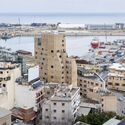
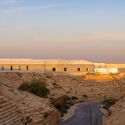
The Renovation of Tianbao Cave District of Erlang Town by Liu Jiakun, the 2025 Pritzker Architecture Prize laureate. Image Courtesy of Arch-Exist
As the architecture community looks ahead to the announcement of the 2026 Pritzker Architecture Prize, anticipation is once again building around who will be named this year's laureate. While the official date has yet to be confirmed, the annual reveal traditionally takes place in early March, marking one of the most closely watched moments in the architectural calendar. Established in 1979 by the Hyatt Foundation, the Pritzker Architecture Prize is widely regarded as "the profession's highest honor." Each year, it recognizes a living architect, or architects, whose work demonstrates a consistent and significant contribution to humanity and the built environment. Over the decades, the award has reflected shifting priorities within the discipline, highlighting practices engaged with social equity, environmental responsibility, material experimentation, and cultural continuity.
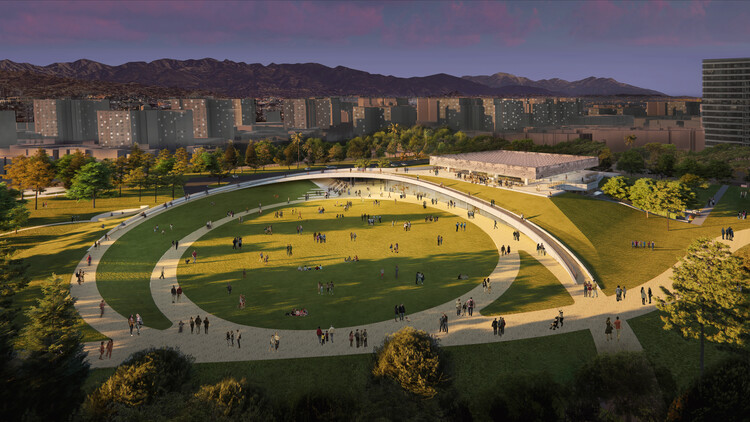
New renderings released by WEISS/MANFREDI reveal updated plans for the ongoing transformation of the La Brea Tar Pits in Los Angeles, a comprehensive redesign that integrates the museum, landscape, and active excavation areas into a continuous public and research-oriented campus. Alongside the design update, the Natural History Museums of Los Angeles County (NHM) has announced the creation of the Samuel Oschin Global Center for Ice Age Research, a new initiative supported by the Samuel Oschin Family Foundation, which advances the site's long-term redevelopment. The transformation project is led by WEISS/MANFREDI as design lead for the museum and park, with Gruen Associates serving as executive architect and landscape architect, and Kossmanndejong (KDJ)responsible for exhibition design. Fundraising efforts are ongoing, with the project positioned for completion ahead of the 2028 Olympic Games in Los Angeles.
Across history, the relocation of capital cities has often been associated with moments of political rupture, regime change, or symbolic nation-building. From Brasília to Islamabad, new capitals were frequently conceived as instruments of centralized power, territorial control, or ideological projection. In recent decades, however, a different set of drivers has begun to shape these decisions. Rather than security or representation alone, contemporary capital relocations are increasingly tied to structural pressures such as demographic concentration, infrastructural saturation, environmental risk, and long-term resource management. As metropolitan regions expand beyond their capacity to sustain population growth and administrative functions, governments are turning to spatial reconfiguration as a means of addressing systemic urban imbalance.
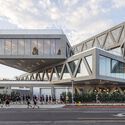
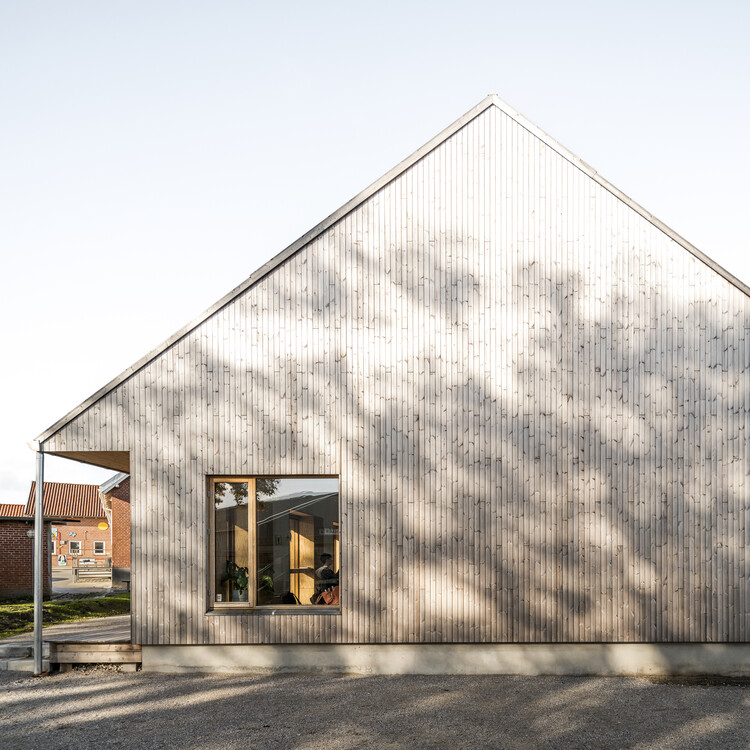
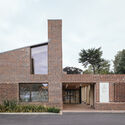
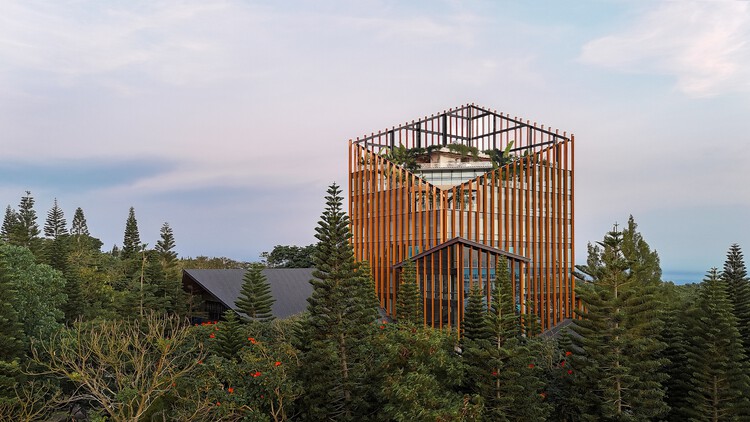
Tagaytay City Hall / WTA Architecture and Design Studio. Image Courtesy of WTA Architecture and Design Studio
This week's architecture news brings together a series of announcements that reflect how the discipline is engaging with larger structural and institutional frameworks. The OBEL Foundation's introduction of Systems' Hack as the theme for its 2026 cycle foregrounds architecture's relationship to the systems that organize contemporary life, from infrastructure to resource flows. At the scale of the design industry, Salone del Mobile.Milano's outline of its 2026 framework, including OMA's involvement in the Salone Contract master plan, signals an evolving understanding of major fairs as long-term cultural and economic infrastructures rather than standalone events. Running alongside these agenda-setting developments, the final days of nominations for the 2026 ArchDaily Building of the Year Awards underscore the role of collective evaluation and public participation in shaping contemporary architectural discourse.
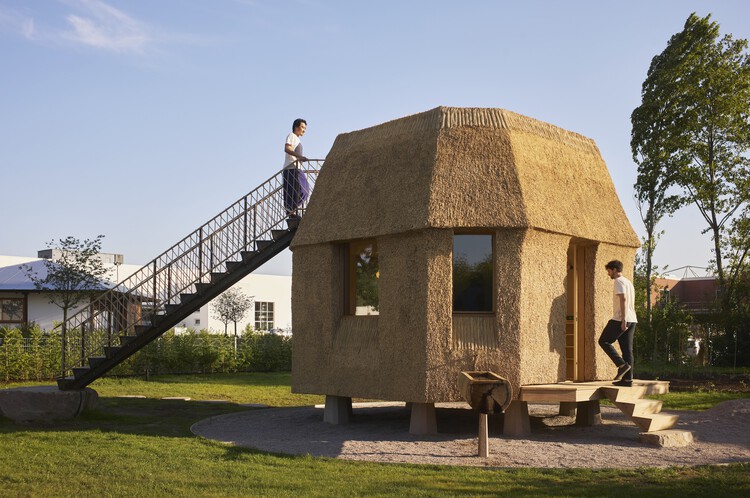
Tsuyoshi Tane is a Japanese architect born in 1979 in Tokyo and based in Paris, where he founded ATTA – Atelier Tsuyoshi Tane Architects in 2006. Working across cultural, institutional, and landscape-related projects, Tane has developed an architectural approach that positions memory as a fundamental design driver. In his interview with Louisiana Channel, filmed in his Paris studio, Tane reflects on architecture as a discipline of observation and thought, arguing that meaningful design emerges from carefully reading the traces embedded within a site. For him, architecture is not produced on a blank slate but begins with an inquiry into what already exists, physically, culturally, and emotionally, beneath the surface of a place.
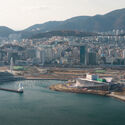
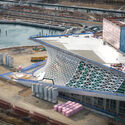
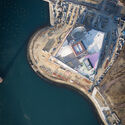
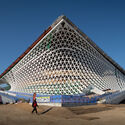
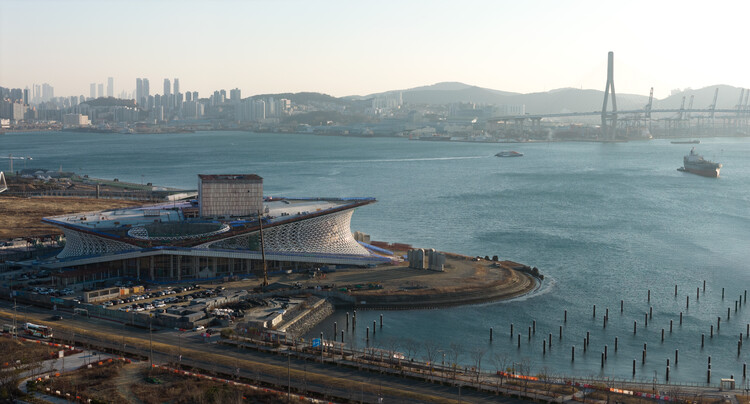
Commissioned in 2012 following an international design competition, Snøhetta's BusanOpera House is under construction on the city's North Port waterfront, with major works scheduled for completion in late 2026 and an opening planned for 2027. Conceived as the first opera house in South Korea's second-largest city, the project redefines the traditional opera house as an open and inclusive civic institution. Rather than operating solely as a venue for performance, the building is envisioned as a public destination that supports everyday use, collective experience, and long-term cultural engagement within Busan's evolving urban landscape.