The concept of sustainability emerged at the United Nations Conference on the Human Environment (UNCHE) in Stockholm in 1972 and was coined by Norwegian Gro Brundtland in the report "Our Common Future" (1987). According to this definition, the sustainable use of natural resources should "meet the needs of the present generation without compromising the ability of future generations to meet their own needs." However, despite the urgency of the concept and the constant evolution it has undergone over time, its application is often restricted to the controlled use of natural resources and the preservation of wildlife. In other words, it treats the situation from the perspective of "man versus nature," as a dichotomous view, with the loss of a holistic perspective.
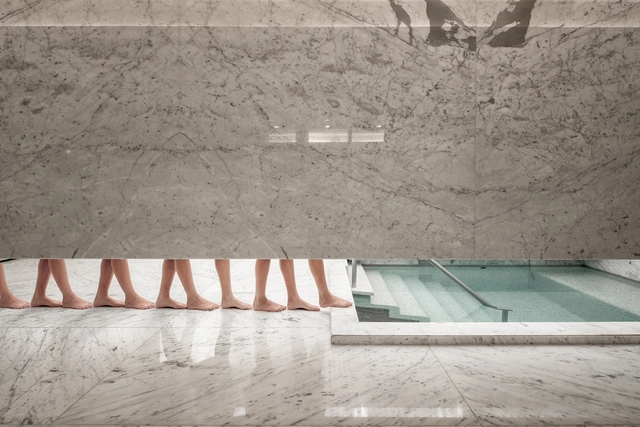
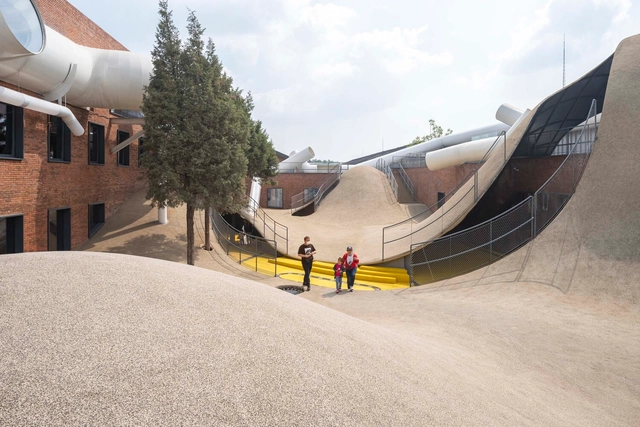
The skin absorbs matter, and the world is contemplated, touched, heard, and measured through our bodily existence. Juhani Pallasmaa, a Finnish architect known for propagating sensory architecture, defends the notion that, unlike vision, touch is the sense of proximity, becoming a main axis by covering the entire body. It is a fact that, when speaking of touch, the first image that comes to mind is usually contact with hands. However, there are other ways to feel architecture that can be developed in projects, such as the touch of bare feet on a particular surface.
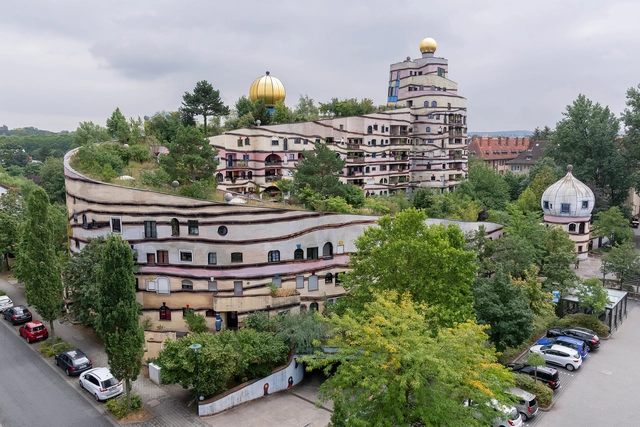
Waldspirale, Alemanha. Foto de Alexandre Prevot, via Flickr. Licença CC BY-SA 2.0
"I am tolerant. But I revolt. I accuse. It is my obligation. I am alone. Behind me there's no dictatorship, no party, no group, nor any mafia — neither a collective intellectual scheme nor an ideology. The green revolution is not a political revolution. The base sustains it and is neither minority nor elitist. It is a creative evolution in harmony with nature and the universe's organic course."
The above paragraph was said in the mid-20th century by Friedensreich Hundertwasser, an Austrian artist, and architect born in 1928. Hundertwasser marked architecture history with his distinct style of irregular and vibrant forms. His projects were a manifesto against rational and repetitive architecture. In them, there was a right to intervene in windows, irregular floors, green roofs, and spontaneous vegetation. As an architect, he always put diversity before monotony, believing in the right of each individual to modify their home and express their creativity. Above all, Hundertwasser believed in the importance of man's identification with nature and the world around him, addressing concepts related to community life and respect for the environment.
From Thomas Edison's empty glass bulb to AI-controlled LEDs, hundreds of years of constant evolution have passed, which culminated in what we now know as artificial lighting. Edison could not have imagined how dependent we would become on his invention almost two centuries later. It led to a way of life where we spend up to 90% of our time in enclosed spaces deprived of natural light, such as shopping centers and offices. Places where artificial light remains constant throughout the day, without any variation of color temperature or luminous intensity are where artificial lighting practically eliminates day and night differences.
The first image that comes to mind when we think of an office is a place with a table and chair. But it was not always the case. In the Middle Ages, monasteries were the main places for study and knowledge, with private rooms designed to help monks concentrate when researching. However, records state that such spaces were uncomfortable since scholars remained standing most of the time.
Some authors claim that the term kitsch has German origins and arose in artistic vocabulary around 1860 from the verb kitschen/verkitschen (to cheat, to sell something instead of something else). Others, such as Guimaraens & Cavalcanti (1979), affirm that the term comes from the English language, from the word sketch. In the second half of the 19th century, when American tourists wanted to buy a work of art at a cheap price, they asked for a sketch.
When you come to think of it, most of the food on your plate has a history behind it - a long journey that we are unable to describe. In her book Food Routes: Growing Bananas in Iceland and Other Tales from the Logistics of Eating (2019), Robyn Shotwell Metcalfe refers to the paradox of fish being caught in New England, exported to Japan, and then shipped back as sushi, revealing a large and complex network that nobody can see when they buy takeout Japanese food at the local grocery store.
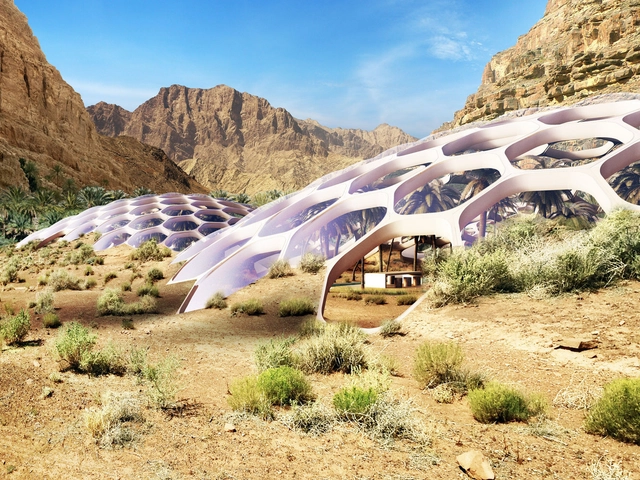
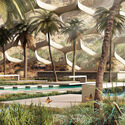
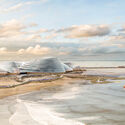
"Biodomes" in the mountains of the United Arab Emirates seek to promote ecotourism. Courtesy of Baharash Architecture
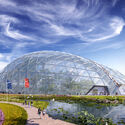
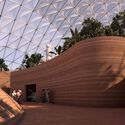
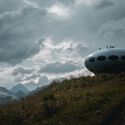
Buckminster Fuller's obsession with geodesic shapes placed them in architectural history. The spherical appearance and the complex structural framework gained different appropriations and scales over the years, one of the most iconic works being the Montreal Biosphere, the US pavilion for the 1967 World Expo, designed by him. These structures emerged from his interests in material efficiency, structural integrity and modularity. Back in the 60s, he understood these features as essential for a sustainable and easily replicable intervention
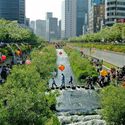
Infrastructure is widely known by the population in general, defined simply as a set of fundamental services for the socio-economic development of a region, such as sanitation, transportation, energy, and telecommunication. The commonly presented examples always refer to man-made physical structures. However, a new concept of infrastructure has emerged in recent decades, driven primarily by the urgent need for reconciliation between humans and nature for the survival of species.
Whenever light falls on a surface there will be a shadow, no matter how insignificant its focus is. The outline will hardly be visible, but other shapes will come to the fore in this play of light and dark. In the case of being projected by solar dance, a latent dynamic is added to the shadows that can be used to intensify everyday phenomena, breaking the monotony of space. Orthogonal openings in a long corridor or woven pieces in a courtyard are examples of constructive elements that create patches of light and shadow, bringing in addition to aesthetic delight and thermal comfort to its users. In this way, it becomes evident that these intangible elements are essential parts of an environment that, long before Louis Kahn declared the power of shadows, was already being manipulated.
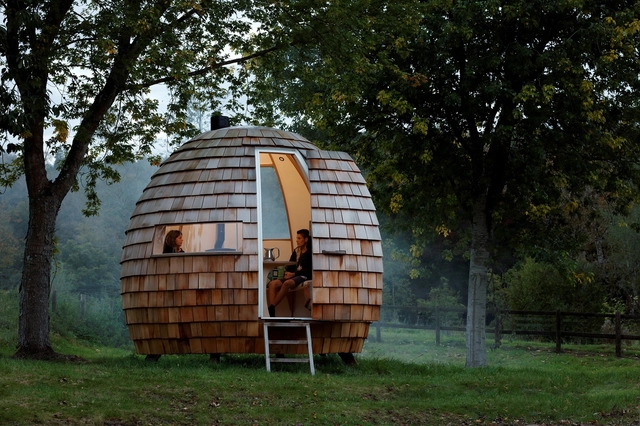
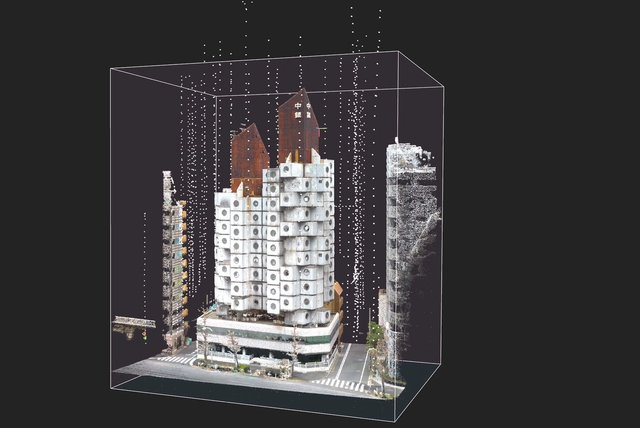
“With the forgiveness of the master [Le Corbusier], the house is a machine to carry with you and the city a machine to which you connect”. That phrase was said almost 60 years ago by David Greene, the founder of the English group Archigram. He was speaking on the presentation of the Living Pod, a capsule house that could be transformed into a trailer. The idea was that the structure could be connected and disconnected from the cities, forming the Plug-In City. Designed as an airtight capsule, the interior was small and comfortable, with multiple compartments. The Living Pod was one of many similarly utopian and daring projects by this group that seemed to have a fixation on nomadic and mutant structures like the Walking City and the Instant City.
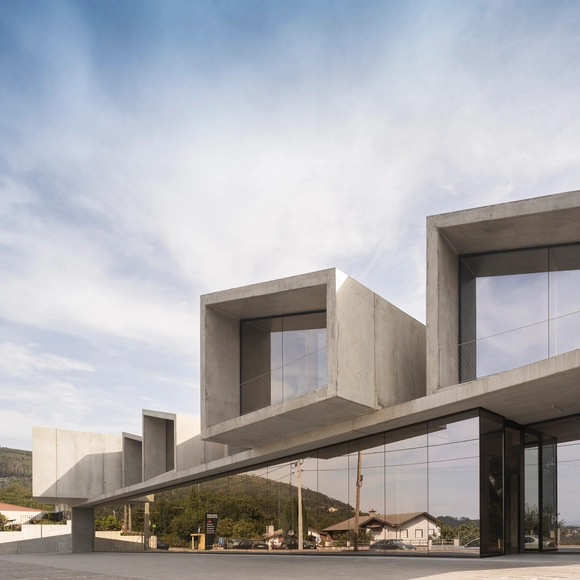
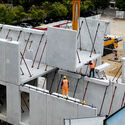
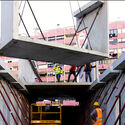
The precast and prefabricated elements made of concrete (such as slabs, pillars, beams and walls) are part of the constructive process known as modular construction. A construction methodology carried out in stages, based on the standardization of the parts that make up the building, with its modules produced on an assembly line, transported and assembled to shape the architecture.
World Wetlands Day is celebrated every February 2nd to raise awareness of wetlands. This day also marks the anniversary of the Wetlands Convention, adopted as an international treaty in 1971. Its enactment is because nearly 90% of the world's wetlands have been degraded since 1700, decimated three times faster than the forests. However, they are essential ecosystems that contribute to biodiversity, climate mitigation and adaptation, freshwater availability, world economies, and much more.
Imagine that you have scheduled a visit to an important building for the history of architecture, a reference work for all enthusiasts. Probably you would equip yourself with a camera or a good cell phone, take a pencil, notebook and even a measuring tape to record all its aspects.
However, this is not the only way to “visit” a building of historical importance nowadays or, at least, that is what some researchers are trying to show. The metaverse is being explored for its role in architecture and culture preservation, embracing different generations.
"The flat floor is an invention of architects. It suits machines, not humans." Inspired by the Viennese Secessionists and Austrian artists Egon Schiele and Gustav Klimt, as well as bold Gaudinian forms, the author of this phrase, Friedensreich Hundertwasser (1928-2000), was a prolific painter, sculptor and architect. His works are marked by the dualities between discipline and indiscipline, the predictable and the unexpected, rational and irrational. In his creative adventure, Hundertwasser was not just an enemy of the straight line. He despised architectural rationalism, claiming fluid forms and striking colors.
Add cabbage leaves, orange peels, onions, bananas and a few slices of pumpkin to get... cement. That's right, researchers from the University of Tokyo in Japan have developed a technique through which it is possible to produce cement from food waste. Besides being used in construction, the innovative initiative is edible as well. You can make boiled cement into a delicious meal by adjusting flavors, adding seasonings, and breaking it into pieces.
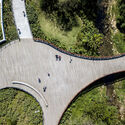
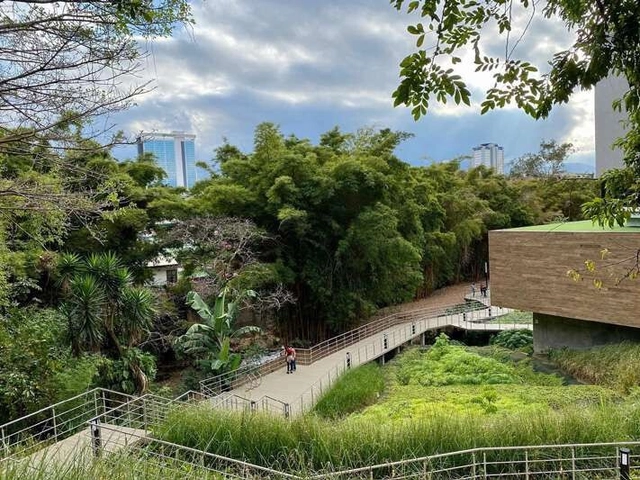
Rutas Naturbanas (San José, Costa Rica. 2015 – 2020). Fundación Rutas Naturbanas - Federico Cartín. Image Courtesy of Jeannette Sordi
Green corridors, or biodiversity corridors, are large portions of land that receive coordinated actions to protect biological diversity. According to Brazil’s National System of Nature Conservation Units, they strengthen and connect protected areas, encouraging low-impact use by implementing a more comprehensive, decentralized and participatory conservation alternative.
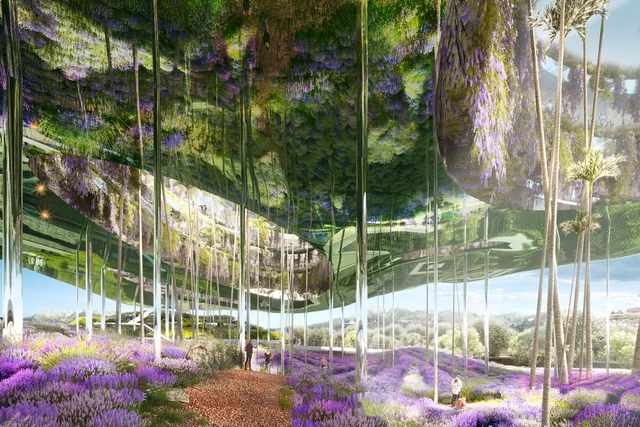
Jean Nouvel + OXO Architectes design Mountainous Mixed-Use Campus in Antibes. Image via Compagnie de Phalsbourg
Nowadays, much is said about the importance of collaborative design processes that involve joint creation, affirming a context in which there is less and less room for individual work and much more for the logic of collective and co-creation. Therefore, the idea that the work is created exclusively by the architect is already understood as a distortion of the complex reality of designing a project, going beyond the technical staff and also adding the community and its users.