Anna Fixsen

BROWSE ALL FROM THIS AUTHOR HERE

Equipo Mazzanti reclaims a rift in Bogotá's urban fabric with these gardens.

Subscriber Access | 

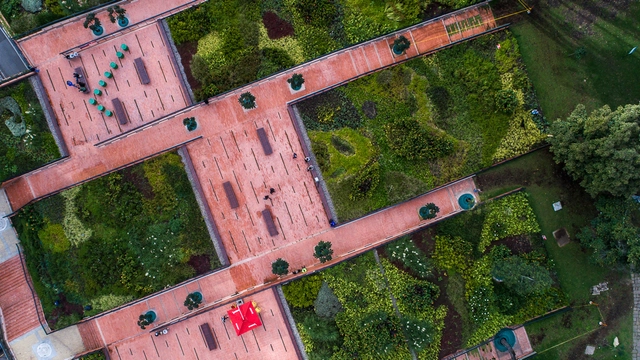
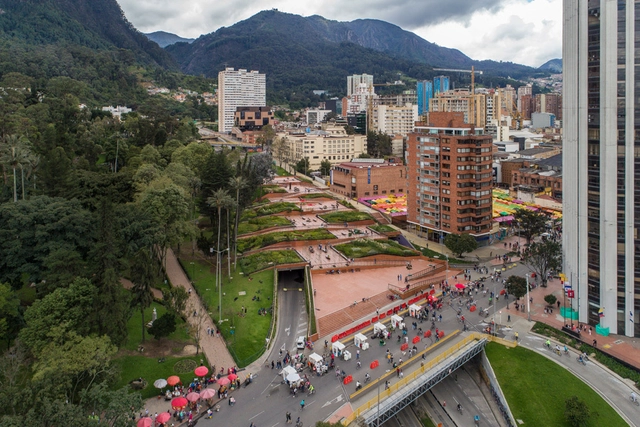
Originally published in Metropolis Magazine as El Equipo Mazzanti Heals a Gash in Bogotá’s Urban Fabric. With a Patchwork of Verdant Gardens, Anna Fixsen writes about Bicentennial Park in Bogotá. "Once a lightning rod for controversy, the innovative park now reconnects two areas at the heart of the city's historic center," she writes.

It is impossible to experience Bogotá without encountering the aura of Rogelio Salmona. Perhaps more than any other architect, Salmona shaped the urban identity of this Andean city through civic and poetic buildings. From a small balcony in his last office—located at the top of a tower he designed himself—a tableau of Salmona's legacy unfolds: directly ahead, the massive volumes of the Torres del Parque, a three-tower residential complex completed in 1970; and to the south, MAMBO, the Museum of Modern Art of Bogotá.

The Pride and Prejudice of Bogota's Bicentenario Park

Medellin’s renaissance is one for architecture’s storybooks. After decades of mundane violence, the city today is not only (comparatively) peaceful but a world-class architectural hub. Indeed, many cite the city’s urban development as a factor in its rebirth. But Medellin’s success sometimes overshadows that of neighbouring (and capital) city, Bogota.

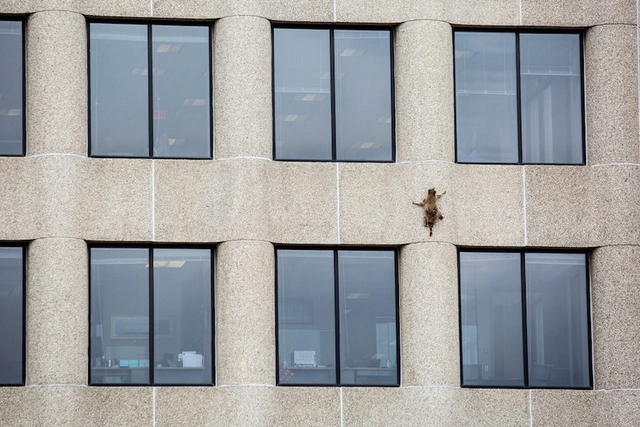
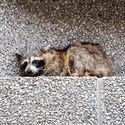
The Architecture Behind a Brave Racoon's Viral Skyscraper Climb

This article was originally published by Metropolis Magazine as "SOM Explains Exactly How a Raccoon Scaled Its St. Paul Skyscraper."

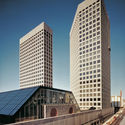
After completing Town Square, a mixed-use, double-tower complex in the heart of St. Paul, Minnesota in 1980, the late architect Donald Smith of SOM told Architectural Record magazine, “We must reorient our attention to the center [of] cities to save them.”

Smith’s words were prophetic, it turns out, but not in the way he may have expected.

Last month, Town Square—now known as UBS Plaza—captured the attention of the globe as a scraggly, wayward raccoon climbed up its southern tower’s 25 stories.

The Architecture Behind a Brave Racoon's Viral Skyscraper Climb - Image 1 of 4The Architecture Behind a Brave Racoon's Viral Skyscraper Climb - Image 2 of 4The Architecture Behind a Brave Racoon's Viral Skyscraper Climb - Image 3 of 4The Architecture Behind a Brave Racoon's Viral Skyscraper Climb - Image 4 of 4The Architecture Behind a Brave Racoon's Viral Skyscraper Climb - More Images+ 2

Mexico City's Controversial Airport Project Could Be a Preservation Site for a Collection of Modernist Murals

This article was originally published by Metropolis Magazine as "How a Small Mexico City Exhibition Fueled a Debate About Preservation and Power."

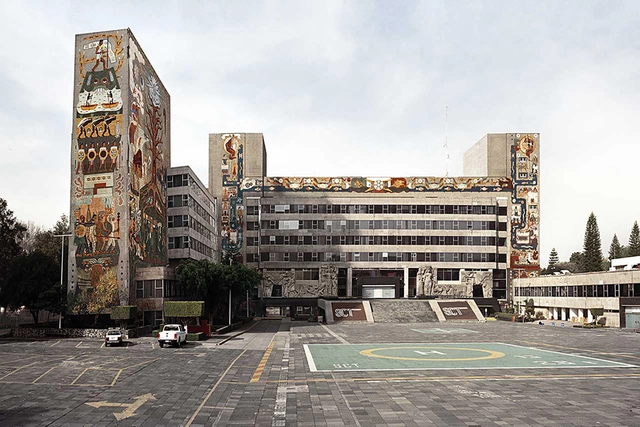
It’s a slate-gray day in Mexico City’s Colonia Narvarte neighborhood and mounting gusts signal imminent rain. Centro SCOP, a sprawling bureaucratic complex, rises sharply against this bleak backdrop. The building is a masterful, if not intimidating, example of Mexican Modernism, an H-shaped assemblage of muscular concrete volumes designed by architect Carlos Lazo, covered in an acre-and-a-half of vibrant mosaic murals.

At its peak, the building accommodated more than 3,000 workers for the Secretariat of Communications and Transportation (SCT). Today, save a security guard in its gatehouse, it is empty.

Mexico City's Controversial Airport Project Could Be a Preservation Site for a Collection of Modernist Murals - Image 3 of 4Mexico City's Controversial Airport Project Could Be a Preservation Site for a Collection of Modernist Murals - Image 4 of 4Mexico City's Controversial Airport Project Could Be a Preservation Site for a Collection of Modernist Murals - Image 7 of 4Mexico City's Controversial Airport Project Could Be a Preservation Site for a Collection of Modernist Murals - Image 11 of 4Mexico City's Controversial Airport Project Could Be a Preservation Site for a Collection of Modernist Murals - More Images+ 21