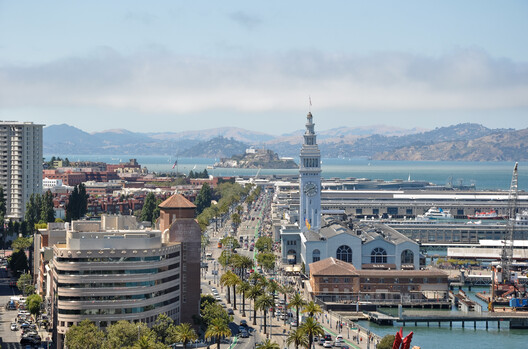
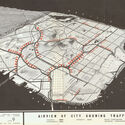
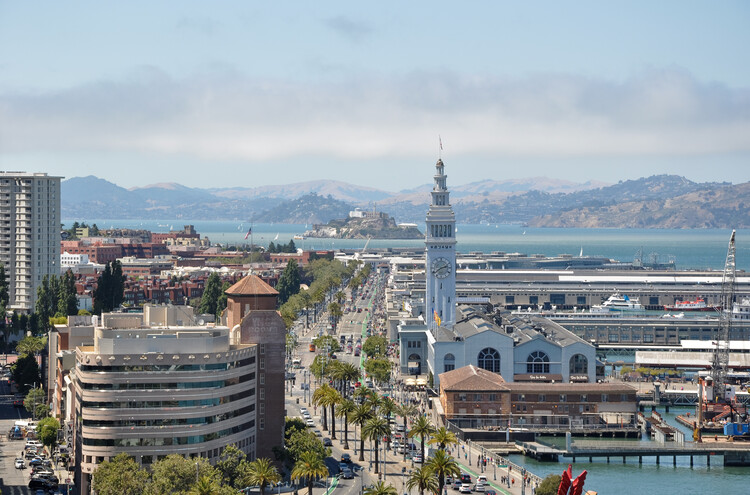
In recent decades, cities across the world have seen an increase in the demolition of elevated concrete freeways. Taipei, Seoul, Portland, and Boston, for example, have all seen the rise and fall of these infrastructures to give way to parks and new urban regeneration ideas. In other cases, like Montreal in Canada, some people opposed the freeways even before they were built, effectively rerouting viaducts, preserving heritage, and freeing waterfront views. For San Francisco, in the United States, the story of the Embarcadero Freeway is one of those narratives that serves as a case study of the city's mid-century infrastructural ambition, people's reaction to the project, and its eventual reversal in favor of urban connectivity.
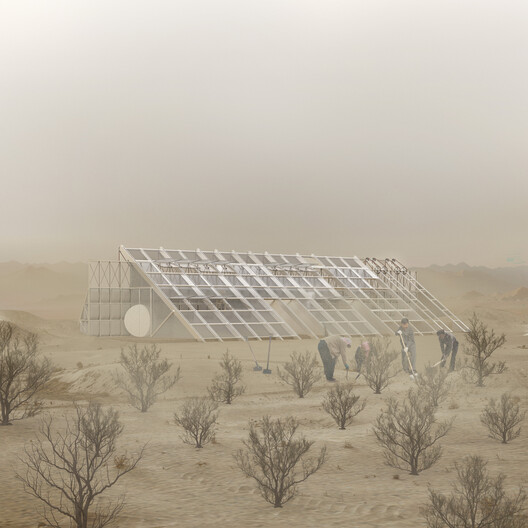
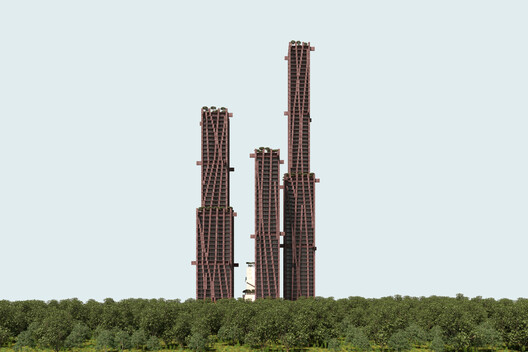
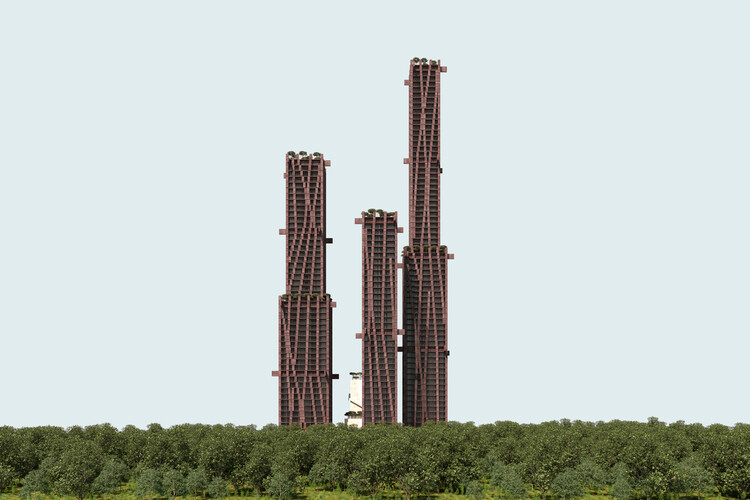
Small Scale Category Winner + Student Winner: Architecture as Resilient Machine. Image Courtesy of Buildner
Buildner has launched the Unbuilt Award 2026, the third edition of its annual competition, offering a €100,000 prize fund. At the same time, the results of the Unbuilt Award 2025 have been announced, marking the second competition in a series that celebrates architectural designs that have yet to be realized. The initiative provides a global platform for architects and designers to showcase their most compelling unbuilt projects—whether conceptual, published, unpublished, or fully developed.
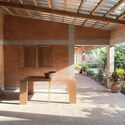
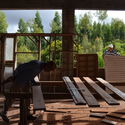
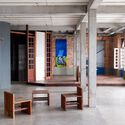
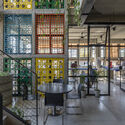
Studio NEiDA operates at the intersection of architectural practice, research, and curatorial work, with a consistent focus on how buildings emerge from the material and cultural conditions of a place. Rather than treating materiality as a finishing language, the studio frames it as the beginning of an architectural narrative—starting from what is locally available, they look at what craft knowledge exists on the ground, and how those resources and skills situate a project within an architectural lineage. This approach foregrounds limitations and possibilities as productive forces, and positions design as an iterative process of aligning spatial intent with the realities of construction culture and vernacular intelligence.
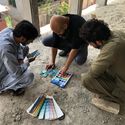
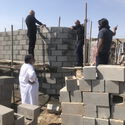
Across their work, NEiDA's interests extend beyond form toward the socio-political and climatic contexts that shape how architecture is made and inhabited. They emphasize learning from non-authored, vernacular, and informal building practices as a way of establishing a shared grammar for intervention, and they describe an indoor–outdoor continuity not as a stylistic preference but as a response to local life and ventilation logics—where outdoor rooms can be as spatially defined and programmatically central as interior ones. Collaboration, in this framework, is not auxiliary: the studio highlights on-site exchange with craftspeople and builders as a core methodology, where projects evolve through collective intelligence and adaptive communication.
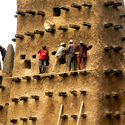
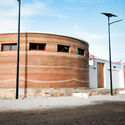
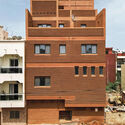
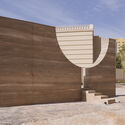
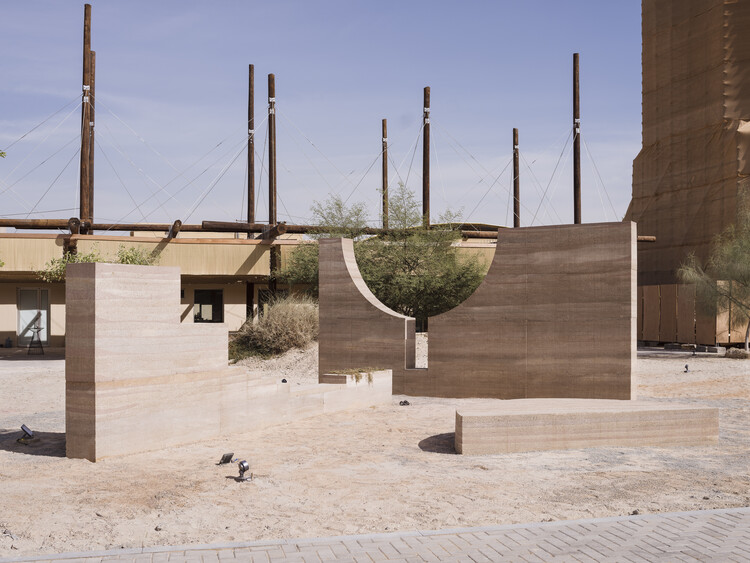
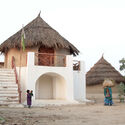
Twenty meters tall and four thousand years old, the Western Deffufa towers over the adjacent date orchards and ancient city remains in the desert. It is a former religious and administrative building near the modern-day Sudanese town of Kerma. Its significance is not only in its age and size, but also in that it is one of the oldest mud brick buildings in the world. And as the nearby mud brick houses also attest, earth is a material of continuous use from ancient times to the present. Yet, conversations around contemporary building systems have largely ignored this essential material. Some architects on the continent of Africa, however, are changing that.
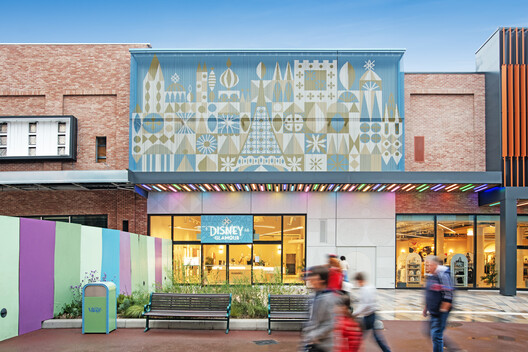
Aluminum Chain Facade Disney Glamour Store / SRA Architectes – Etienne Jacquin. Image Courtesy of Kriskadecor
In highly-curated environments such as Disneyland Paris, architecture operates under a different set of expectations. Buildings are not only required to perform, they must also communicate, often instantly. Within this context, the facade becomes a visual marker that can serve as a threshold, mediating light, air, and perception. One strategy that has gained traction in this setting is the use of semi-opaque envelope systems. Neither fully transparent nor entirely enclosed, these facade systems introduce depth and variability.
The construction industry today faces an unavoidable paradox: the urgent need for sustainable solutions for the future of cities collides with the exhaustion of the term "sustainability" itself, often reduced to a hollow commercial label. In this scenario, Arquivo – one of the winners of ArchDaily's 2025 Next Practices Award – emerges as a facilitator and mediator between different stakeholders in the construction field through disassembly – or rather, de-construction – and the reuse of building elements. Etymologically, if "construction" derives from the Latin construere (to heap up, assemble), the prefix "de-" imposes a conceptual inversion: it is not about destroying, but about disassembling with intelligence to understand the logic of the parts.
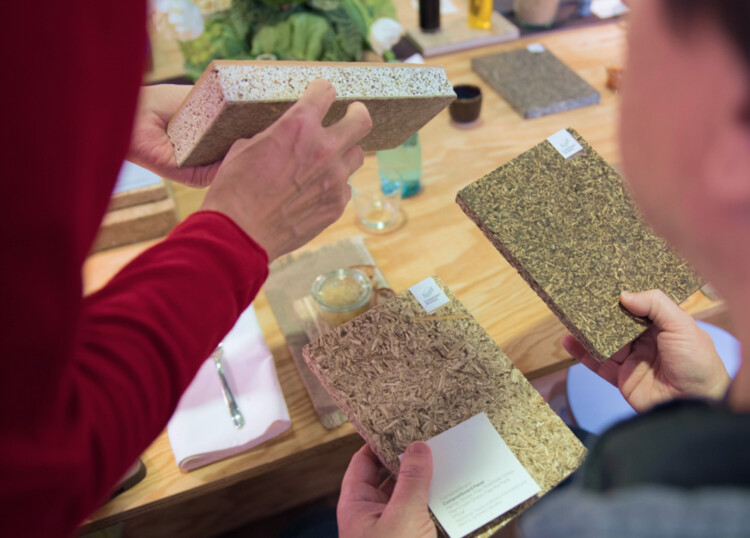
At the Table with Nature Exhibit, ambiente 2026 Photo Credit: Jürgen Baumhauer
The well-known phrase "man is what he eats" (Der Mensch ist, was er isst), by Ludwig Feuerbach, asserts that the physical, mental, and even moral constitution of human beings is directly linked to what they consume. Today, this idea is widely internalized, with growing awareness around food, nutrition, and the impact of what we ingest on our bodies. Yet, this same level of awareness doesn't extend to the environments we inhabit, where materials continue to be treated as technical decisions rather than active agents in the relationship between body and space. Considering that a large portion of the global population spends around 90% of their time indoors, it is rarely discussed what actually composes these spaces at their most fundamental level: materials. Walls, floors, and finishes are often approached as technical or aesthetic choices, when in reality they can function as continuous sources of exposure to potentially harmful substances.
Anan Alsama designed by Fatimah Alabid, Masud Alzunaifer, and Maha Alesawi. Image Courtesy of Mujassam Watan
In the city, aesthetics are not measured by the height of towers or the width of roads, but by their ability to evoke meaning within space. From this perspective, the Mujassam Watan initiative emerges as more than a mere artistic endeavor. It involves a deliberate attempt to redefine the relationship between people and place, between material memory and imagined identity. In the city of Khobar, in the Kingdom of Saudi Arabia—where urban modernity intersects with rapid social transformation—this initiative raises the question: How can a sculpture become an open text, one that is both visually read and experientially felt?
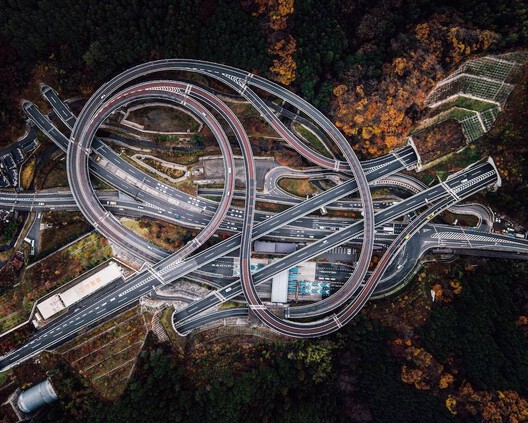
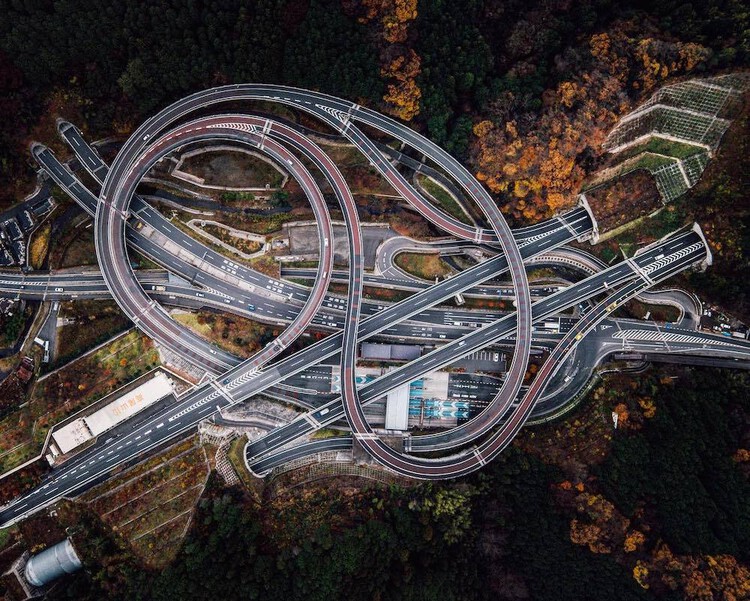
Sagamihara, Japan. Drone photo by Rob Antill (@digitalanthill) and Ben Steensls (@randomoperator)
At a time when satellites orbit the planet, submarine cables sustain the global flow of data, and algorithms organize everyday life, a question emerges within architecture: at what scale are we actually designing today?
While design was once primarily shaped by local or regional conditions, it is now entangled in chains that begin with resource extraction, pass through industrial systems, and extend across planetary infrastructures that are often invisible, yet operate continuously and interdependently.
Offsite construction dramatically reduces construction waste and ensures precision assembly, but long-term sustainability relies on the durability of the factory-applied building envelope.. Image Courtesy of Terraco
The global offsite construction market—encompassing modular, precast concrete, and hybrid prefabricated systems—was valued at USD 172 billion in 2024 and is projected to reach USD 225.7 billion by 2030 (CAGR 4.9–8%). In the UAE, government targets call for 25–30% offsite content in public projects by 2030; the UK currently leads globally, with 15–20% of housing using offsite solutions. Offsite manufacturing is increasingly promoted as the sustainable future of construction, with benefits including reduced waste, accelerated delivery, and improved quality control. Sustainability is not defined by how quickly a building is assembled. It is defined by how long it performs.
In recent years, Albania has undergone a rapid and visible transformation, emerging as one of the most active urban environments in Southeast Europe. This growth is not only reflected in the expansion of its built fabric but also in the scale and ambition of new architectural interventions that seek to redefine the country's image. Across its territory, a series of large developments, cultural institutions, and infrastructural projects are being introduced as part of a broader effort to reposition Albania and its capital, Tirana, within regional and international networks.
A significant number of these interventions are being designed by internationally recognized architectural offices, whose presence has become a defining characteristic of the city's current phase of development. Rather than relying primarily on incremental or locally embedded processes, Tirana's transformation is increasingly shaped through externally authored visions that introduce new formal languages, typologies, and urban strategies. These projects often operate as singular objects or large-scale fragments, contributing to a landscape where the city is assembled through distinct and highly visible gestures.
Videos
Dornbracht Madison fittings for Brenners Park-Hotel & Spa in Baden-Baden. Image Courtesy of Dornbracht
During renovation projects, replacement is often preferred over refurbishment. Used fixtures are removed, new products specified, timelines secured. Particularly in hospitality projects, where closures are costly and operations are tightly scheduled, installing new components appears to be the most reliable solution. It is faster, easier to coordinate, and aligns with established workflows. Refurbishment operates differently. It requires careful dismantling instead of disposal, evaluation instead of substitution, and trust in the quality of what is already there. It introduces complexity into a process designed for efficiency.
The recent renovation of Brenners Park-Hotel & Spa in Baden-Baden demonstrates that under the right circumstances, this additional effort can become a deliberate architectural strategy for similar projects, especially when the original materials were never intended to be temporary.
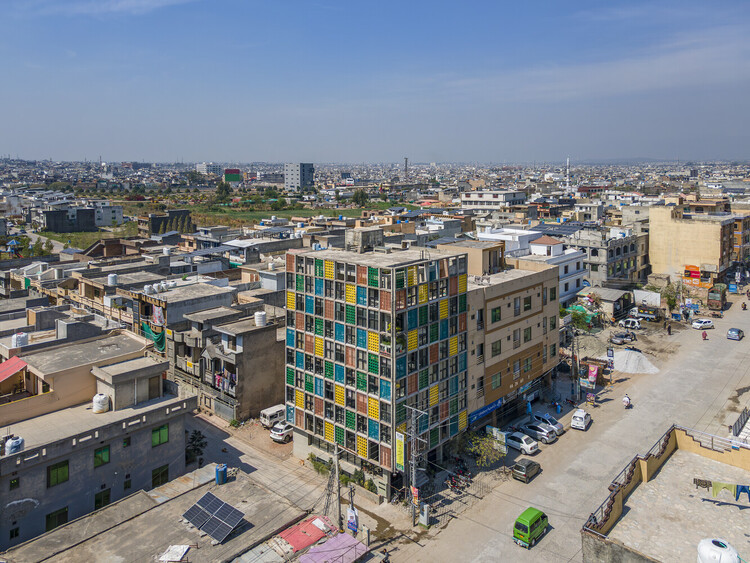
For DB Studios, architecture is not only about building, but about belonging. It is about creating a situated practice, one that responds to its context, its people, and its local identity, expressed through materials, color, and spatial decisions. In this sense, design becomes a way of articulating a language rooted in its context and shaped by the people it serves.
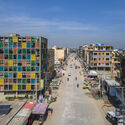
This position becomes especially evident in Vision Pakistan, a project by DB Studios recently recognized with the 2025 Aga Khan Award for Architecture. Beyond recognizing the project's architectural qualities, the award highlights a broader commitment: creating a supportive environment for underprivileged youth in which education, vocational training, and spatial design work together to foster independence and social mobility. Through its form, façade, and interior organization, the building responds closely to its context, reinforcing a sense of ownership among its users while fostering pride in the surrounding community and among emerging local practitioners.
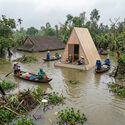
The flood does not arrive as a surprise. It returns, following the same swollen rivers and monsoon skies, loosening the ground and entering homes that were never meant to resist it. Walls are untied before they are lost, materials are gathered before they drift, and structures are rebuilt with a familiarity that suggests this is not destruction, but sequence. In landscapes where water returns each year, survival is defined by the ability to begin again.
Across the floodplains of Bangladesh, the Brahmaputra basin, and the Mekong Delta, inundation is a seasonal certainty. Reports by institutions such as the World Bank and the Intergovernmental Panel on Climate Change often frame floods through exposure and damage, measuring success through resistance and durability. Yet in territories that are submerged annually, such metrics only partially describe the problem. The ground itself oscillates between solid and liquid states. To build as if it were fixed is to design against the very condition that defines it.
The Cosmogony of (Racial) Capitalism. Image Courtesy of Dele Adeyemo
Having thrown a stone today, Eshu kills a bird of yesterday. The Yoruba proverb tells both a story of reparation and of ancestrality by joyfully bending spacetime conventions and accessing subjects from the past with present actions. The saying offers a poetic entry point to broader West African traditions and to the practice of Scottish-Nigerian artist and architect Dele Adeyemo. Named one of the winners of the ArchDaily 2025 Next Practices Awards, Adeyemo's work brings together ecology, spirituality, dance, and territory, examining how embodied cultural practices can generate alternative spatial possibilities within and against the architecture of racial capitalism.
Born in Nigeria and raised in the United Kingdom, Adeyemo has been visiting Lagos for many years. Through this engagement, he has developed an extensive body of research on collective movement practices that predate capitalism and offer distinct, often imaginative spatial intelligences operating alongside dominant systems. ArchDaily spoke with Dele about his artistic and pedagogical practices, and how he identifies design sophistication where architects often perceive deficiency.
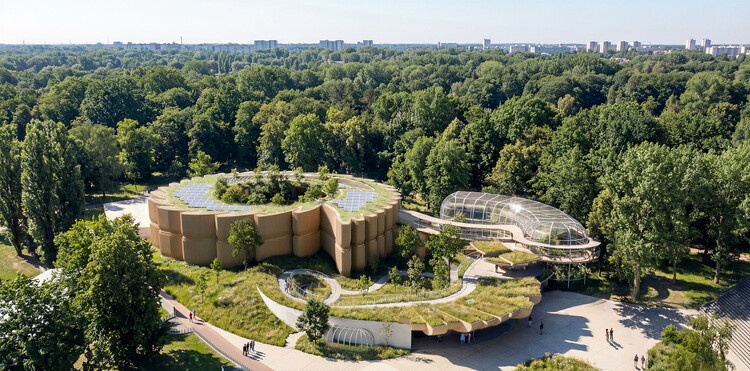
Cultural centers continue to serve as a productive ground for unbuilt architectural exploration, reflecting how architects are rethinking the role of public institutions in relation to landscape, experience, and program hybridity. In this Unbuilt edition, submitted by the ArchDaily community, the selected projects bring together a range of proposals that expand the definition of the cultural center beyond a singular building. These works position architecture as a spatial framework that mediates between research, exhibition, retreat, and public life, often embedded within or distributed across natural and urban contexts.
Across varied geographies, from northern Norway and Oslo to Łódź, Vienna, Marrakech, and New Tashkent, the projects demonstrate diverse responses to cultural infrastructure. They include landscape-integrated complexes shaped by topography and climate, bridges that combine gallery and public circulation, zoological pavilions structured as immersive sequences, adaptive reuse of military buildings into performance spaces, courtyard-based environments rooted in local traditions, and climate-responsive institutions informed by environmental analysis. Together, these proposals explore how cultural programs can be organized through movement, spatial layering, and relationships between interior and exterior conditions.
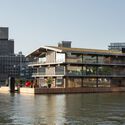
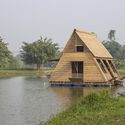
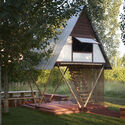
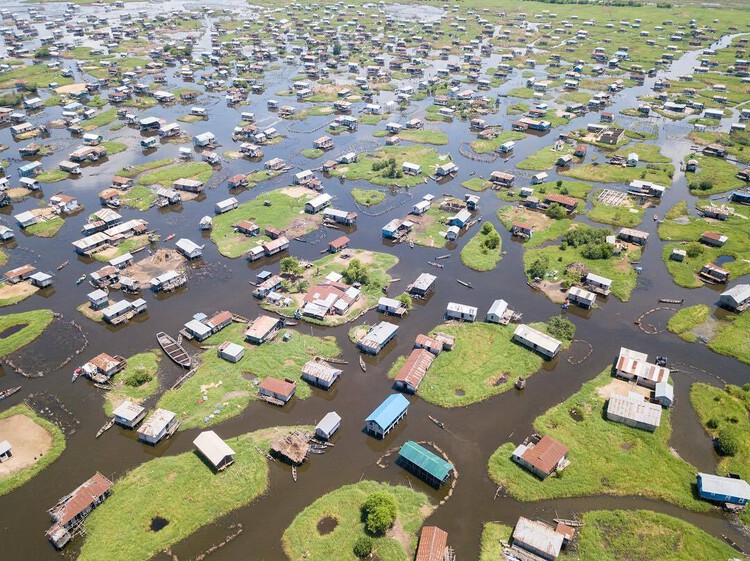
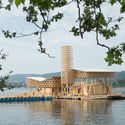
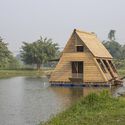
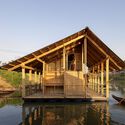
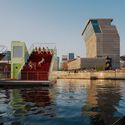
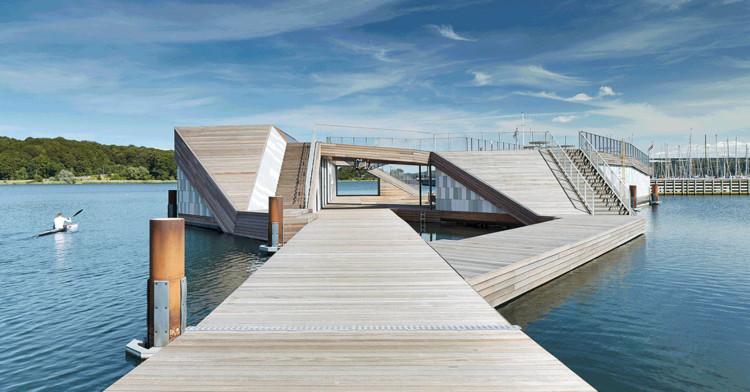
Building above water means doing away with a part of construction that is quite literally the basis of most of our built environment: the foundation. In a world dominated by water, currents, and shifting levels are variables that simply cannot be ignored, which is why the most emblematic feature these projects share is their adaptability.
Instead of robust, deep bases – such as piles or caissons – designed to anchor architecture into the earth, floating structures frequently employ solutions like concrete pontoons or plastic drums to prevent the building from sinking. These are typically paired with anchoring systems to "fix" the structures, even if only temporarily, to a specific location.
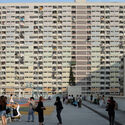
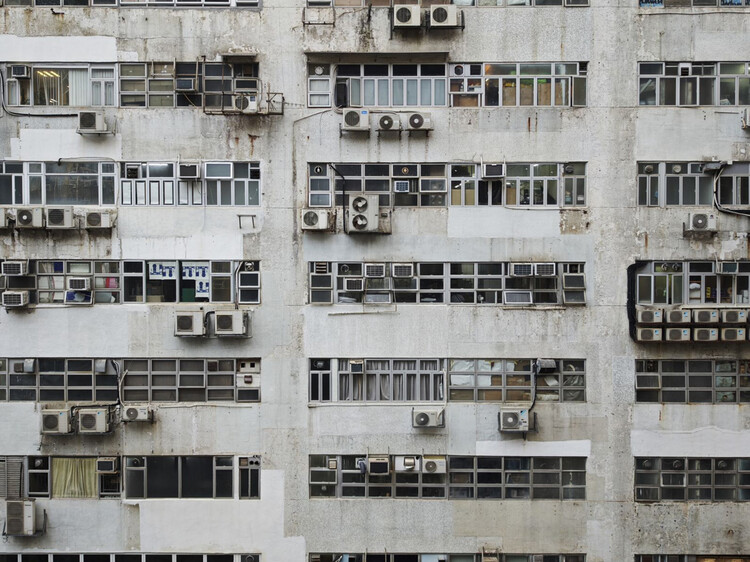
Establishing thermal comfort once demanded a far more deliberate and calibrated architectural intelligence—an interplay of orientation, massing, material behavior, ventilation potential, shading, and the ways daylight and surfaces absorb and release heat. This was not simply a matter of taste, but of necessity. When many of Hong Kong's post-war modernist buildings were constructed in the late 1960s and 1970s, forming a substantial portion of the city's public housing and broader residential stock, air-conditioning was not yet a ubiquitous, default service. Cooling, where present at all, was limited and unevenly distributed; comfort had to be negotiated through passive means, through section, façade depth, operable openings, and climatic detailing. It was only later, particularly through the 1970s and 1980s, as air-conditioning became increasingly standardized across the region, that mechanical cooling began to displace this earlier matrix of architectural decision-making.
Did air conditioning negatively affect architectural space, particularly in Hong Kong and the nearby region? The more precise claim is that widespread reliance on AC has profoundly rearranged the incentive structure of building design.
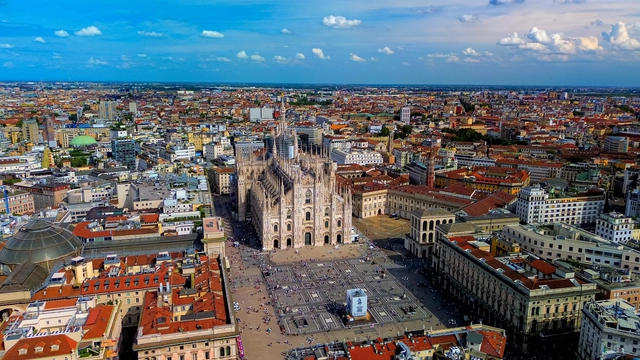
Milan, a global hub of fashion and finance, increasingly asserts itself as a leading center for architecture and design. Its status as Italy's second-largest city underpins its vibrant cultural scene, attracting both established and emerging creative talent. Additionally, Milan is home to esteemed educational institutions recognized for their focus on heritage preservation and conservation. Its cultural and design significance is increasingly pronounced, as a growing number of creators are relocating to establish their presence in this vibrant creative hub.
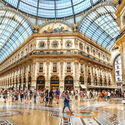
Among Milan's most iconic landmarks are the flamboyant Gothic Duomo di Milano, the historically and artistically significant Santa Maria delle Grazie, and the ornate Galleria Vittorio Emanuele II, along with numerous Renaissance and Baroque sites. The city also boasts some of the most innovative modern and contemporary architecture, showcasing a unique dialogue between tradition and modernity. This synergy is exemplified by the contributions of architects like Aldo Rossi,Gio Ponti,Stefano Boeri, Mario Cucinella, Zaha Hadid, Grafton Architects, Herzog & de Meuron, and Foster and Partners.
The following guide highlights key historical landmarks alongside exemplary contemporary architecture curated by ArchDaily. This guide serves as an indispensable resource for those planning to explore Milan during the 2026 Design Week, presenting a blend of essential sites designed by renowned local and international architects.
In November 2025, ArchDaily launched its first edition of the Student Project Awards. The decision to introduce this new award came from a place of hope; hope in the next generations of architects, their talent and vision, and the importance of giving them visibility and recognition. After all, the future of architecture is being shaped right now, in classrooms, studios, and workshops around the world, and it is vital to support those shaping it. The response was remarkable, with projects from students in every continent, showcasing a wealth and breadth of viewpoints, solutions and visions.
Five months after the launch of the open call, and following the announcements of a longlist of 104 projects and a shortlist of 20, our external jury of architects and practitioners carefully reviewed the proposals to select the three winners and four honorable mentions of the ArchDaily Student Project Awards. Approaching each project with care, the jury looked beyond final outputs, focusing on the ideas, questions, and positions driving the work. The result is a selection of winning projects that reflect both the spirit of the awards and the shifting priorities shaping architecture today.
In our current cities, urban density and rising land values often force a choice between large-scale civic buildings and open public space. Traditionally, plazas have been treated as areas surrounding a building's footprint, but this strategy was modified when pilotis were introduced by the early 20th-century modernist movement. While the original intent was to create a sense of lightness that would allow circulation and light to flow beneath a structure, contemporary requirements for seismic loads, fire egress, and heavy occupancies render thin columns insufficient for the needs of current large-scale civic projects.
However, the pursuit of architectural lightness is not a strictly contemporary phenomenon. Following the modernist introduction of pilotis, several mid-century projects began experimenting with the illusion of suspension to achieve civic transparency. In 1953, the National Congress of Honduras in Tegucigalpa, designed by Mario Valenzuela, applied these principles to a legislative setting. The building consists of a solid assembly chamber elevated on a series of slender columns. Because the site sits on a terrace at the end of a sloping street, the resulting void does more than just provide circulation; it frames views of the city, creating the impression that the heavy legislative mass is lightly suspended above the urban fabric.
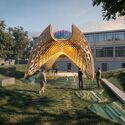
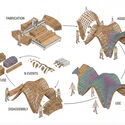
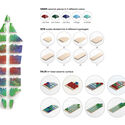
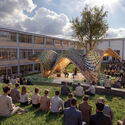
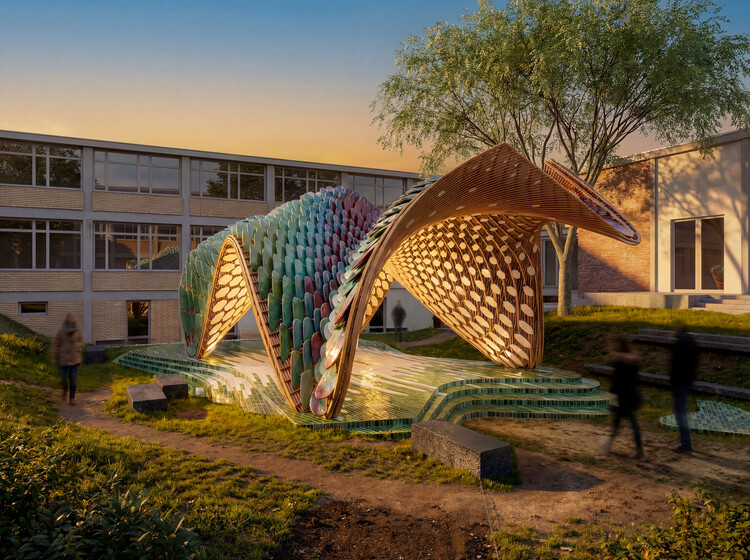
At a moment when architecture is being pushed to respond more directly to environmental and social pressures, Spain's pavilion for World Design CapitalFrankfurt Rhein-Main 2026 positions itself as more than a temporary installation. While materiality is at the center of its design, the project explores how a reversible cultural infrastructure can activate public space without permanent construction. Discussions about material use, circularity and reutilization in architecture are closely tied to cultural contexts, environmental conditions, and historical influences that reveal how time shapes the built environment. Beyond its construction, Spain's pavilion expresses identity by reinterpreting the architectural method of Antoni Gaudí, the creator of the Sagrada Familia and Park Güell. It also demonstrates how Spain's creative and industrial sectors address current challenges with innovative construction solutions.