Designers at this year's Milan Design Week drew inspiration from everything and anything around them. Many were inspired by the serenity of nature, some by picturesque vintage pieces, and others by tokens from their youth. Although inspiration often comes unannounced in the most unexpected places, the inspiration behind Sancal’s pavilion at this year’s Salone del Mobile, was encouraged by one simple, very common mistake.
During the 2017 Milan Design Week, the Spanish brand’s eccentric duo Esther and Elena made a wrong turn on Milan's metro station, ending up at the Turati station. That is when the light-bulb illuminated, and the duo found the backdrop for their upcoming collection, emerging from none other than the depths of Milan's underground systems.
Sergey Makhno Architects. Image Courtesy of ArchDaily
As Milan Design Week continues to set avant-garde design trends for the upcoming years, the 2019 Salone del Mobile’s lighting biennale, Euroluce, saw a nod to classic designs mixed with contemporary craftsmanship.
Two dominant trends at this year’s Euroluce are ‘rediscovering the past’ and a ‘reference to nature’. Vintage lighting pieces were rediscovered, not only to serve as valuable tokens of the past, but as foundation for new research. The reference to nature is evidently the most dominant design trend at this year’s lighting biennale, as designers found inspiration from natural, organic forms, and produced their pieces with eco-friendly material.
However, some of the most unique pieces at this year’s Euroluce were developed in collaboration with heavyweights in the world of design. Profound architects found their way into the 2019 Euroluce, bringing together their design skills with the engineering solutions of design companies.
While the Eiffel Tower was negatively received at first for its utilitarian appearance, it soon became a major attraction for Paris, France in the late 19th century. It represented structural ingenuity and innovation and soon became a major feat, rising to 300 meters of7,500 tons of steel and iron. Just three years after its unveiling, London sponsored a competition for its own version of the tower in 1890. The Tower Company, Limited collected 68 designs, all variations of the design of the Eiffel Tower. Proposals were submitted from the United States, Canada, Germany, Sweden, Italy, Austria, Turkey and Australia. Many of the designs are bizarre interpretations of utilitarian structures, following the aesthetics of the Eiffel Tower, only bigger and taller.
Join us after the break for more on the story of the Tower of London.
What can you learn from enterprising firms who push tech to new limits? It is time to be inspired to experiment with innovative technology that supports BIM. The software that opens projects up to unlimited possibilities is the one that helps you benefit from ground-breaking techniques. For firms, using ARCHICAD, 3D modeling photorealism and VR experiences are more than gimmicks. These technologies are part of a powerful toolset that opens the door to unlimited possibilities. Hear from the firms who have unlocked that power in By Design: The Next Frontier.
https://www.archdaily.com/914502/three-architecture-firms-explore-the-benefits-of-bim-in-by-design-the-next-frontierAD Editorial Team
UPDATE: In honor of the 100th anniversary of the Bauhaus, we’re re-publishing this popular infographic, which was originally published April 16th, 2012.
From the “starchitect” to “architecture for the 99%,” we are witnessing a shift of focus in the field of architecture. However, it’s in the education system where these ideas really take root and grow. This sea change inspired us to explore past movements, influenced by economic shifts, war and the introduction of new technologies, and take a closer look at the bauhaus movement.
Often associated with being anti-industrial, the Arts and Crafts Movement had dominated the field before the start of the Bauhaus in 1919. The Bauhaus’ focus was to merge design with industry, providing well-designed products for the many.
The Bauhaus not only impacted design and architecture on an international level, but also revolutionized the way design schools conceptualize education as a means of imparting an integrated design approach where form follows function.
INSPIRELI AWARDS is proud to announce the first three projects entering into the contest finale. This global student contest enables new talents to tell their stories and raise awareness about their own world view before they get their chance to build it.
The following three projects were selected through the international semifinal jury based on originality and subsequently approved by the chairman of INSPIRELI AWARDS jury. All three projects will compete in the final for having his or her name engraved on the original “Wings to the Future” created by world-renowned designer Bořek Šípek.
https://www.archdaily.com/914845/inspireli-awards-announces-student-contest-finalistsAD Editorial Team
A USC Architecture student pins up a project in Watt Hall.
From short supply and high demand to a lack of affordable options, housing in Los Angeles is a complex and prominent issue that deserves the attention of local universities. As the crisis continues to evolve, architecture and architectural education are vital parts of the discussion surrounding housing equity.
https://www.archdaily.com/914765/architecture-students-and-faculty-lead-the-charge-in-equitable-housing-solutionsSponsored Post
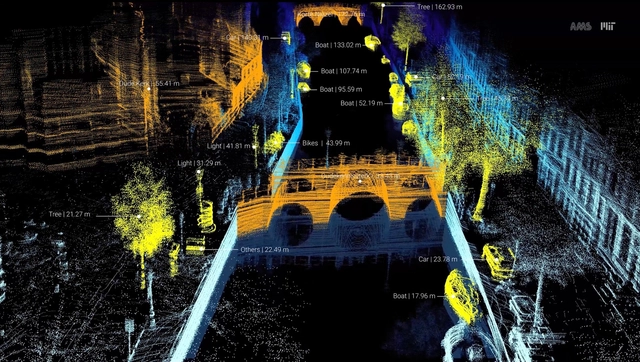
Opening on December 15th, 2019 in Shenzhen, China, "Urban Interactions" is the 8th edition of the Bi-City Biennale of Urbanism\Architecture (UABB). The exhibition consists of two sections, namely “Eyes of the City” and “Ascending City”, which will explore the evolving relationship between urban space and technological innovation from different perspectives. The “Eyes of the City" section features MIT professor and architect Carlo Ratti as Chief Curator and Politecnico di Torino-South China University of Technology as Academic Curator. The "Ascending City" section features Chinese academician Meng Jianmin and Italian art critic Fabio Cavallucci as Chief Curators.
ArchDaily is working with the "Eyes of the City" curatorial team, to publish a series of articles by international architects, designers, writers and thinkers who will discuss the ways in which new technologies - and Artificial Intelligence in particular - might impact architecture and urban life. The open call for proposals for the “Eyes of the City” will run from April 1st to May 31st: www.eyesofthecity.net
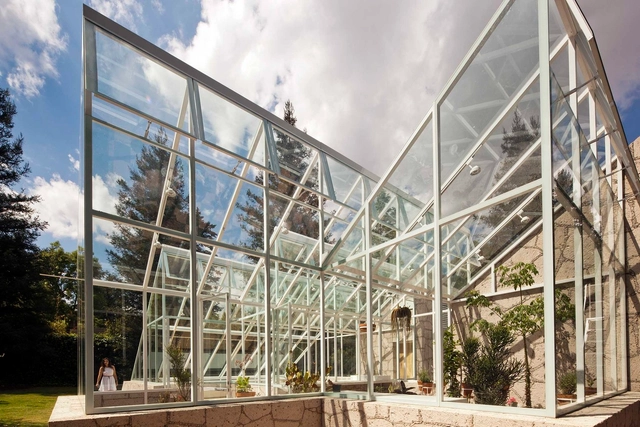
Although the sun is almost 150 million kilometers away, this star has had the most impact on our planet. But while some are busy chasing the sun for sun-kissed skin, architects are all about creating sun-kissed spaces.
By definition, “passive solar energy is the collection and distribution of energy obtained by the sun using natural means”. The simple concept and process of implementing passive solar energy systems have provided buildings with heat, lighting, mechanical power, and electricity in the most environmentally-conscious way possible.
In this article, we will provide you with a complete guide of implementing passive solar systems in your designs.
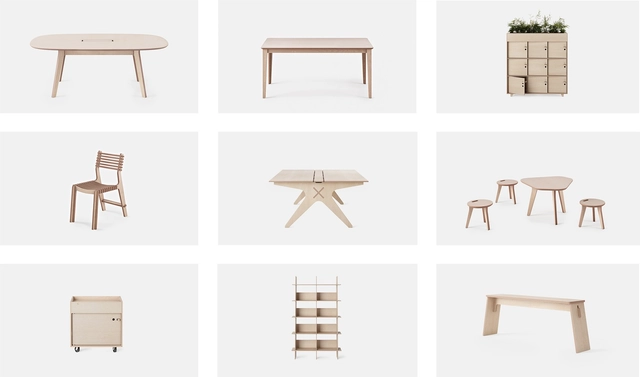
Let's suppose you need a bookcase. Years ago, you would probably search the furniture stores or antique shops in your town. Today you are more likely to open dozens of tabs on your web browser to compare prices and models. But there is another option that is becoming increasingly popular: open source furniture.
It's simple; you download the design of a piece of furniture and send it to a CNC machine (a mill that cuts wood from a digital file). It’s more or less like sending a PDF to print. With the pieces cut, you just assemble it. We used a bookcase for example, but it could be a chair, a table, a cupboard, a bench. Opendesk, one of the current open source furniture platforms, brings together about 30 pieces of furniture available for download. There the user can download a project and cut the furniture in a FabLab or personal workshop, or use the site to connect with a joiner who makes the cuts.
What would historic cities look like if scale didn’t exist and functions were manipulated?
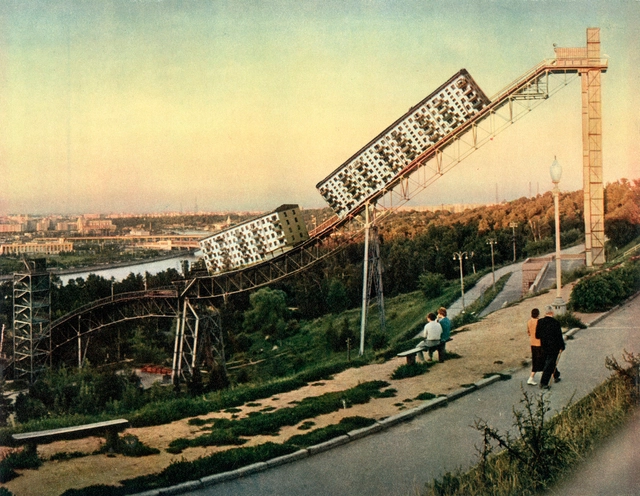
Dutch artist Tamara Stoffers found inspiration from an old Soviet Union book published in the early 1960s, which featured images of mass-housing apartment blocks without any ornamentation or color. The book highlighted the symmetry and functionality of Soviet architecture, representing what a communist future strived to look like. It became clear to her that a lot of stories lie in the history of USSR that deserve to be explored.
Stoffers' admiration extended beyond Russian architecture, looking at everyday objects, banners, postcards, and books. In a matter of 4-5 years, she put together a series of surreal collages taken from more than 30 picture books. The images, which seemed intriguing on their own, were mixed and matched with complementary photographs in an exaggerated, amusing way, presenting the Soviet Union as never seen before.
For ten consecutive years, Vienna ranks first in the Mercer survey on cities with the best quality of life in the world. In this edition to the global ranking, eight Western European cities join the top ten, even when "trade tensions and populist undercurrents continue to dominate the global economic climate", as Mercer points out in its report.
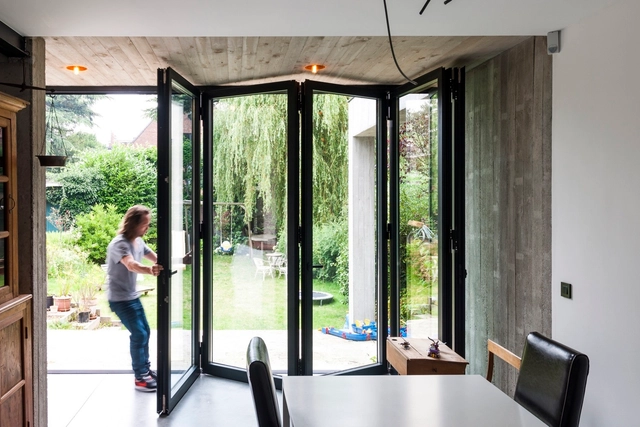
Although all windows have common functions such as allowing the passage of light, providing ventilation, and focusing the different views, these objectives can be enhanced through a series of useful options. Depending on the orientation of the building, climatic conditions, direction of the wind, and architectural point of view, each specific window model can make a difference within a project, improving usability and the spatial and environmental quality of each room.
Below, we present types of windows that can be found in today's homes, specifically in 11 projects previously published on our site.
YAC - Young Architects Competitions launches “Plastic Monument”, a competition of ideas aiming to create an itinerant architectural installation. It will travel all around the world to raise awareness about the impact of plastic waste on our planet. A cash prize of € 15,000 + realization of the 1st Prize will be awarded to winners selected by a well-renowned jury made of, among the others, Kengo Kuma, Carlo Ratti, Italo Rota, Mandy Barker, Maria Cristina Finucci.
https://www.archdaily.com/914526/plastic-monument-an-architectural-call-for-our-planetSponsored Post
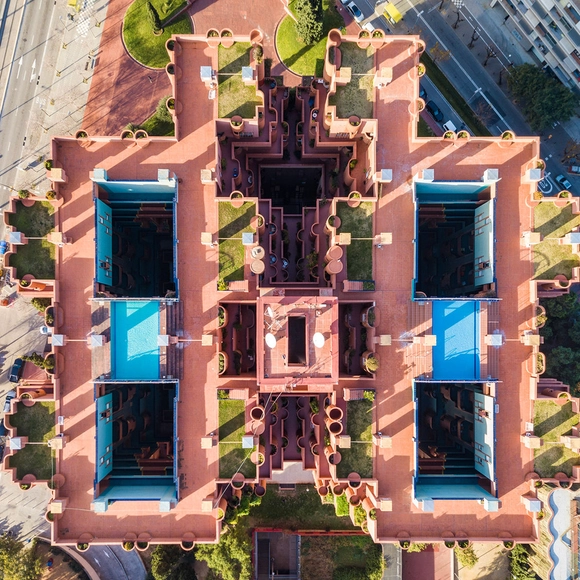
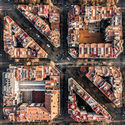
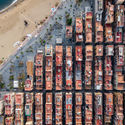
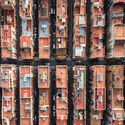
Exploring the streets of foreign cities is profoundly engaging. Whether it's meeting new cultures, observing new architectures, or trying new food, travelers usually go for the typical sightseeing activities. However, some have quite a unique take on tourism and choose to think outside the box - or in this case, above it.
Hungarian photographer Márton Mogyorósy chose to explore the Catalonian capital from above, capturing aerial shots of the city. Drone photography has helped us see cities from a unique perspective, and with Barcelona’s dynamic urban fabric, the coastal city’s buildings and beaches have turned into vibrant geometric artwork.
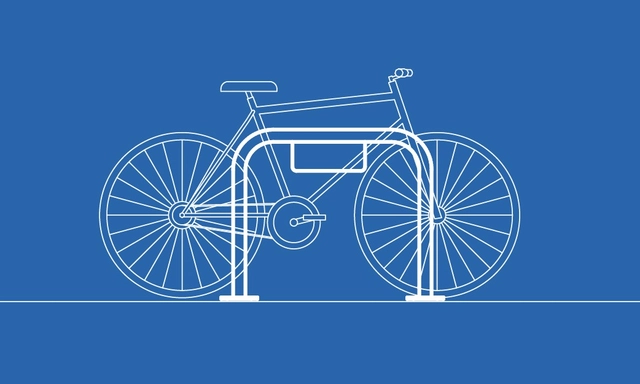
Studies show that public investment in integrated and safe cycling networks promotes urban transformation, providing more humanity, health and quality of life in urban spaces. While cities in the Netherlands and the Nordic countries have already incorporated bicycles into daily life, with a significant portion of the population using the means of transport for daily commutes, much of the world is still seeking a model to reduce congestion and increase its use. According to the Institute for Transportation and Development Policy (ITDP), investing in non-motorized transport allows congestion reduction, improves air quality, physical and mental health of residents, and local trade and brand visibility, once that cyclists tend to pay more attention to local commerce and take up less space than cars.
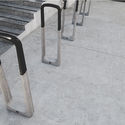
But along the cycle lanes and cycle paths it is essential to provide suitable places so that bicycles can be parked at the end of the trails. While bike stands are enclosed spaces, usually with some kind of surveillance and additional infrastructure, paracycles are the structures that allow to securely support and lock the bike. They can integrate in the urban furniture of a city, next to benches, plates, lamps and informative totems.
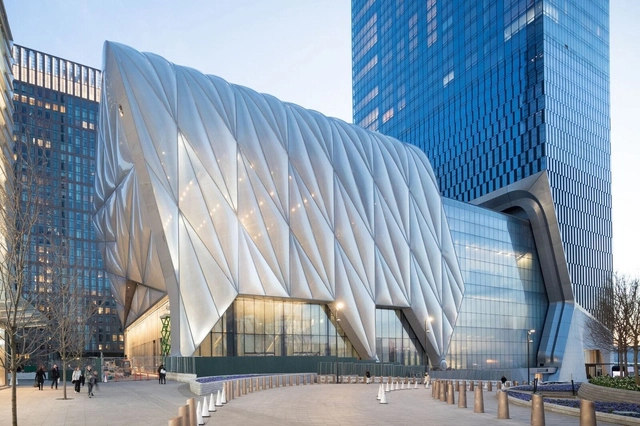
Until recently, the architecture world largely viewed plastic polymers as inferior building materials, handy for wipe-clean kitchen surfaces, but not practical in full-scale building applications. But with technological innovations driving material capabilities forward, polymers are now being taken seriously as a legitimate part of the architect’s pallet. One of the most widely-used of these materials is a fluorine-based plastic known as ETFE (Ethylene tetrafluoroethylene). Brought into the public consciousness thanks to its use on the facade of PTW Architects' Water Cube for the 2008 Beijing Olympics, architects are now realizing the film’s capabilities to express a new aesthetic and replace costlier transparent and translucent materials. Its most recent and spectacular public appearance was on the 120-foot telescopic shell of The Shed, designed by Diller Scofidio + Renfro and Rockwell Group in New York City.
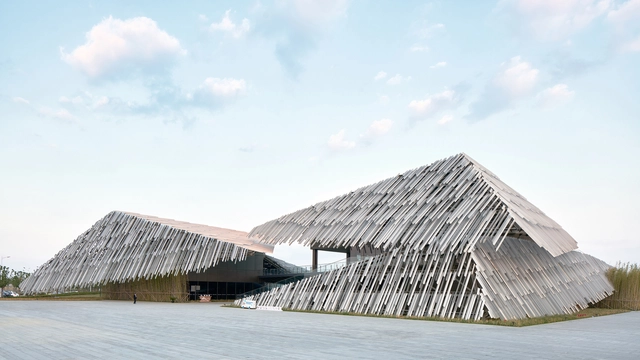
From Chinese architectural photographerZheng Shi comes imagery of Kengo Kuma's Yangcheng Lake Tourist Transportation Center in China. Architecture aimed to build a topographic structure as a large hill by randomly placing aluminum extruded materials with single-sized sections. Inside is designed as the assemblage of slanted floors, in order to maintain the same landform both in inside and outside that create some random yet ambiguous state.
Access to housing, both in the case of purchasing or renting, with any type of financing, is usually one of the most important economic investments in people's lives. It is natural to ask oneself what considerations are necessary in order to have a knowledge base before acting.
Within the framework of Espacios Oscuros research project, focused on observing and analyzing the experience of sexual diversity in public spaces of Santiago de Chile, architects María González and José Tomás Franco spoke with Nikos Salingaros, a mathematician and thinker known for his alternative theoretical approach to architecture and urbanism. Salingaros promotes design focused on human needs and aspirations, combining rigorous scientific analysis with a deep intuitive experience.
Our cities are, for the most part, hostile to the sensibilities of their citizens. (...) Almost everything has been aligned, standardized, emptied. So, how to meet different people, and how to expect a mix between strangers?
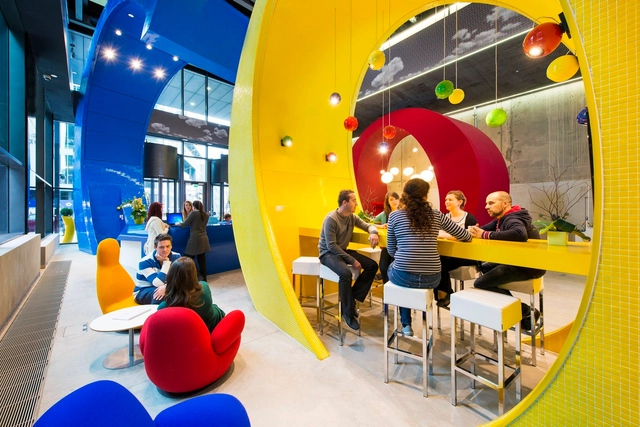
Architecture, unlike other aspects of culture (such as fashion or music), can only really be experienced and understood in person. For highly branded companies, designing a new building can be a prime opportunity to signal taste and values - but also creates an interesting architectural conundrum. While the buildings will be inhabited (nearly 24/7) by company employees, they’re also very much populated by the imaginations of people across the globe. What is it like to be in these places?
MIT's Senseable City Lab, led by the architect Carlo Ratti, has launched Escape, an interactive platform for visualizing air travel data. "Escape" serves as a search engine that helps users find the cheapest flights from a particular city, and to make the decision on their next trip faster and easier.
https://www.archdaily.com/914292/mits-new-travel-platform-finds-you-cheaper-flights-around-the-worldPedro Vada
_0466.jpg?1555015039&format=webp&width=640&height=580)
_0480.jpg?1555015259 "Courtesy of ArchDaily")
_0438.jpg?1555014874 "Courtesy of ArchDaily")
_0474.jpg?1555015163 "Courtesy of ArchDaily")
_0468.jpg?1555015070 "Courtesy of ArchDaily")
_0466.jpg?1555015039)
_0523.jpg?1554982545&format=webp&width=640&height=580)


.jpg?1554933485&format=webp&width=640&height=580)








_Vienna_Tourist_Board_Christian_Stemper.jpg?1554392750&format=webp&width=640&height=580)
.jpg?1548697132 "Headquarters 'Le Duff Group' / Ateliers 2/3/4/ | ArchDaily. Image © Juan Sepulveda")


.jpg?1554996532&format=webp&width=640&height=580)