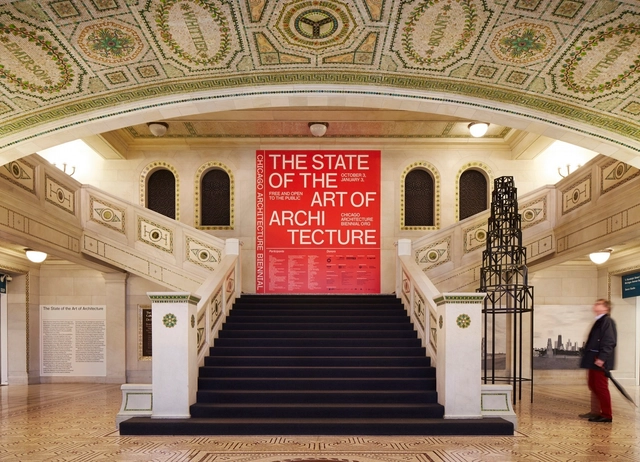
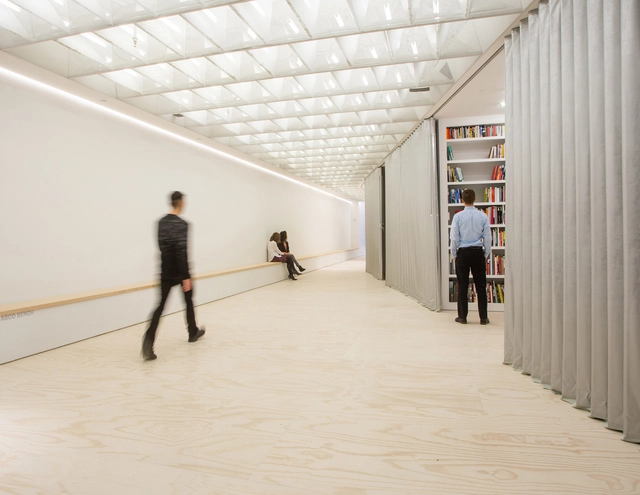
The first ever Chicago Architecture Biennial closed January 3, with over half a million visitors having attended the event. An architecture exhibition of unprecedented size on the continent, the Biennial gathered 93 projects from 120 offices from over 30 countries to discuss the “State of the Art of Architecture.” We take a look at some of the Biennial's highlights after the break.
The Nordic nations—Finland, Norway and Sweden—have reached a pivotal point in their collective, and individual, architectural identities. The Grandfathers of the universal Nordic style—including the likes of Sverre Fehn, Peter Celsing, Gunnar Asplund, Sigurd Lewerentz, Alvar Aalto, and Eero Saarinen—provided a foundation upon which architects and designers since have both thrived on and been confined by. The Nordic Pavilion at the 2016 Venice Biennale—directed by Alejandro Aravena—will be the moment to probe: to discuss, argue, debate and challenge what Nordic architecture really is and, perhaps more importantly, what it could be in years to come.
We're asking for every practice (and individual) across the world who have built work in Finland, Norway and Sweden in the past eight years to submit their project(s) and be part of the largest survey of contemporary Nordic architecture ever compiled.
Update: the Open Call for In Therapy closed on the 24th January 2016.
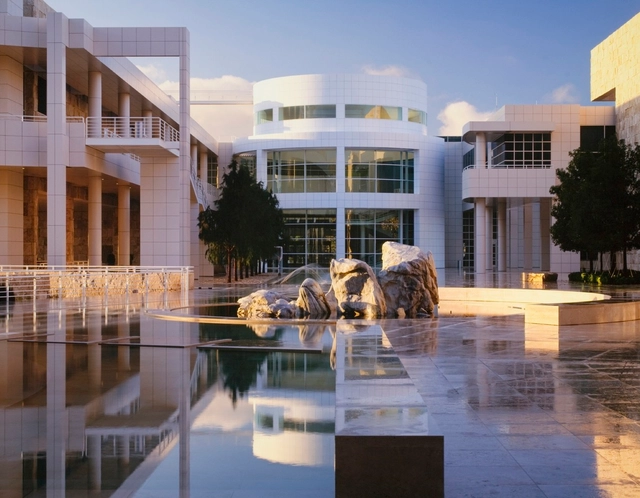
Maristella Casciato, former associate director of research at the Canadian Centre for Architecture, has been named the Getty Research Institute's new Senior Curator of Architectural Collections. Casciato is an expert on 20th century European architecture - the Institute's most sought after content - making her an ideal choice to manage GRI's expanding archives.
“Maristella Casciato is an exceptionally accomplished scholar and curator who is passionately committed to the study of architectural history and the preservation of architecture. She is the ideal steward for our tremendously significant architecture holdings,” said Thomas W. Gaehtgens, director of the Getty Research Institute.
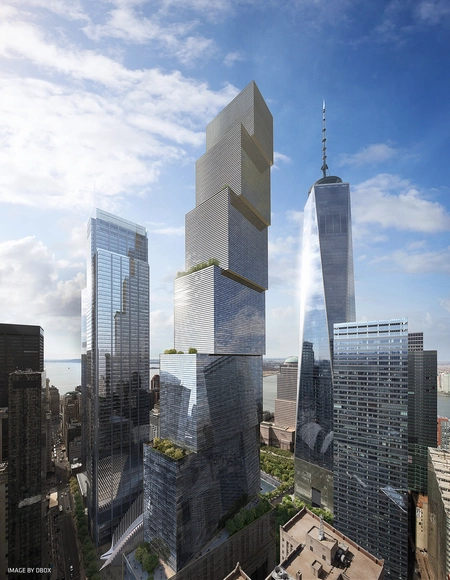
Two major tenants, 21st Century Fox and News Corp have pulled plans to relocate to the BIG-designed 2 World Trade Center - the final building planned for the 16 acre site. 2 WTC was unveiled last summer after news broke that BIG would be replacing Foster + Partners as the building's architect. According to a report on The Wall Street Journal, the two media companies based their decision on the high cost of relocating; they plan to stay in their current Midtown site until at least 2025.
The project will be placed on hold until a new tenant is found.
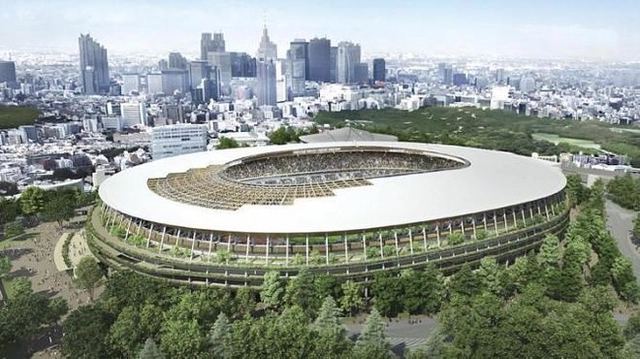
In the latest Tokyo National Stadium news, Kengo Kuma is firing back to Zaha Hadid's allegations regarding the "similarities" of the two designs by insisting that his "concept is completely different." As reported the Architects' Journal, the Japanese architect agrees there are some natural similarities due to appropriate sightlines and regulations, however the actual design and concept are radically different.
"I believe that the design by Zaha Hadid was excellent, with a unique shape and demonstration of her philosophy," said Kuma in a press conference. "When we consider the design is being created within the same land, using the same tracks and under the same laws it is natural and almost automatic that there are some similarities which will arise."
"And despite the technical details being similar, the concepts and designs are completely different," he added, referring to Hadid's "saddle-style" design and his flat-roofed proposal.
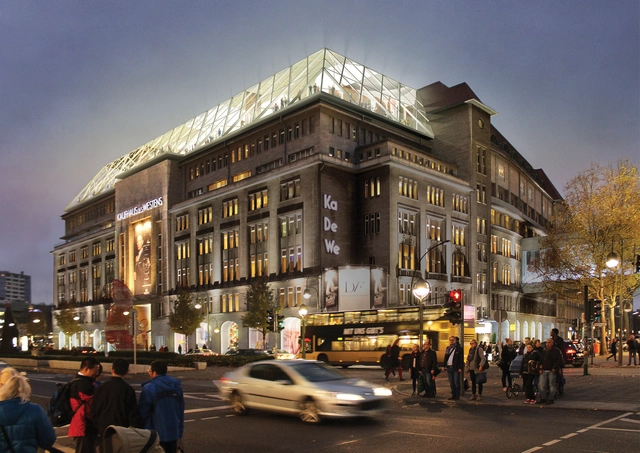
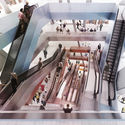
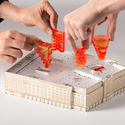
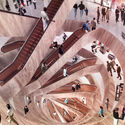
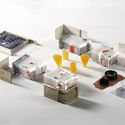
OMA has been selected to renovate Kaufhaus des Westens (KaDeWe), a historic department store in Berlin – and the biggest in continental Europe. Its giant size “makes it akin to a city: a three dimensional network of paths, squares, neighbourhoods, activitiies and views unfolding through its large extensions and providing opportunities for commercial, social and cultural encounters,” writes OMA.
To address the size, their design divides the department store into four quadrants, breaking “the original mass into smaller, easily accessible and navigable components.” Each quadrant will target different audiences and act as an independent department store. Learn more about the design after the break.
New York City's Van Alen Institute have announced four new members—Haptic Architects, Mecanoo, Studio Libeskind, and Trahan Architects—to their International Council, a platform for exchange among leading architects, designers, developers, and planners. Furthermore, Jing Liu (SO–IL), Kim Herforth Nielsen (3XN), and Raymond Quinn (Arup) have joined its board of trustees to help guide the organisation's cross-disciplinary research, provocative public programs, and design competitions.
As the first month of 2016 draws to a close, we decided to tap into our network and ask an esteemed group of architects, critics, theorists and educators to tell us what they are looking forward to this year in architecture.
What are you looking forward to in architecture this year?
https://www.archdaily.com/780498/50-architects-tell-us-what-they-are-looking-forward-to-in-2016AD Editorial Team
Following the recent completion of 432 Park Avenue in New York City, The Council on Tall Buildings and Urban Habitat (CTBUH) has announced that there are now 100 supertall (300-plus-meter) skyscrapers in the world. The majority of these skyscrapers are in Asia and the Middle East, mirroring construction trends that have emerged over the past decade. Dubai leads the rankings with 18 supertall buildings, while New York City now falls in second place with a total of seven, including 432 Park Avenue.
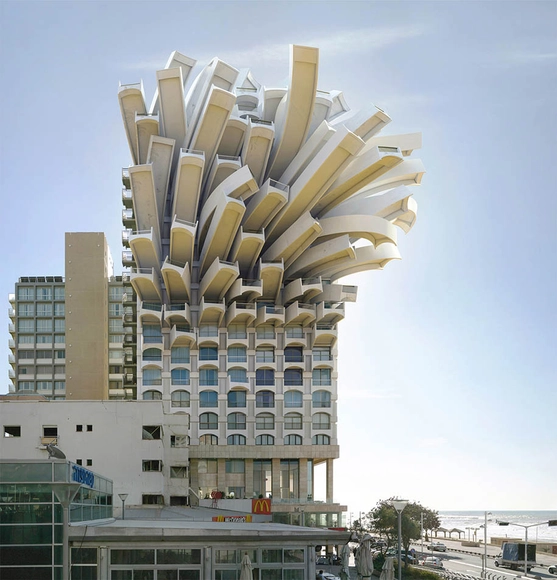
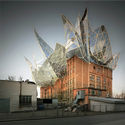
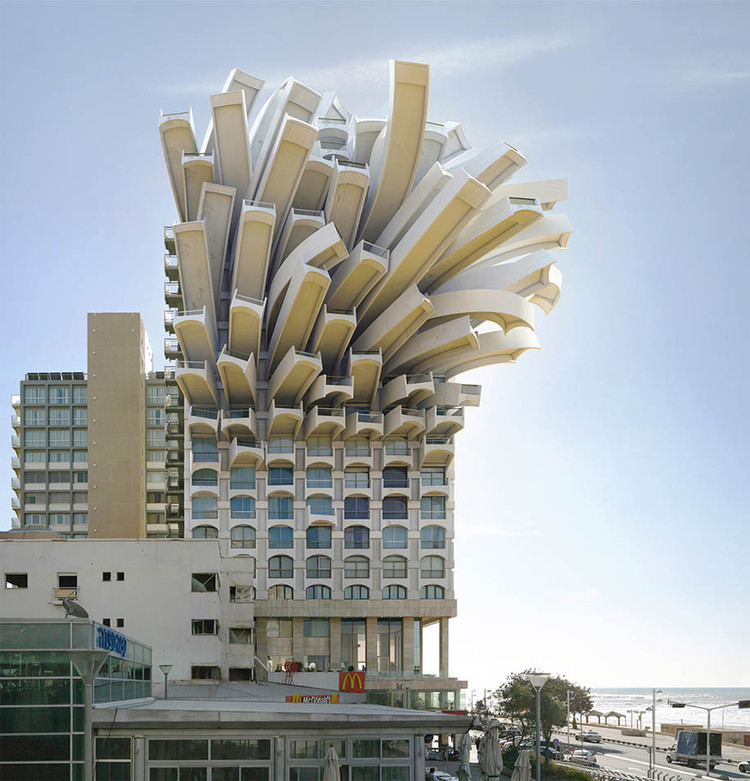
Since 2006, artist Victor Enrich has been working on his project, City Portraits, a series of digitally manipulated images that transform photos into architectural illusions.
In the latest episode of The Urbanist, Monocle 24's weekly "guide to making better cities," the team tackle the 'establishment'. From small businesses to citizen collectives, the show discovers how "championing transformative change from the ground up can be the best way to alter the status quo in our cities." Investigating how the Ministry of Space is reclaiming public spaces in Belgrade, how ordinary citizens in Vienna are welcoming refugees, and how a collective in Rio de Janeiro wants to reshape the politics of the city, the episode also explores how small businesses in London’s West End are fighting against increasing rent.
2015 Winning Entry by Jacques Gaffigan. Image Courtesy of The Knight Foundation
The John S. and James L. Knight Foundation has announced the names of the 158 finalists in the Knight Cities Challenge. The nationwide call was for innovative ideas to make the 26 communities where the Knight Foundation invests more social and vibrant places to live. More than 4,500 entries were submitted proposing a range of ideas from opening the world’s largest African American history museum in Detroit to a card game that encourages residents of Charlotte to visit new neighborhoods. The winners, who will split a prize of $5 million, will be announced in the spring of 2016.
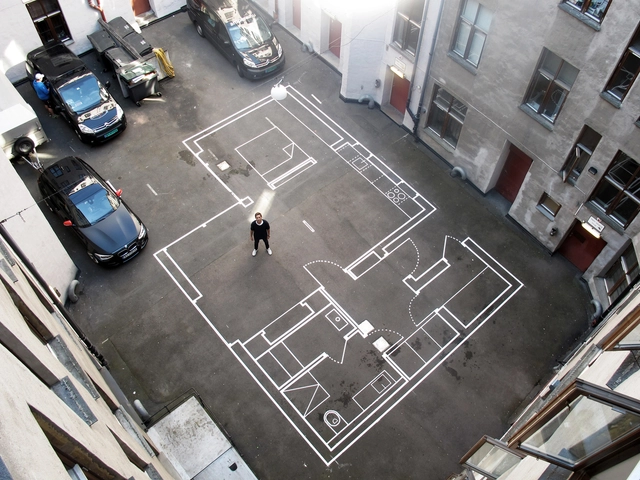
Norway based architecture studio Vardehaugen has created a series of life-sized project drawings in its own backyard. Inspired by the idea that the "bodily sensation of scale, or the notion of simply walking through a room, cannot be experienced through traditional 3D visualizations or scaled models," the 1:1 models allow for better understandings of dimensions and spatial sequences, even before the projects are built.
Architect, illustrator and cofounder of the Miniatura project, Bruna Canepahas shared with us a stunning collection of her illustrations and collages, which offer a fresh gaze onto one of architecture’s most common tools: the drawing. Beyond depicting examples of unreal architecture, her works present architecture that replaces firmitas, utilitas and venustas for complexity, wonder and irony.
From extrusions and explosions of familiar typologies to surreal and sterile atmospheres of empty spaces, we suggest three subcategories to frame Bruna’s illustrations as shown below: Houses, Cubics, and Displacements.
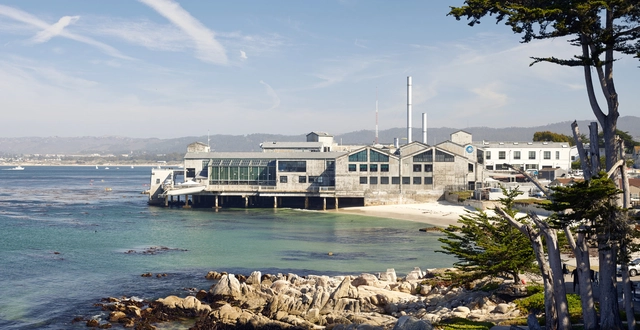
Monterey Bay Aquarium / EHDD. Image Courtesy of Bruce Damonte
The Monterey Bay Aquarium in Monterey, California, has been selected for the 2016 American Institute of Architects' (AIA) Twenty-five Year Award. Designed by EHDD of San Francisco, and completed in 1984, the Monterey Bay Aquarium is a "light-filled ensemble of diverse spaces, unique among aquariums in its interweaving of indoors and out," says the AIA. The award is presented yearly to a project that has "stood the test of time by embodying architectural excellence for 25 to 35 years."
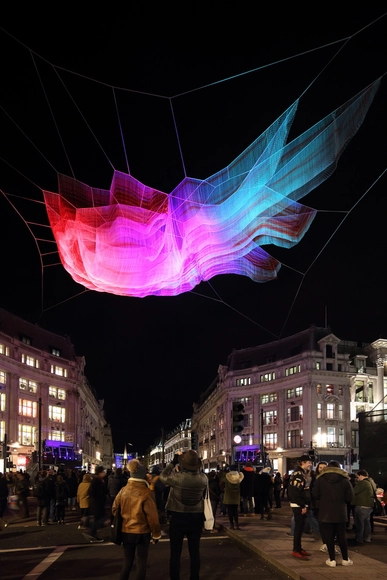
London is the latest city to host one of Janet Echelman's stunning net sculptures. Suspended 180 feet above Oxford Circus, the city's busiest intersections, the colorful floating form was inspired by 1.8 - "the length of time in microseconds that the earth’s day was shortened" as a result of Japan's devastating 2011 earthquake and tsunami.
"The sculpture’s form was inspired by data sets of the tsunami’s wave heights rippling across the entire Pacific Ocean," says the studio. "The artwork delves into content related to our complex interdependencies with larger cycles of time and our physical world. The sculpture’s net structure is a physical manifestation of interconnectedness – when any one element moves, every other element is affected."
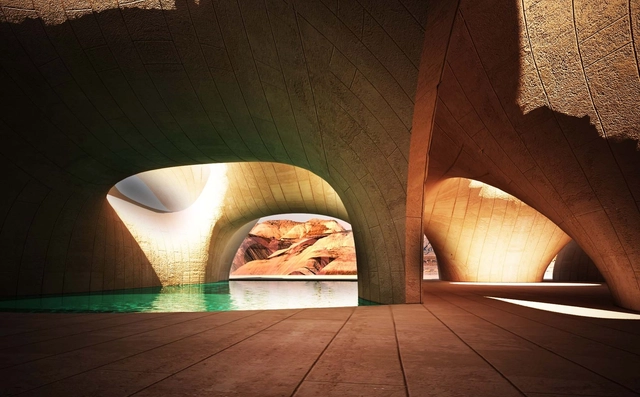
Aysu Aysoy and Roman Hajtmanek have been announced as the winners of the ArchDaily + IIDEXCanada Virtual Spaces Competition, which sought proposals for un-built, fantastical spaces. The designs were then developed into virtual spaces by Invent Dev as a part of a virtual reality exhibition at IIDEXCanada.
Learn more about both of the winners, after the break.
Based on the concept of listening to the sounds of the ocean inside a shell, STUDIOKCA, commissioned by NASA, has created the NASA Orbit Pavilion to immerse visitors in the sounds of satellites orbiting in outer space.
The traveling, nautilus-shaped pavilion provides a space in which to experience the trajectories of 19 satellites orbiting Earth. Made with 3,500 square feet of water-jet cut aluminum panels, the pavilion is "scribed with over 100 'orbital paths' fitted together and bolted to a curved framework of aluminum tubes."
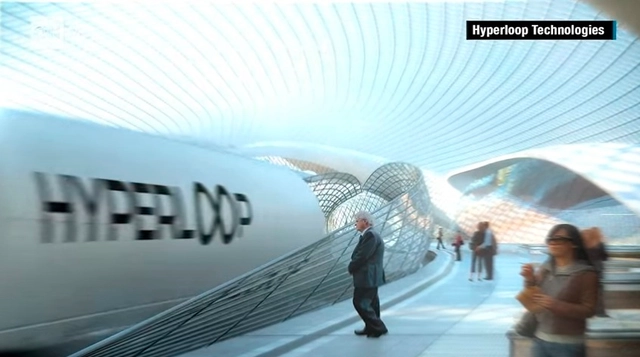
Hyperloop Technologies is starting to realize its high-speed transit system. As Tech.Mic reports, pipes for the project's first test tube are showing up in Nevada. Hyperloop was first outlined by Elon Musk in 2013 as a response to California's pricey bullet train plan that aim to connect Los Angeles to San Francisco. The ultra-fast, energy efficient Hyperloop proposes to send pods of people through a depressurized tube at speeds up to 700 miles-per-hour. It is believed that the new system could be running as soon as 2020.
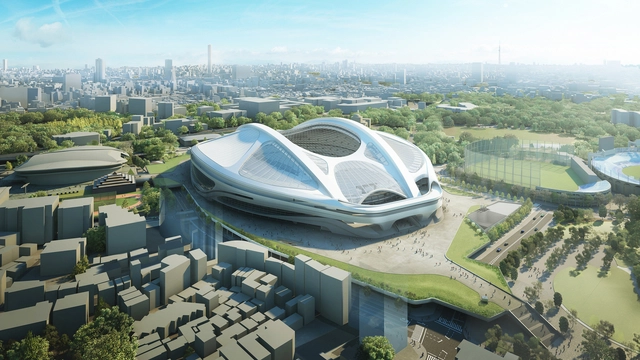
Zaha Hadid is facing new hurdles regarding her scrapped Tokyo National Stadium design; according to the architect, the Japan Sport Council (JSC) is withholding an overdue payment until ZHA agrees to relinquish ownership of their original designs.
After working on the design for more than two years, the British practice was decommissioned from the project over cost objections last summer. Since, Japanese architect Kengo Kuma has been reassigned the project, offering a design that ZHA says is suspiciously similar to their original proposal "in the structure, layout and numerous elements."
Now, the JSC has requested ZHA agrees to new "Compliance Rules" that would allow the stadium's new architect to "use any product of work ... regardless of its copyright."
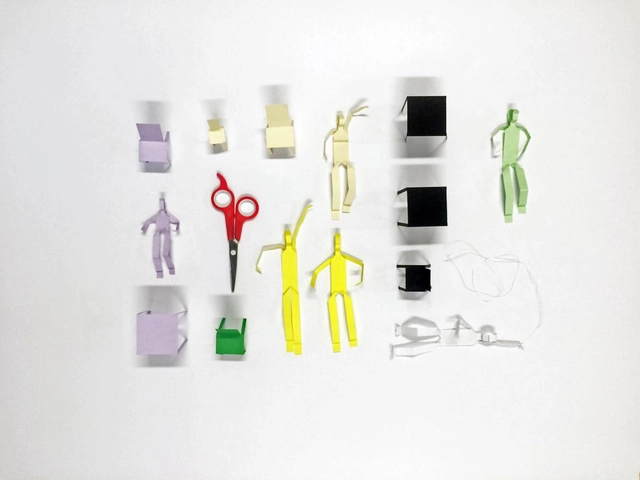
In response to the question posed by the curators of the Chicago Architecture Biennial – what is The State of the Art of Architecture today? -- Colombian firm El Equipo de Mazzanti (Giancarlo Mazzanti) developed their exhibition “Speaking Architecture,” which looks at architecture as “a living process rather than a finished and static object.”
The installation puts the visitor in control, breaking with the typical conception of an exhibition as something controlled, static, limited and unidirectional, and creating “a place to play.”
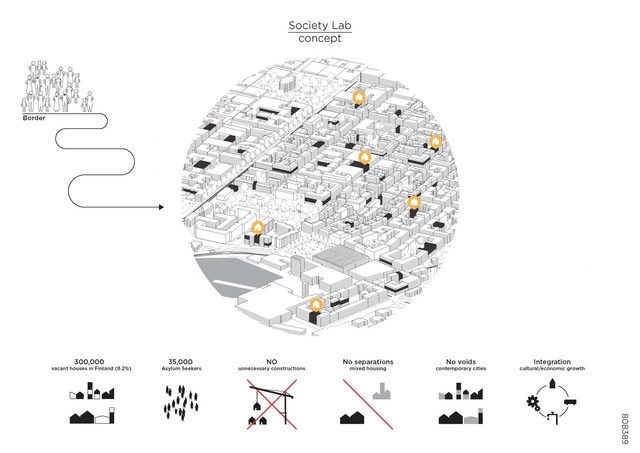
The Museum of Finnish Architecture, in collaboration with the Finnish Association of Architects (SAFA), has announced the winners of its “From Border to Home” competition, which sought solutions for temporary housing seekers who are awaiting a decision on their refugee status, prior to finding more permanent housing in Finland. Ninety-three entries were submitted from countries around the world including Finland, Sweden, Norway, China, Belarus, the United States, and Brazil, among others. Submitted proposals included solutions that would provide a positive social impact, and also support future ideas about long-term living arrangements.
The jury, comprised of architects, members from the Ministry of the Interior, the Finnish Red Cross, and the Finnish Refugee Council, shortlisted seven entries in the first round of judging. They praised the overall quality of the submissions, stating that they ranged in strategies from tackling national issues to creating new buildings, repurposing old sites, and even transforming housing solutions to digital platforms.
From those, three winners tied for first place, chosen due do their “logical coherence and compelling social impact,” according to the jurors. These entries will be showcased in the Finnish Pavilion at the Venice Architecture Biennale this upcoming summer.
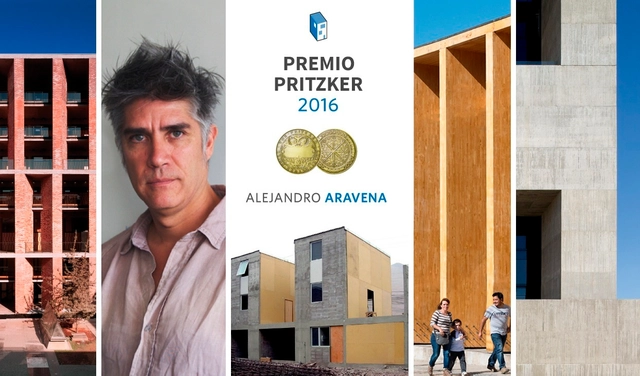
Alejandro Aravena has been named as the winner of the 2016 Pritzker Prize. Highlighting his dedication to improve urban environments and to address the global housing crisis, the Pritzker Prize jury praised the way in which the Chilean architect has "risen to the demands of practicing architecture as an artful endeavor, as well as meeting today's social and economic challenges." Aravena is the 41st Pritzker Prize laureate and the first Chilean to receive the award.
At 48 years of age, Aravena has a large portfolio of private, public and educational projects in Chile, the USA, Mexico, China and Switzerland. But perhaps more notably, through his “Do Tank” firm ELEMENTAL he has managed to build 2,500 units of social housing, engaging in the public housing policies of governments where he works and taking an opportunistic approach to market forces to generate a powerful impact on lower-income communities.
"Alejandro Aravena epitomizes the revival of a more socially engaged architect, especially in his long-term commitment to tackling the global housing crisis and fighting for a better urban environment for all,” explained the Jury in their citation. “He has a deep understanding of both architecture and civil society, as is reflected in his writing, his activism and his designs. The role of the architect is now being challenged to serve greater social and humanitarian needs, and Alejandro Aravena has clearly, generously and fully responded to this challenge."





_Macklowe_Properties.jpg?1452745763&format=webp&width=640&height=580)






_Hedrich_Blessing_(3).jpg?1452884759 "WMS Boathouse at Clark Park / Studio Gang Architects. Image © Hedrich Blessing")