Following an extensive day of presentations, panels, critiques, and talks The World Architecture Festival (WAF) has announced the Day 1 category winners in their 2018 programming. Winners are recognized in over 35 categories over the first two days of the conference, which culminates with the announcement of the World Building of the Year 2018 on the third and final day of the conference.
While still early days, the world’s largest architectural award program, the WAF Awards is poised for its biggest year yet, with a total of 535 shortlisted projects from 57 countries across the world.
https://www.archdaily.com/906741/the-2018-world-architecture-festival-announces-the-day-one-winnersAD Editorial Team
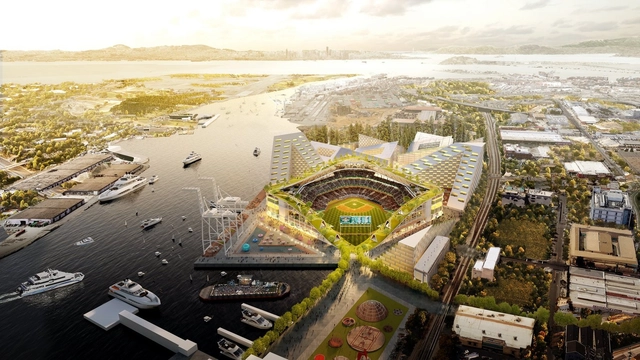
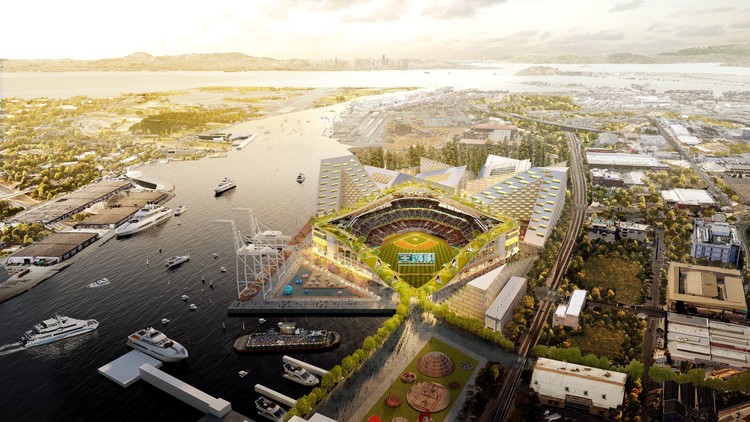
Oakland Baseball Stadium. Image Courtesy of Oakland Athletics / Bjarke Ingels Group
Bjarke Ingels Group, James Corner Field Operations, and Gensler have released new renderings of the new Oakland Athletics baseball stadium and surrounding development. The new stadium will replace the Oakland A’s existing 51-year-old Oakland-Alameda County Coliseum, which the A’s share with the Oakland Raiders football team. The mega-ballpark includes a waterfront “jewel box” stadium at Howard Terminal and would turn the current Coliseum site into a tech and housing hub.
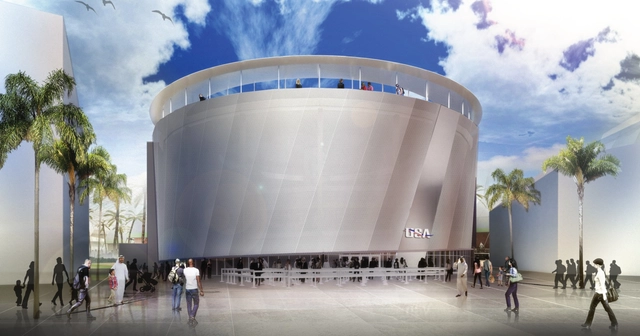
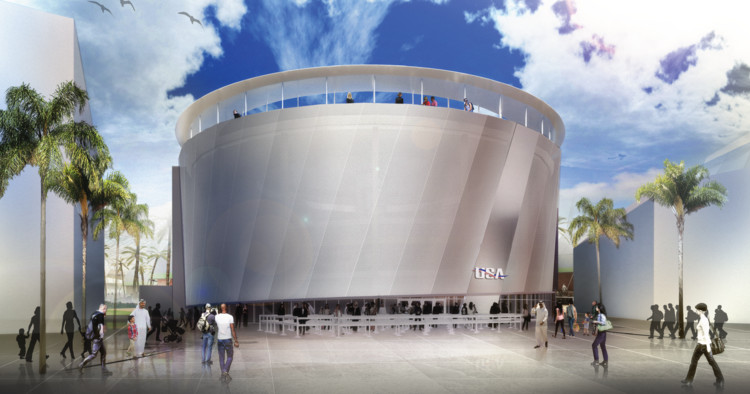
The design of the USA Pavilion for the Expo 2020 Dubai has been revealed, designed by Curtis W. Fentress and Fentress Architects. Destined to represent more than 325million Americans, the pavilion seeks to “provide a unique platform for [the United States] to come together to showcase the very best of [their] cultural and commercial achievements.”
The pavilion is to be circular in form, with “slants fashioned to project a sensation of movement, making the viewer feel like the building itself is in motion.” The pavilion’s interior will showcase American innovation and technology, including the premiere of the Virgin Hyperloop One ride experience.
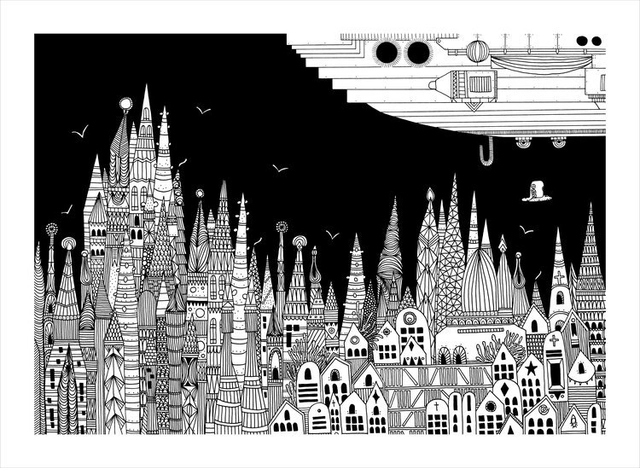
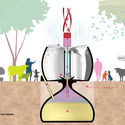
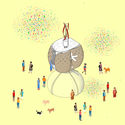
Lima-based architect Karina Puente has created a new series in her personal project: to illustrate each and every "invisible" city from Italo Calvino's 1972 novel. Her collection, which ArchDaily published in 2016, and again in 2017, consists of mixed media collages, drawn mainly using ink on paper, brings together a sequence of imagined places – each referencing a city imagined in the book.
Invisible Cities, which imagines fictional conversations between the (real-life) Venetian explorer Marco Polo and the aged Mongol ruler Kublai Khan, has been instrumental in framing approaches to urban discourse and the form of the city. According to Puente, "each illustration has a conceptual process, some of which take more time than others." Usually "I research, think, and ideate over each city for three weeks before making sketches." The final drawings and cut-outs take around a week to produce.
Puente’s work is set to go on display in the San Miguel de Allende, Mexico on the 2nd February 2019. You can learn more about the project from Puente’s official website here.
We are pleased to partner with the World Architecture Festival to bring you live streaming of each day's keynote addresses. On Wednesday, tune in for lectures from Peter Cook, Li Xioadong and an impressive group of speakers. Follow us on Instagram at @archdaily to see more updates from our team on the ground.
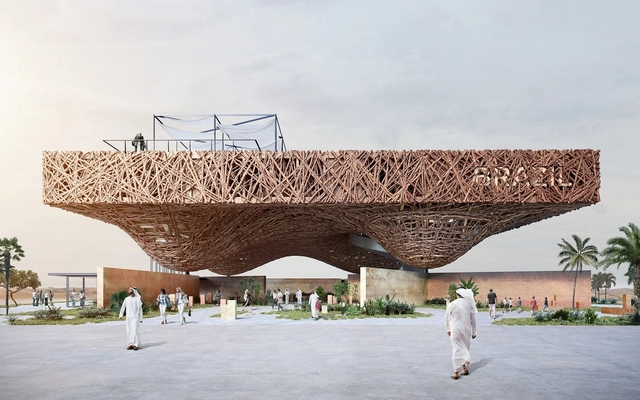
Brazil Pavilion. Image Courtesy of Gabriel Kozlowski
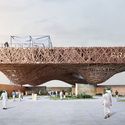
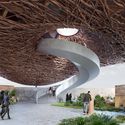
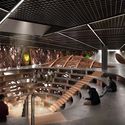
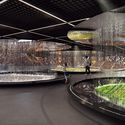
Architect Gabriel Kozlowski has partnered with Gringo Cardia, Bárbara Graeff, and Tripper Arquitetura to design a structure of floating tree branches for the Brazil pavilion at Expo 2020 Dubai. The pavilion is inspired by one of the greatest technological achievements of Brazil: the improvement of the Direct Planting System over a straw. The design conceptually mimics this scheme through its layered arrangement - soil, an entanglement of protection, productivity - presenting itself as both a building and a symbolic image.
UNESCO and the International Union of Architects (UIA) have announced the launch of a “World Capitals of Architecture” initiative, seeking to create a “synergy between culture and architecture in an increasingly urbanized world.”
Cities designated as World Capitals of Architecture will become a global forum for discussion on the world’s most pressing challenges “through the prism of culture, heritage, urban planning, and architecture.” UNESCO and UIA will collaborate with local city organizations to organize activities and events promoting buildings, architects, planners, and related sectors.
https://www.archdaily.com/906675/unesco-and-uia-to-begin-designating-cities-as-world-capitals-of-architectureNiall Patrick Walsh
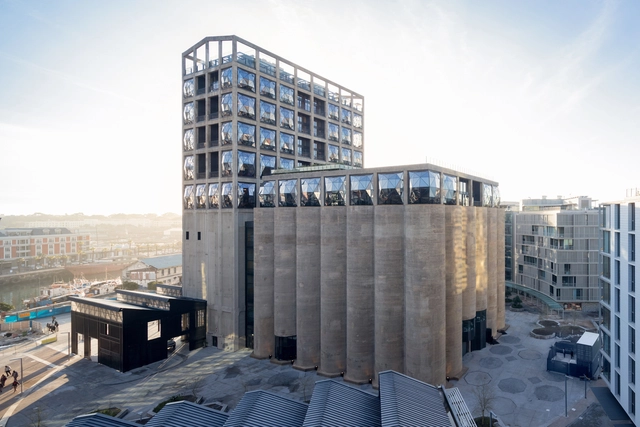
New photography by Hervé Hôte has been released, showcasing the Frank Gehry-designed Luma Arles complex as construction continues in the French town of Arles. The arts center, situated on a former SNCF rail yard, will offer exhibition, research, education, and archive space within a 46-meter-tall, aluminum tile-clad tower.
Constructed from a concrete core and steel frame, the scheme emerges from a circular glass atrium echoing the town’s Roman amphitheater. The distinctive jagged form above the atrium echoes the region’s rugged mountain ranges, with glass boxes extruding from reflective aluminum panels.
https://www.archdaily.com/906664/frank-gehrys-jagged-aluminum-luma-arles-takes-shape-in-franceNiall Patrick Walsh
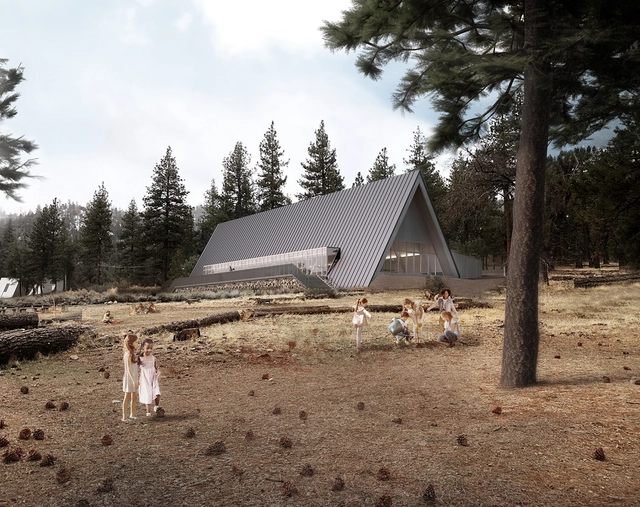
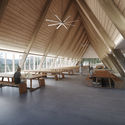
Perkins+Will’s Los Angeles studio has revealed a new dining hall and A-frame cabins for Camp Lakota, a campsite for the Girl Scouts of Greater LA. Located one and half hours north of the city in Frazier Park, the camp master plan proposal was made to create a camp of the future. Completed pro-bono by Perkins+Will, the aim is to support the Girl Scouts’ mission of empowering girls and young women. Perkins+Will reimagined the typical A-Frame layout and wanted them to be both practical and modern for the campers, but still a traditional tie-in to California cabin design.
Vilnius Multifunctional Complex. Image Courtesy of MAD Architects
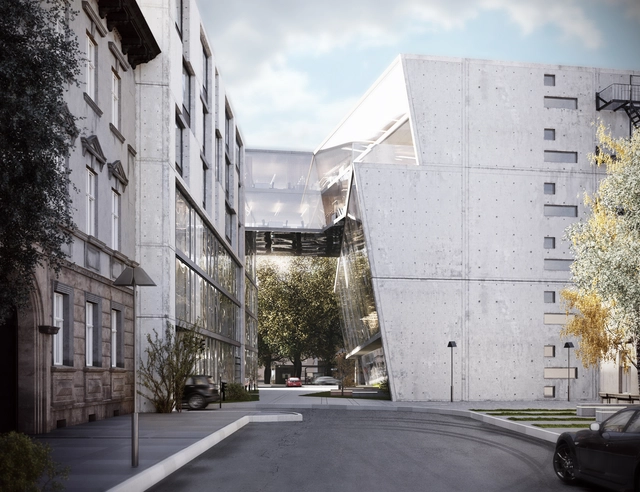
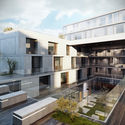
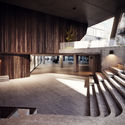
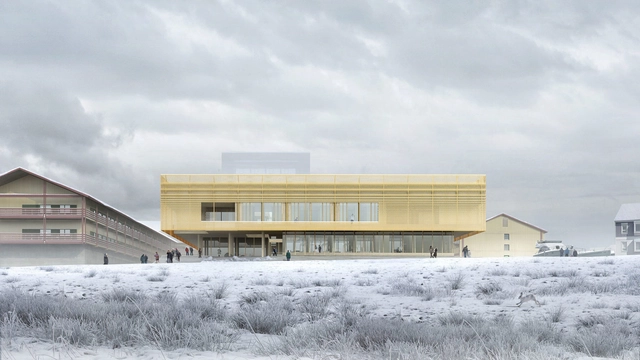
MAD Architects have revealed their design for a multi-functional complex located in the historical center of Vilnius, the capital city of Lithuania. The project was designed as an "urban sculpture" where anyone can move between underground levels, walk-able roofs, porches and other sightseeing platforms. All public spaces are adapted for the city residents, so the complex benefits not only its users but also the citizens of Vilnius.
With the exhibition closed, the organizers behind the Venice Biennale have released an impressive roundup of statistics related to the event, demonstrating the Biennale’s role as one of the most influential events in the architectural calendar.
https://www.archdaily.com/906536/half-of-the-visitors-were-under-26-the-numbers-behind-the-2018-venice-biennaleNiall Patrick Walsh
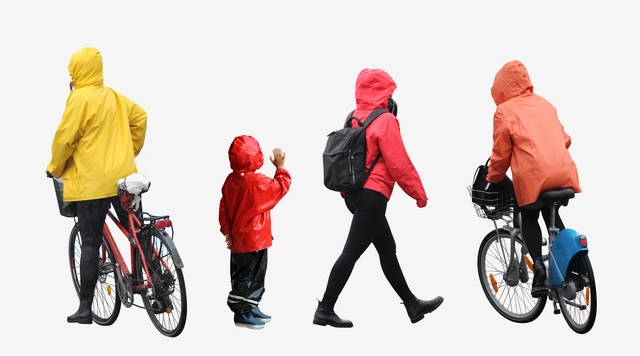
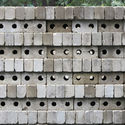
In celebration of the launch, the studio is offering a new mixed pack of 50 diverse, high resolution cuts outs for free, normally priced at £100. Users can gain access to the offer using the discount code “BFARCHDAILY” on the cutout shop here during the purchasing process.
You can check out a selection of the cutout products below, or on the official website here.
https://www.archdaily.com/906206/a-library-of-high-resolution-cutouts-free-with-archdaily-discount-codeNiall Patrick Walsh
'Central Community Pavilion' was a response to an invitation to design a variety of temporary pavilions by different creators as a part of Arch Days CDMX and Design Week 2018. For the occasion, three up-and-coming architectural firms have joined forces to design and construct a single pavilion with a common theme. The design process between TO Arquitectura, LANZA Atelier, and Alberto Odériz reinforced the idea of a generation plagued with a certain collective curiosity and concern.
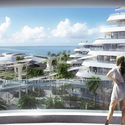
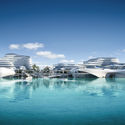
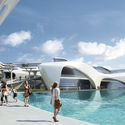
CAA Architects have won first prize in the Maldives Airport Economic Zone competition. Their winning proposal, "Ocean’s Heaven" is a mixed use development made to embrace tropical culture and ocean systems with renewable energy structures in a living belt design. Facing global warming and rising sea levels, the project hopes to create a new model for sustainable development before the Maldives disappear from the world forever.
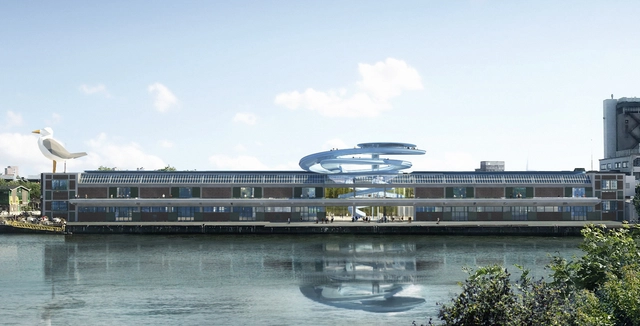
MAD Architects has unveiled images of their proposed panoramic viewpoint for the Fenix Warehouse in Rotterdam, commissioned by the Droom en Daad Foundation. The scheme represents MAD’s first public cultural project in Europe, which sees them tasked with uncovering the forgotten history of what was once one of the biggest warehouses in the world.
The viewpoint is to form part of a restoration project of the historic warehouse itself, to be led by Rotterdam-based Bureau Polderman. The scheme is situated on the site of one of the oldest Chinatowns in Europe, on the southern banks of the port of Rotterdam.
https://www.archdaily.com/906500/mad-architects-design-panoramic-viewpoint-for-historic-warehouse-in-rotterdamNiall Patrick Walsh
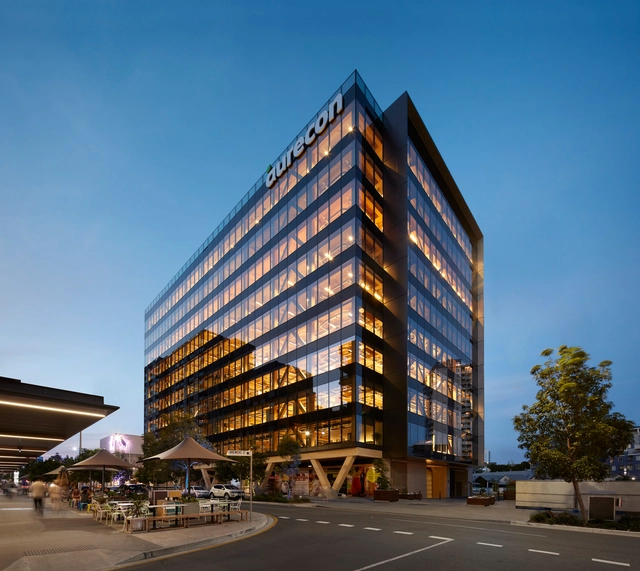
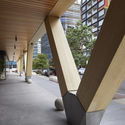
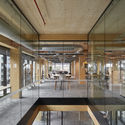
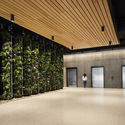
Australia’s largest engineered timber commercial building has opened in Brisbane, designed by Bates Smart. At 10 stories, and 45 meters in height, the “25 King” open plan office complex is the tallest timber structure in Australia, and “establishes new frontiers in the design of commercial buildings.
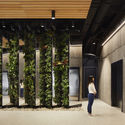
The scheme’s aesthetic is centered on the goal of “bringing a clear expression of its exposed timber structure to the building’s transparent envelope and promoting a warmer, more natural workplace environment of the future.”
The built atmosphere in which we live has a profound impact on our mood and well-being. For those with mental health issues, this fact is particularly important to understand. This raises the question: can architects successfully design a space that has an overall positive influence on the healing process? What integrated elements of the building, in particular, aid in the process while fighting the prejudice and stigma of mental health issues?
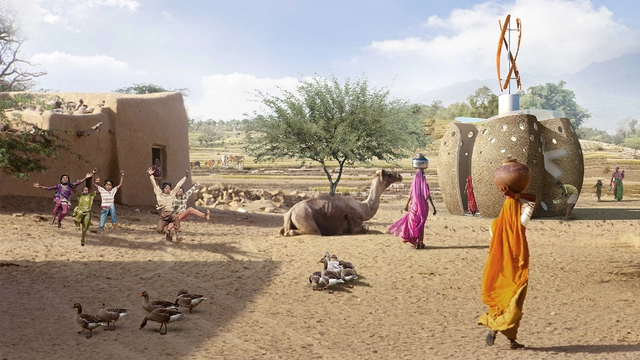
In support of World Toilet Day on November 19, SPARK Architects launched their prototype for a 3D printed toilet module titled, "Big Arse Toilet" alongside a slogan stating that "Sparks gives a sh*t." Though the pun-filled humor is definitely attention-grabbing, the project tackles serious issues of hygiene and sanitation as part of the UN initiative to eliminate open defecation by 2025. With the perpetuating cycle of malnutrition, disease, and poverty, poor sanitation is the leading cause in nearly a third of the deaths in low- and middle-income regions in several countries such as India.
Easily transportable, the toilet module converts human waste into biogas into electricity using a micro combined heat and power (CHP) unit. Essentially producing "free" energy, SPARK's proposal combats the issue of open defecation and uses the abundant natural waste in remote communities in Indian villages where there is low accessibility to electricity.
Videos
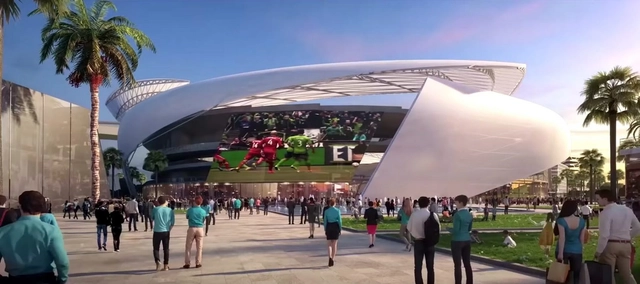
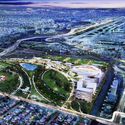
Freedom Park and Soccer Village. Image Courtesy of Beckham Group
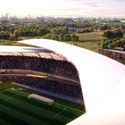
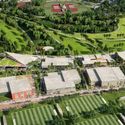
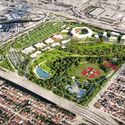
David Beckham's Freedom Park and Soccer Village proposal for Miami has received the public vote supporting the project. Designed by Arquitectonica, the proposal to bring a soccer club to the city has been under development for over five and a half years. The Miami public voted in favor of building the 25,000-seat stadium, community park and public soccer facilities. While negotiation with city officials is still needed, if approved, the project would create a home for the new Internaćional de Fútbol Miami soccer club.
Grimshaw has unveiled its vision for the Eden Project North, following on from its acclaimed domed megastructure in Cornwall, England. The new scheme is to be located in Morecambe, Lancashire, featuring “a series of pavilions inspired by mussels, which could house a variety of environments.”
Eden Project North seeks to combine indoor and outdoor experiences in a “seaside resort for the twenty-first century,” with lidos, gardens, performance spaces, and immersive experiences and observatories.
https://www.archdaily.com/906439/a-first-look-at-grimshaws-next-eden-projectNiall Patrick Walsh
Courtesy of Bi-City Biennale of Urbanism\Architecture (Shenzhen)
The Organizing Committee of the Bi-City Biennale of Urbanism\Architecture (Shenzhen) (“UABB (Shenzhen)”) announced the team of Chief Curators of 2019 UABB (Shenzhen), which includes Architect and Director of MIT Senseable City Lab Carlo Ratti, CAE Academician Meng Jianmin and famous curator and art critic Fabio Cavallucci.
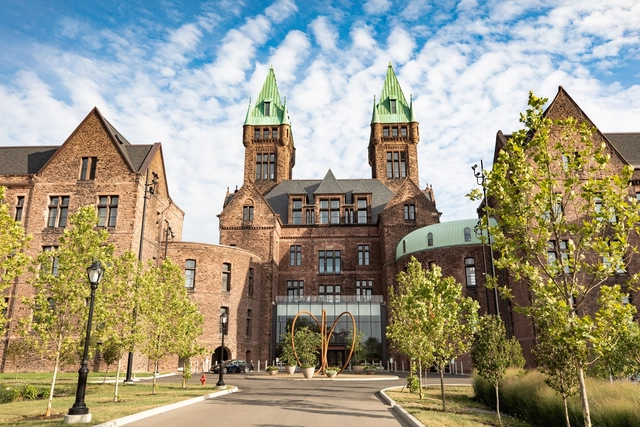
Richardson Olmsted Campus, Buffalo, NY / Henry Hobson Richardson & Fredrick Law Olmsted. Image Courtesy of The National Trust for Historic Preservation’
The National Trust for Historic Preservation has announced the winners of the Richard H. Driehaus Foundation National Preservation Awards, honoring the best projects on 2018 in the field of preservation and adaptive reuse. The three schemes range “from the reimaging of a former asylum to the adaptive reuse of a historic school to the groundbreaking transformation of a 1.5 million square foot mixed-use facility”
The schemes were chosen from a shortlist of 50 nominated projects by a jury led by Pulitzer-Prize-winning architecture critic Paul Goldberger, recognized for demonstrating “excellence in execution and a positive impact on the vitality of their towns and cities.”
https://www.archdaily.com/906425/the-best-refurbishment-projects-in-the-usa-recognized-by-the-richard-h-driehaus-foundationNiall Patrick Walsh
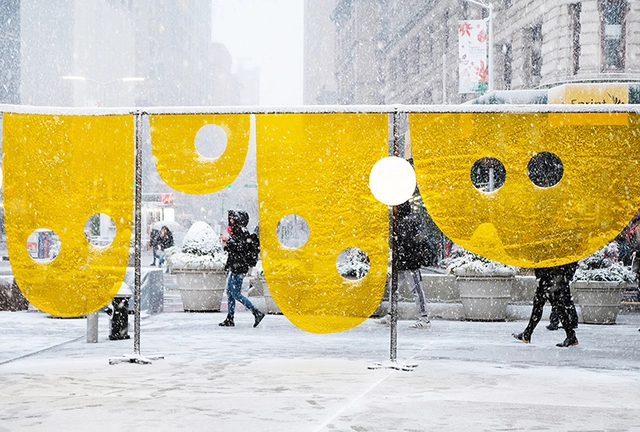
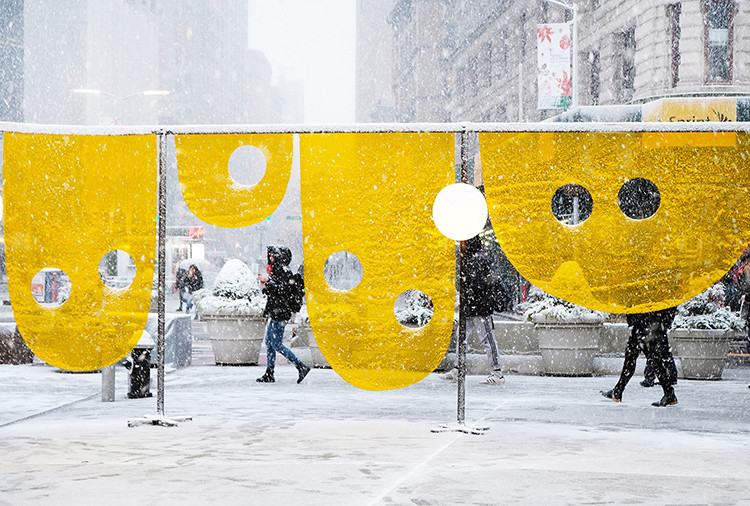
Studio Cadena’s Happy installation has been unveiled in New York's Flatiron Plaza. The project is the winner of the fifth annual Design Competition hosted by the Flatiron/23rd Street Partnership Business Improvement District (BID) and Van Alen Institute. As the centerpiece of the annual holiday program, the installation was selected by a jury with expertise across the worlds of design and public art, including representatives from the Flatiron Partnership, New York City DOT Art, and Van Alen Institute’s board of trustees.
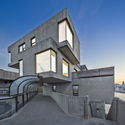
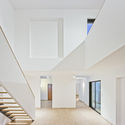
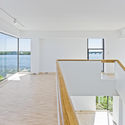
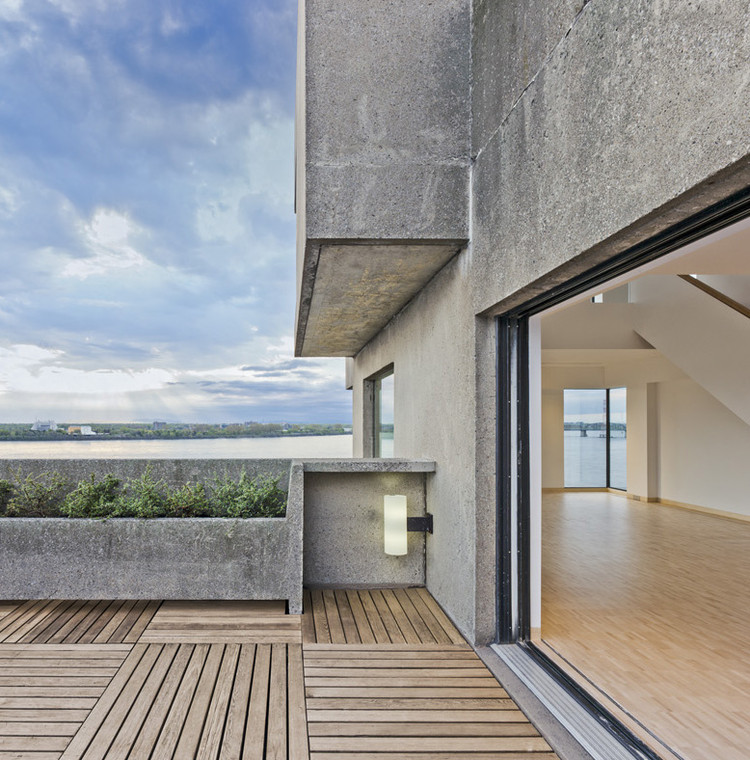
Two years worth of repairs to the duplex unit included addressing decades worth of water damage, extensive interior restoration, and technical upgrades to align the building’s systems to 21st century standards of sustainability and energy conservation.







.jpg?1543322326&format=webp&width=640&height=580)












.jpg?1542902655&format=webp&width=640&height=580)