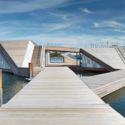
Building above water means doing away with a part of construction that is quite literally the basis of most of our built environment: the foundation. In a world dominated by water, currents, and shifting levels are variables that simply cannot be ignored, which is why the most emblematic feature these projects share is their adaptability.
Instead of robust, deep bases – such as piles or caissons – designed to anchor architecture into the earth, floating structures frequently employ solutions like concrete pontoons or plastic drums to prevent the building from sinking. These are typically paired with anchoring systems to "fix" the structures, even if only temporarily, to a specific location.
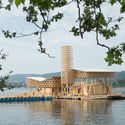
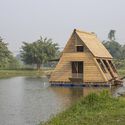
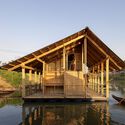
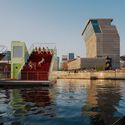
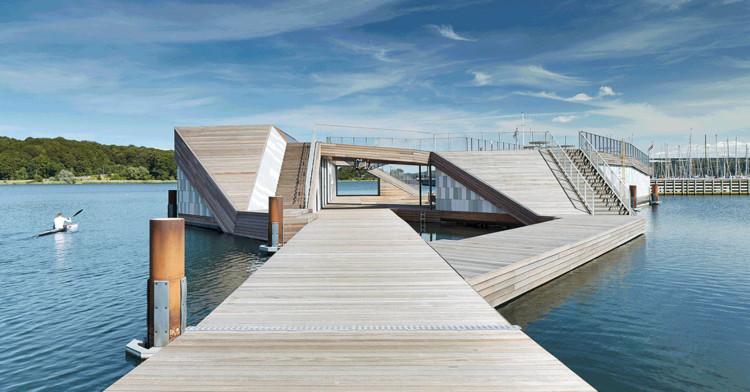
While these structures are not necessarily lightweight – consider cargo ships, which weigh thousands of tons yet remain buoyant – they convey an aesthetic sense of lightness. Conversely, if "lightness" is often associated with delicacy, grace, or softness, many examples of water-based architecture offer a more "down-to-earth" alternative for confronting a harsh and urgent reality.
Related Article
Why Doesn't Floating Architecture Sink?More than half of the planet is composed of water, and the majority of the population lives in its vicinity. These areas are increasingly affected by environmental disasters and rising sea levels, creating a scenario that poses new challenges to how we live in and design buildings for coastal or riverine regions.
Floating architecture can adapt to fluctuating water levels, floods, and diverse climatic conditions, creating a viable path toward addressing these issues. To expand your repertoire, we have gathered a selection of projects implemented directly on the water, ranging from residential and cultural to educational, recreational, infrastructure, hospitality, and public spaces.
Houses
The Float House / Tigg + Coll Architects
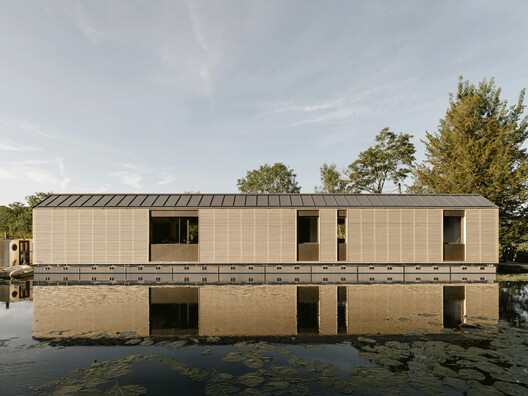
The Floating Neighborhood of Las Balsas / Natura Futura
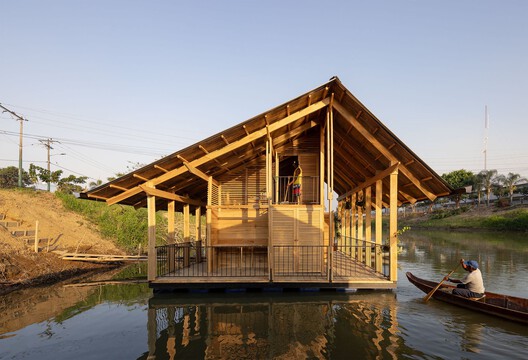
Floating Bamboo House / H&P Architects
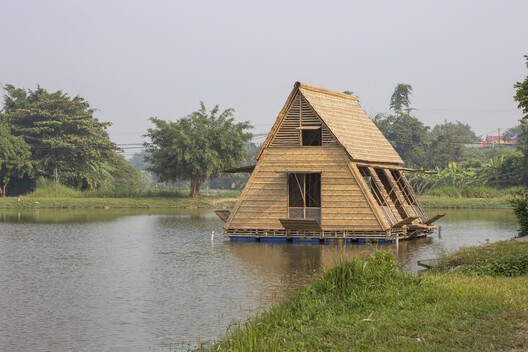
Floating House / CTA | Creative Architects
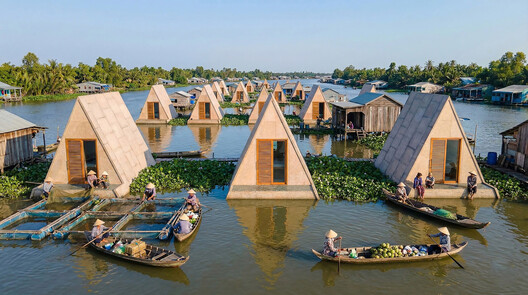
DD16 / BIO-architects

DOC - Temporary Floating House / Lime Studio

Floating House / Friday SA

Cultural
AquaPraça Floating Plaza / Carlo Ratti Associati + Höweler + Yoon Architecture
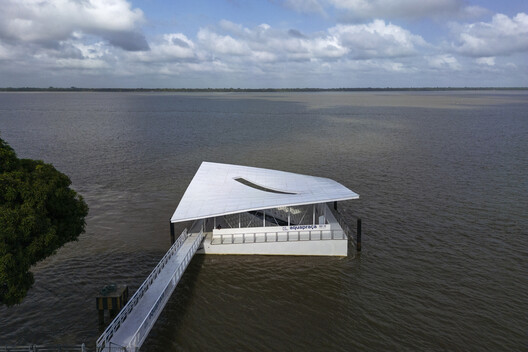
Pavilion of Reflections / Studio Tom Emerson

Water Way / EKA Sisearhitektuur

AntiRoom II Pavilion / Elena Chiavi + Ahmad El Mad + Matteo Goldoni

Educational
Pusaran Ocean Deck / RAD+ar (Research Artistic Design + architecture)
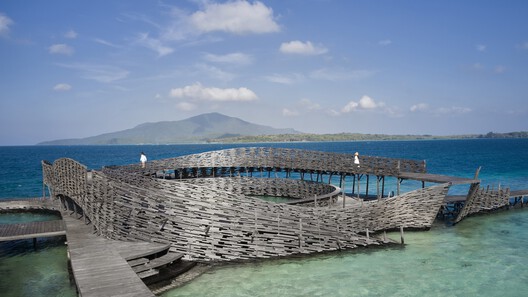
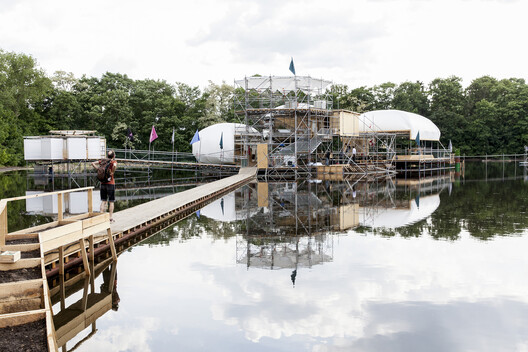
Floating University Berlin / raumlabor berlin
Makoko Floating School / NLÉ

Recreational
The Floating Kayak Club / FORCE4 Architects

Trosten Floating Sauna / Estudio Herreros
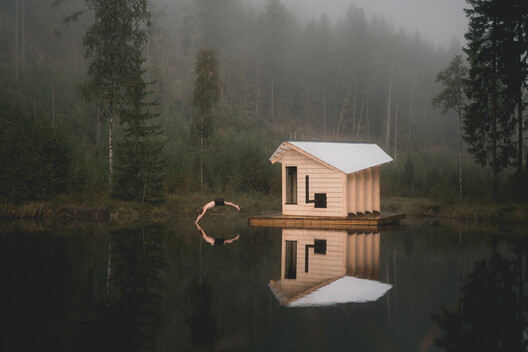
Water Cave Sauna / Rabagast Studio
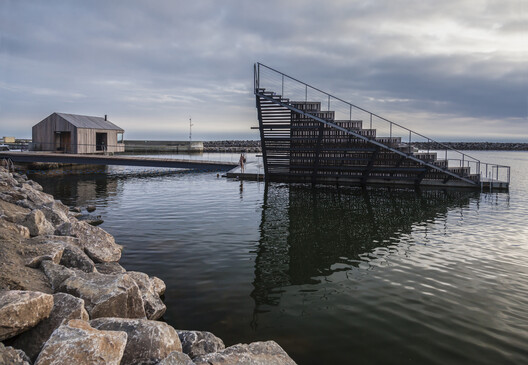
Hasle Harbour Bath / White
Infrastructure
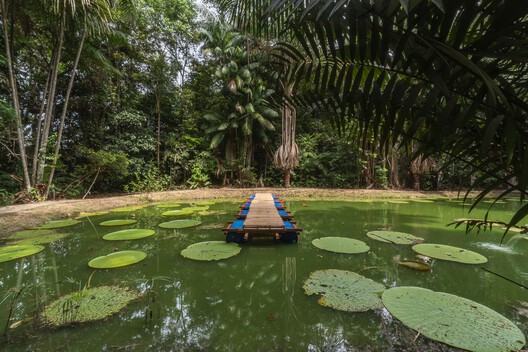
Floating Bridges in Manaus / Colectivo Aqua Alta
Floating Islands of Sky / unarchitecte
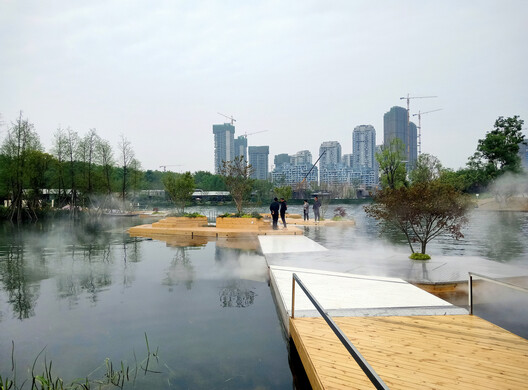
Dutch Floating Bridge / RO&AD Architecten

Hospitality
GCP Wood Cabins Hotel / Atelier LAVIT
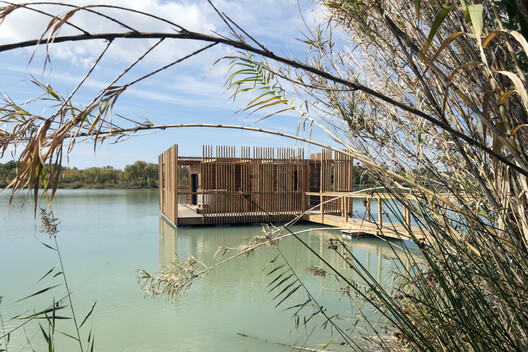
Restaurant Iris / NORM Architects + Kvorning Design
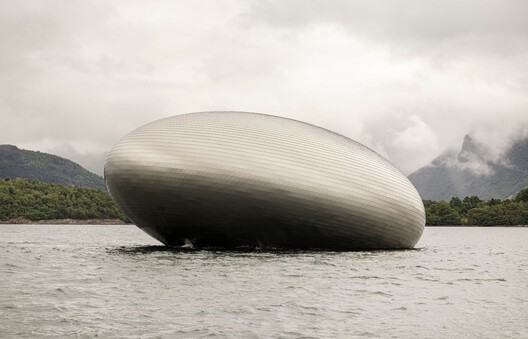
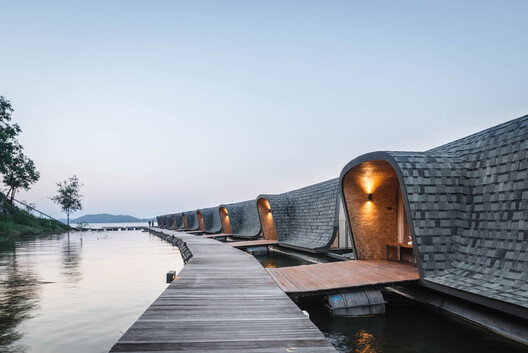
Z9 Resort / Dersyn Studio
Public Spaces
Canal Swimmer's Club / Atelier Bow-Wow + Architectuuratelier Dertien 12

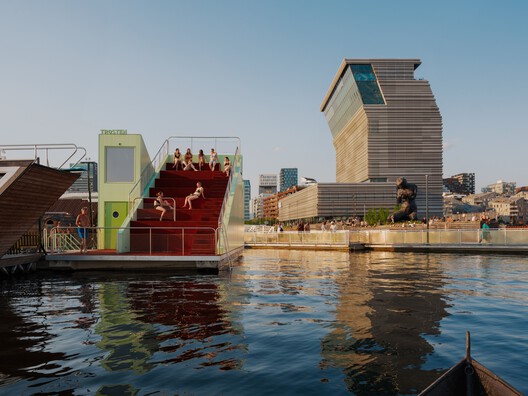
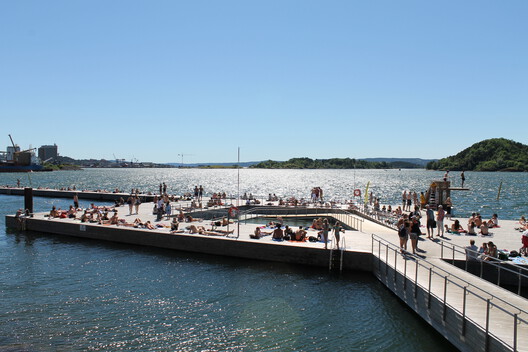
Sørenga Sjøbad / LPO arkitekter
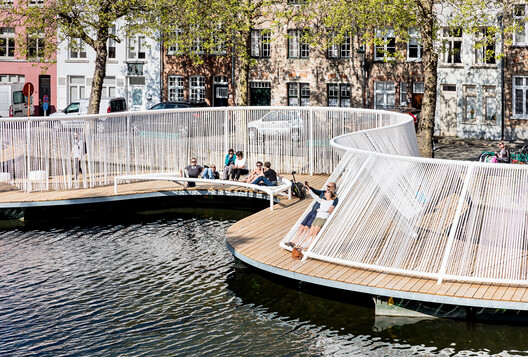
The Floating Island / OBBA & Dertien12
This article was originally published on December 23, 2017, and republished on April 3, 2026.
This article is part of the ArchDaily Topic: Light, Lighter, Lightest: Redefining How Architecture Touches the Earth, proudly presented by Vitrocsa, the original minimalist windows since 1992.
Vitrocsa designed the original minimalist window systems, a unique range of solutions, dedicated to the frameless window boasting the narrowest sightline barriers in the world. Manufactured in line with the renowned Swiss Made tradition for 30 years, Vitrocsa's systems "are the product of unrivaled expertise and a constant quest for innovation, enabling us to meet the most ambitious architectural visions."
Every month we explore a topic in-depth through articles, interviews, news, and architecture projects. We invite you to learn more about our ArchDaily Topics. And, as always, at ArchDaily we welcome the contributions of our readers; if you want to submit an article or project, contact us.