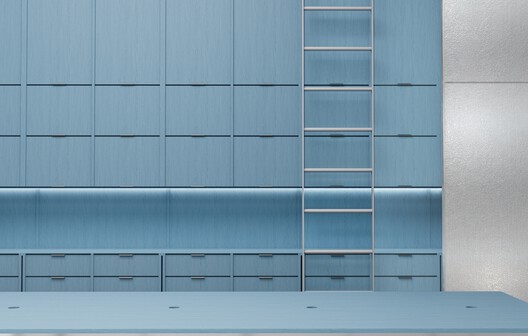
"We can really bring a hospitality look into a workplace, which is something that our clients have been asking for, for many years," says Mark Harder, a design director at Gensler. The warmth of wood, the texture of leather, and the tactile surfaces found in hotels and restaurants are also sought in offices, airports, and shared corridors. Bringing these qualities into different settings, however, requires considering how materials will respond to everyday use.
Designers must weigh the characteristics of wood veneer, the cost of leather, and the maintenance requirements of fabrics. Depending on the application, these considerations can limit where and how a material is used, prompting a search for alternatives that retain aspects of its appearance and texture.
With these questions in mind, Gensler and PoliLam developed Raw & Refined, a laminate collection informed by references from fashion and hospitality interiors. Its first release brings together 18 coordinated designs, combining a varied color palette with woodgrain, woven, leather-like, and metallic textures. The collection explores how these references can be adapted to different interior applications through laminate surfaces.
From Fashion References to Interior Finishes
The teams began by looking at elements that interested them in fashion: woven leather, distressed materials, vibrant colors, and the layering of different finishes. Rather than developing each surface in isolation, they considered how colors and textures could work together across furniture, walls, and other interior elements.
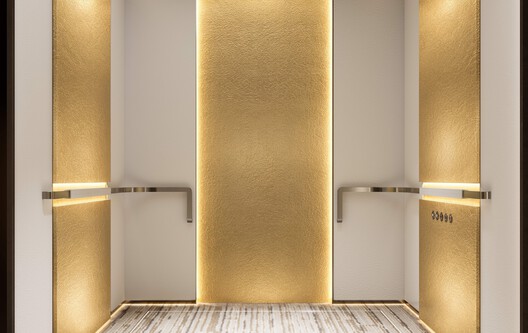
The metallic designs feature deliberately irregular textures over a brushed-metal appearance. Incorporating real metal, the finishes recall the creases of a flattened candy wrapper. Available in gold and silver tones, they introduce a textured variation on familiar metallic surfaces, with potential applications in retail and hospitality interiors.
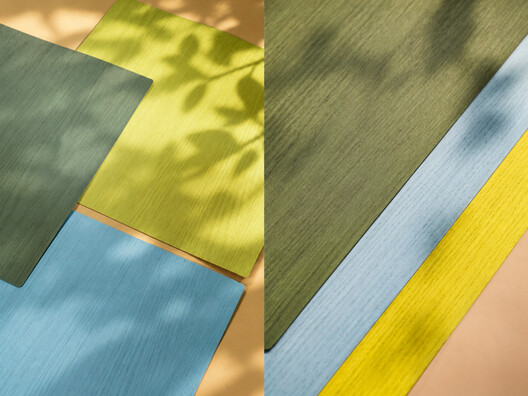
For the woodgrain designs, the team selected an ash veneer as a reference and introduced more vivid colors, pairing them with PoliLam's deep wood texture. The grain remains visible beneath the color, retaining variation across the surface. Gensler's designers suggest these finishes for furniture and walls, where they offer a way to combine a pronounced color with the visual detail of woodgrain.
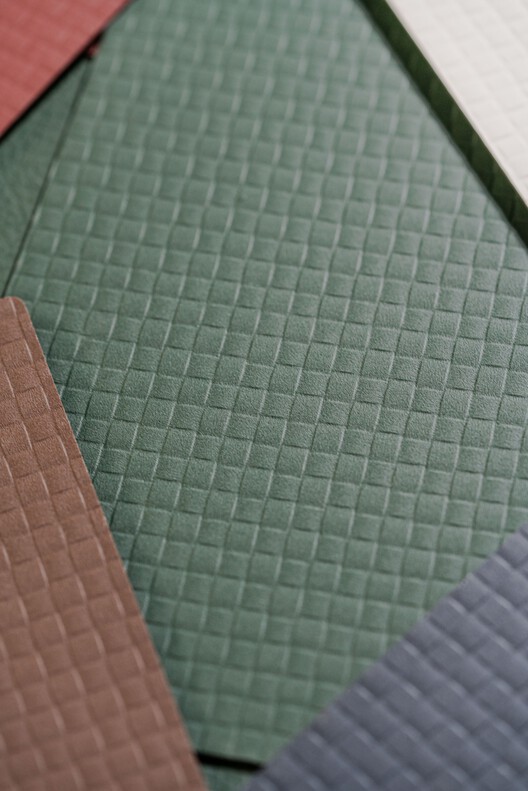
The woven designs explore how a surface can suggest different materials. Inspired by woven leather in fashion, their fine texture can read as leather in one color and resemble fabric in another. Other color treatments may give the same pattern a metallic appearance. This variation allows a shared texture to take on different roles within an interior palette.
A companion family uses a leather-like texture while sharing the woven designs' colors. The coordinated palette allows designers to pair different surface treatments without introducing a separate set of tones. According to PoliLam, most of the leather and woven designs incorporate its fingerprint-resistant ACE Surfaces technology, with solid-core options also available within the leather range.
The final design, Gallery White, was developed in response to Gensler designers' search for a white with a particular tone and color temperature. Alongside the collection's more textured and colorful finishes, it provides a neutral surface that can be used to connect different elements of a scheme. Gallery White also incorporates ACE Surfaces technology.
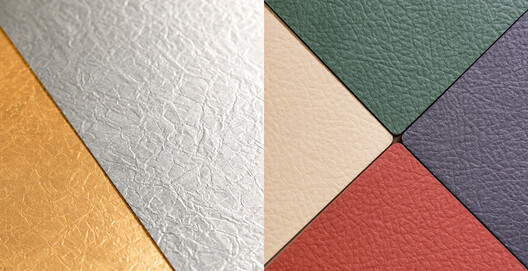
Together, the families offer several ways to combine matching colors and contrasting finishes. A similar tone can carry across a woven surface and a leather-like panel, while a colored woodgrain or metallic finish introduces a different texture. The collection's cohesion comes from these relationships, leaving room for designers to vary the combinations according to the project.
Adapting Material References to Different Uses
"A lot of times, we are restricted on what we can use based off the natural performance of a product. But with this collection, we were able to expand that to make it more usable across different market sectors," says Angel Gonzales, resource director at Gensler.
The use of laminate allows these material references to be considered for applications where cost, cleaning, or maintenance requirements may influence the choice of finish. A leather-like texture, for example, offers a different approach to a large wall surface, while woodgrain patterns provide visual consistency across panels and furniture.
The collection includes conventional HPL, ACE Surfaces, and ACE Surfaces Solid Core options. These variants have different specifications, so properties associated with a particular finish should be checked against its technical documentation. Fingerprint resistance, available thicknesses, and core options are relevant to the selection process, alongside the appearance of the surface.
This makes the relationship between design and application central to the collection. A finish selected for its color or tactile quality must also suit its location, supporting substrate, edge detailing, and expected use. Coordinated finishes can help maintain a consistent palette across a project while allowing individual selections to respond to those conditions.
Gensler and PoliLam see Raw & Refined as an ongoing collaboration. Further designs within the existing families, along with additional themes, are planned, and designers are invited to share feedback on the collection. That exchange can help guide subsequent developments, connecting new colors and textures to the practical needs encountered in interior projects.


