
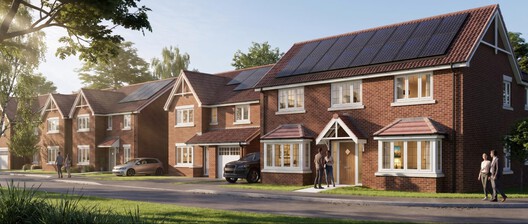
As architectural projects grow more complex and requirements evolve, the ability to iterate quickly is increasingly important to the design process. For Bellway, one of the UK's largest homebuilders, faster design iteration and visualization have become key to meeting these demands. It is not just a way to present finished designs, but also a tool for testing ideas, communicating options, and making decisions earlier in the development process.
David Law, Bellway's Group BIM Manager, is part of a team responsible for developing standardized house designs. These designs are then shared with regional divisions as the basis for full residential developments. The workflow must accommodate changing regulations, including the UK's Future Homes Standard, as well as growing expectations around accessible and inclusive housing. At the same time, visual material is also needed across design development, sales, and marketing.
By integrating real-time visualization and AI-assisted design exploration into its existing design workflow, the company is exploring how faster visual feedback can support both design decisions and image production.
When Iteration Outpaces Delivery
As Bellway's designs evolved to meet changing regulations and customer expectations, so did the need to iterate quickly and communicate design decisions clearly. However, producing the visual material needed to support that process was often time-consuming, making it challenging to keep up with an increasingly iterative design process.
"Historically, creating compelling visual assets was a manual and time-intensive process for us," said Law. "We spent significant time placing landscaping elements, adjusting lighting, refining camera angles, and repeatedly tweaking scenes to create marketing-ready imagery."

Stronger Results in Less Time
The shift toward faster, more iterative design and visualization has a practical impact on how Bellway's design team works. Bellway has used Enscape as part of its Revit workflow for nearly a decade. Building on this foundation, the team recently added the AI-powered ideation and visualization tool Veras, creating a more connected workflow for exploring and communicating design ideas.
This shift has changed the team's day-to-day workflow. Instead of being constrained by the effort required to produce each image, Bellway can explore more design options, iterate more freely, and refine concepts earlier, helping to reduce the risk of costly changes later in the process.
Faster visualization allows Bellway to deliver high-quality imagery to sales and marketing teams earlier, helping them communicate the look and feel of future homes and communities well before construction is complete.
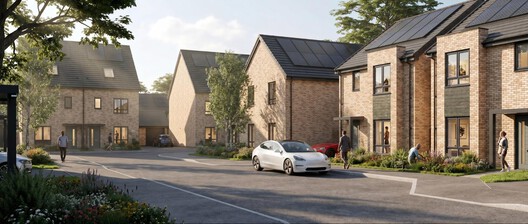
Internal alignment and decision-making have also improved: "Real-time visualization has changed how we make decisions internally," Law explains. "Not everyone can interpret a floor plan the same way, but when we can quickly create and compare visual options, teams immediately understand the differences. It helps us make faster decisions and reach the right outcome with more confidence."
Discover how to accelerate design and stay competitive in a fast-moving market at Chaos.com.