
An architect's training requires a wide range of knowledge. Various disciplines, such as art, mathematics, history, and sociology, enrich their cultural background, providing the tools and knowledge necessary to make the world around us a better place. Books are an essential resource for this learning process, and thanks to the internet, there are no longer any excuses to stop expanding our knowledge base.
We have searched the web to curate a unique selection of architecture books in Spanish that you can read on your computer or download directly to a tablet. The list includes classics of Vitruvian architecture, drawing manuals, and universal accessibility design guides, along with references to the work of inspiring architects.
We hope you enjoy reading these books!
1. Arquitectónica: Sobre la idea y el sentido de la arquitectura (1966) / José Ricardo Morales
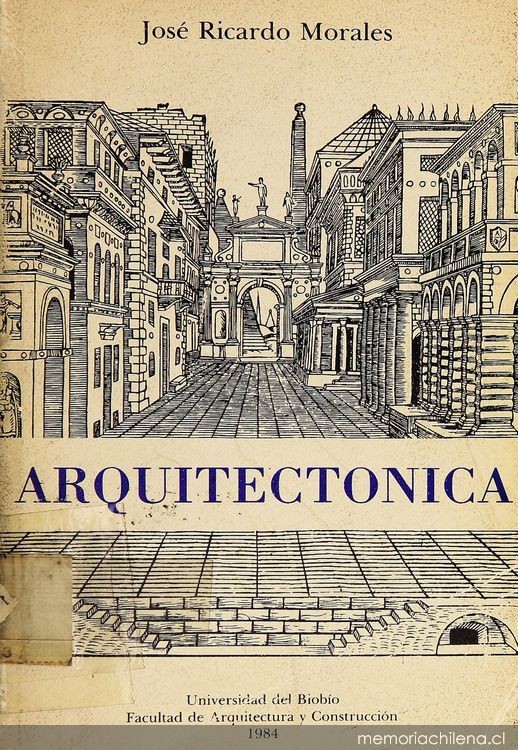
José Ricardo Morales (Málaga, 1915 - Santiago, 2016) was a Spanish writer based in Chile who served as a professor of Art and Architectural History at the Faculty of Architecture and Urbanism (FAU).
According to the University of Chile's Faculty of Architecture and Urbanism, the text “begins with a critical exposition of the dominant trends in art and architectural history from the 18th century to the formulation of regional ontologies in the late 19th and early 20th centuries. In the publication, the author then addresses currently prevailing architectural ideas—formal or classical, functional, and spatial—conducting a critical review from his perspective. In a second volume, he presents his own theory of architecture, attempting to overcome the limitations of the ideas evaluated here.”
2. VARIA Architectonica (2016) / Alberto Campo Baeza

VARIA ARCHITECTONICA is the most recent book by architect and design studio professor Alberto Campo Baeza (Valladolid, 1946). The text compiles writings following 1996's "The Built Idea" (translated into more than 6 languages), 2009's "Thinking with Your Hands"—which follows the same path as the former—2012's "Principia Architectonica," and 2014's "Poética Architectonica."
It begins with a particularly interesting essay, “La manzana y la hoja” (The Apple and the Leaf), where Campo Baeza, drawing on Newton and paying tribute to Christian Kerez, defends the formal freedom of architectural structure. In the author's words, “all these writings are an attempt, by analyzing architecture through words, to explain the reasons why and how I believe architecture should be created.”
3. Arquitectura y Derechos Humanos (2014) / Jorge Lobos

Through five workshops conducted in vulnerable areas around the world, Chilean architect Jorge Lobos explores how architecture can provide solutions to cases of extreme poverty or natural disasters, aiming to open a discussion on architecture as a vehicle for development.
4. Los Cuatro Libros de Arquitectura (1797) / Andrea Palladio

Palladio's most important written work is "The Four Books of Architecture" (*I quattro libri dell'architettura* in Italian), an architectural treatise published in Venice in 1570 in four sections. The text is accompanied by illustrations of designs, sections, and details of architectural elements.
5. Regla de las cinco ordenes de Arquitectura (1714) / Giacomo Barozzi da Vignola

Giacomo Barozzi da Vignola (Vignola, 1507 – Rome, 1573) wrote "Rules of the Five Orders of Architecture." Published in 1562 and considered one of the great architectural treatises of the 16th century, it has been translated into numerous languages and has served as an essential reference for scholars and designers of classical buildings.
It summarizes the five architectural orders, dissecting them into all their parts, perfectly proportioned and drafted. It is based on the work of Vitruvius and the Roman structures he studied firsthand.
6. Carpinterías (2008) / Cazú Zegers

Carpinterías is a book dedicated to the woodwork of renowned Chilean architect Cazú Zegers. It describes vernacular processes and contemporary architectural techniques in Chile, highlighting the fine and meticulous craftsmanship developed over many years, primarily in the south of the country.
7. UNFINISHED: Catálogo, Pabellón de España, Biennale Architettura 2016 / Iñaqui Carnicero, Carlos Quintáns Eiras (Editores)

Arquia Foundation has made PDF versions of some of its publications available on its website. This is the case, for example, with the catalog of UNFINISHED, the Spanish Pavilion at the 2016 Venice Architecture Biennale. In this publication, you can view all the designs that were part of the pavilion curated by Iñaqui Carnicero and Carlos Quintáns, which won the Golden Lion for Best National Participation at the 15th International Architecture Exhibition.
8. Modernización y nacionalismo de la arquitectura mexicana en cinco voces: 1925-1980 (2011) / Yolanda Bojórquez Martínez

Yolanda Bojórquez analyzes the discourse of five key 20th-century Mexican architects—José Villagrán García, Luis Barragán, Pedro Ramírez Vázquez, Juan O’Gorman, and Ignacio Díaz Morales—to identify the elements that shaped the construction of a modernized nation, marked by contradictions, rivalries, and antagonisms, as well as consensus and recognition.
9. Fotografía como arquitectura. Click 1 (2016) / Varios Autores

Since the early decades of the 20th century, photography has been an essential ally of architecture, aiding in its development, teaching, and learning. In recent years, the relationship between the two disciplines has only grown stronger with the emergence of new practices that challenge both architects and photographers. This book aims to contribute to a deeper understanding of how each discipline looks at the other and their mutual impacts.
The volume compiles contributions from Spain, Mexico, Chile, Ecuador, Brazil, and Venezuela, stemming from the International Seminar on Modern Architecture and Photography held in Barcelona on April 9–10, 2015.
10. Los diez libros de arquitectura (1797) / Leon Battista Alberti
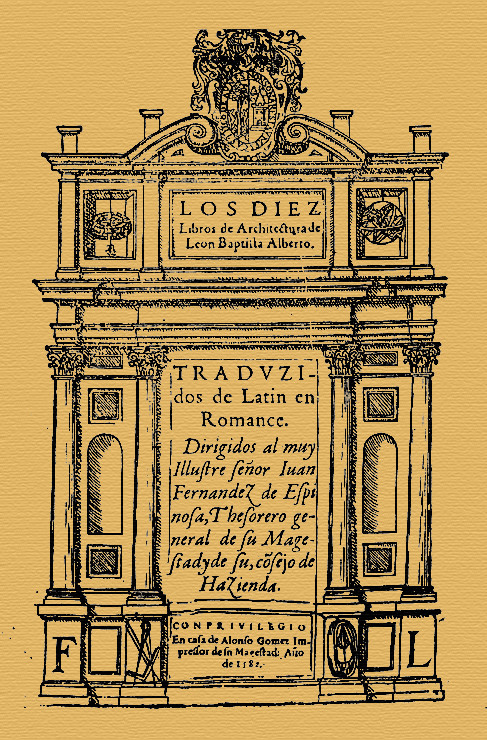
Leon Battista Alberti was the first art theorist of the Renaissance, an emblematic figure recognized for his dedication to a wide range of disciplines, including the priesthood, humanism, architecture, mathematics, and poetry.
Born from his interest in establishing theoretical and practical rules to guide artists, this work is addressed not to specialists, but to a general audience with a humanistic education, using Vitruvius's ten books of architecture as a model.
11. Arquitectura contemporánea en contextos patrimoniales: Una metodología de integración (2009) / Pablo Vázquez Piombo

This book is a significant contribution to the field, addressing the scarce theoretical and methodological resources available on integrating contemporary architecture into heritage contexts—a practice historically carried out in a relatively empirical manner. Furthermore, many critics have addressed this topic superficially, relegating theoretical and methodological debate to the background. Consequently, the author designs a methodological framework to assist professionals in integrating contemporary architecture into cultural heritage settings.
12. Manual de Calles Compartidas (2015) / Dérive Lab

Dérive Lab is an organization founded in 2012 committed to exploring, understanding, and inspiring new ways of living and thinking about life. It aims to generate knowledge and improve people's experiences of space.
This manual presents the concept of the "street" not just as a transportation corridor, but as the quintessential public space of our cities. It seeks to serve as a resource to improve safety for pedestrians and commuters while stimulating the public life that has been sidelined in recent decades.
13. Urbanismo Moderno en Latinoamérica (2013) / Revista DeARQ

DeARQ is a peer-reviewed, indexed journal published twice a year in print and digital (open access) formats by the Universidad de los Andes (Bogotá, Colombia). This issue, dedicated to the Modern Movement in Latin America, explores Le Corbusier's connections to the South American landscape, along with urban projects in Punta del Este, Mexico City, Brasília, and Bogotá.
14. Arquitectura Escolar Pública como Patrimonio Moderno en Chile 1937-1960 (2015) / Claudia Torres

“Arquitectura Escolar Pública” was produced as part of the project “Public school architecture in Chile: Registry and assessment of modern heritage.” Today, these schools often go unnoticed in Chilean cities, unrecognized for their social, aesthetic, and architectural significance, even though they represent 20th-century heritage and the image of State architecture.
The project compiled a registry of 165 works, including urban and rural schools in the country's central region, and analyzed their primary architectural typologies to identify how they adopted the modernist principles of the era.
15. Teoría de la Arquitectura Unificada (2013) / Nikos Salingaros

Until 2013, the book Unified Architectural Theory: Form, Language, Complexity was only available in the United States. Through a collaboration with ArchDaily en Español, the texts by Australian mathematician Nikos Salingaros are now also available to Spanish-speaking students and architects.
The book emerged from a lecture series on architectural theory that Salingaros delivered in 2012, presenting scientific findings on how humans respond to different architectural forms and spaces. By the end of the course, students were equipped with new methods to evaluate which buildings, urban spaces, and interiors are most suitable for human well-being.
16. Arquitectura Pública e Innovación Social (2015) / Taller de Diseño EDU

Arquitectura Pública e Innovación Social compiles 15 projects that transformed the city of Medellín, designed by the Taller de Diseño EDU (Urban Development Corporation of Medellín).
"Through various programs and successive centralized governments, we managed to ensure that the residents of our neighborhoods saw their own dreams materialized day by day. To achieve this, we have walked our streets and made Architecture and Urbanism a platform where citizens and their dreams meet the state and its policies and programs," says John Octavio Ortiz.
17. Modernidades ignoradas. Indagaciones sobre arquitectos y obras (casi) desconocidas de la modernidad (2014) / Roberto Goycoolea Prado (Editor)

The historiography of the Modern Movement has traditionally focused on the unique works of "great masters" and the locations where they built, offering a partial view of a phenomenon that was far more extensive and profound than canonical narratives suggest. An inevitable consequence of this neglect is the theoretical, social, and physical devaluation of an important cultural heritage, resulting in a loss of historical memory and legacy.
This book compiles articles submitted for the 100th issue of the journal CIUDADES (RNIU, Mexico) on this topic. The contributions are grouped by the perspectives through which these overlooked modernities are addressed: Urban Perspectives, Architectural Perspectives, Design Perspectives, and Other Perspectives.
18. German Samper (2011) / Catalina Samper

This book presents the work of Colombian architect Germán Samper, spanning from his years at Le Corbusier’s atelier in the early 1950s to the first decade of the 21st century. The volume brings together multiple voices, with a group of architects independently researching specific aspects of his career, sharing their opinions, and documenting their reflections. The essays are interspersed with presentations of key projects. This non-linear structure allows readers to explore the chapters in any order, depending on their interests.
19. Cine y arquitectura (2002) / Jorge Gorostiza López

This publication explores the relationship between cinema and architecture, reflecting on space through cinematographic technique and language. It uses film classics such as *The Crazy Ray* (René Clair, 1925), *Citizen Kane* (Orson Welles, 1941), and *Mon Oncle* (Jacques Tati, 1958) as case studies.
20. Diccionario de Arquitectura Civil (1802) / Benito Bails

Precisely what its title suggests, this early 19th-century dictionary defines architectural terms from “Ábaco” to “Zócalo,” including archaic spellings like “Ormigón” (sic).
21. Apuntes de Viajes II (2010) / Jorge Iglesis Guillard

Chilean architect Jorge Iglesis, renowned for his hand-drawn sketches, highlights the importance of drawing and travel through a selection of his best work compiled in a volume of over 400 pages.
22. En torno a la Modernidad, Reflexiones e Ilustraciones (2015) / Alex Martínez Suárez (Editor)

The Universidad Iberoamericana in the Dominican Republic presents a collaborative project developed within its Architectural Theory course, focusing on the study and analysis of the key ideas that have shaped architecture up to the contemporary era.
Each topic is introduced with a brief reflection followed by an illustration that visually synthesizes the core ideas using digital collage techniques.
23. Magacín de Arquitectura de la Escuela de Toledo, Especial: Oíza / Javier Velles

This publication is dedicated to Spanish architect Francisco Javier Sáenz de Oíza, known for works such as the Torres Blancas in Madrid and the Oteiza Museum in Alzuza, Navarre.
24. Espacios de Paz (2014) / Pico Estudio

This publication showcases the participatory design projects that PICO Estudio has implemented in Venezuela, aiming to physically and socially transform public spaces in conflicted urban contexts. Through photographic documentation, it demonstrates how collaboration among national and international architecture practices, volunteers, and local communities can reshape a neighborhood's urban landscape by addressing the immediate needs of its inhabitants.
25. Arte de proyectar en arquitectura (1995) / Ernst Neufert

This manual originated from documentation compiled for a series of lectures at the Weimar School of Architecture. Essential for building design, this information is based on dimensions, practical experience, and research into human spatial needs, compiled with an outlook receptive to new possibilities and requirements.
This link has been removed due to copyright issues related to the linked ISSUU. You can view an excerpt of this publication here.
26. Arquitectura: Forma, Espacio y Orden (1982) / Francis D.K. Ching
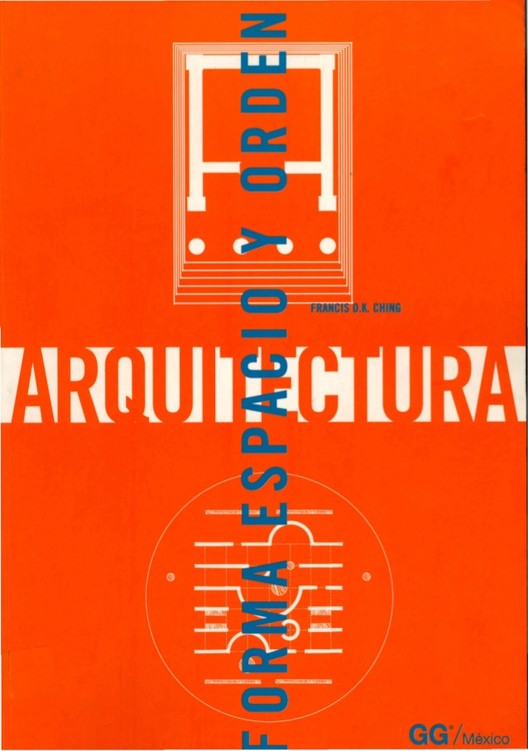
This book has become a foundational manual on architectural composition and a classic for any architecture student. Through the precise illustrations of Francis D.K. Ching himself, it introduces concepts ranging from basic to complex architectural elements: from point, line, plane, and volume to form, space, organization, circulation, proportion, scale, and ordering principles.
This link has been removed due to copyright issues related to the linked ISSUU. You can view an excerpt of this publication here.
27. Compendio de los diez libros de arquitectura (1752) / Marco Vitruvio
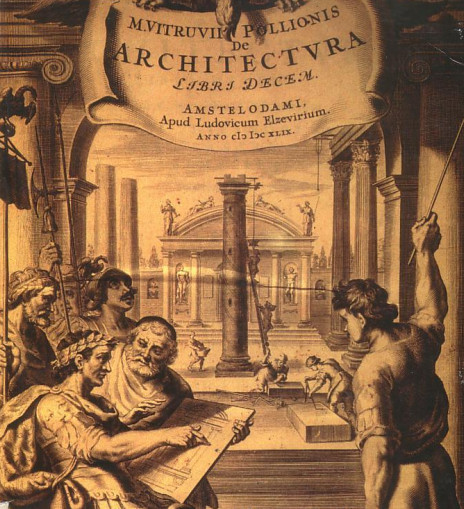
Vitruvius served as an architect for Julius Caesar during his youth. This text is the oldest surviving treatise on architecture and the only one remaining from classical antiquity (likely written between 27 BC and 23 BC). Drawing on Hellenistic theorists, the work presents the architectural knowledge of his time, encompassing not only the art of building construction—the focus of the first seven books—but also public works and the design of construction machinery. In the first book, Vitruvius explores the general principles of architecture, as well as how to select suitable sites for cities and residences.
28. Discapacidad y Diseño Accessible (2007) / Jaime Huerta Peralta

Peruvian architect Jaime Huerta offers guidelines for urban and architectural design that accommodates people with disabilities, using illustrations that detail the dimensions and conditions required for accessible design.
This article was written by Pola Mora. The translation is powered by AI.

