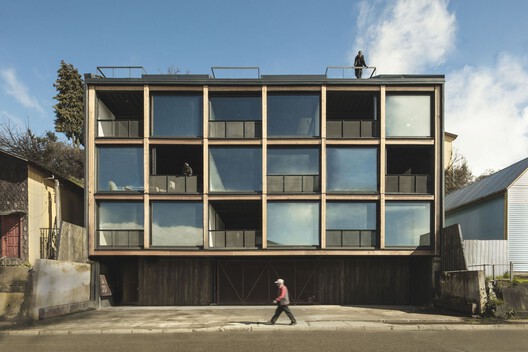
Every regulation is born with a clear intention: to establish a starting point. It is a way of setting a minimum baseline, bringing order to what was perhaps previously assumed implicitly or lacked a common framework. However, like everything involving architecture—and especially our way of living—these frameworks also evolve: they expand, adjust, and become more detailed around new sustainable housing models. This is precisely the case with the new thermal regulations in Chile, which do not emerge from scratch but rather as part of an ongoing process that has steadily integrated new energy efficiency criteria within the General Ordinance of Urbanism and Construction (OGUC).
Historically, previous updates to these regulations introduced improvements across various components of the thermal envelope—such as walls, ventilated floors, windows, and, later on, doors and foundation walls—aimed at increasing comfort and energy efficiency. At the same time, the Residential Energy Rating (CEV) was implemented—a tool that uses an alphabetical scale to assess energy performance, ranging from "G" for the lowest efficiency to "A+" for the optimum level. This evaluation compares a home's energy consumption against a standard reference, meaning a rating closer to A+ reflects greater energy savings and, consequently, higher efficiency.


.jpg)
