
Nearly one hundred thousand square meters make up the site of one of Brazil's most important industrial heritage landmarks. Opened in 1926 by a Canadian group, the Perus Portland Cement Factory in São Paulo was crucial to the region's growth, leaving a legacy that goes far beyond its architectural remains.
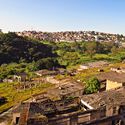
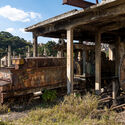
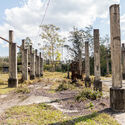


Made possible by the construction of the São Paulo Railway — which still operates today under the CPTM — the factory brought hundreds of workers to the then-small village. These included both foreign employees who would hold high-level positions and modest residents from the countryside ready to haul heavy bags of cement. Numerous incentives and strategies were devised to draw workers to the area, such as the construction of the workers' village built around the factory. It offered housing equipped with basic infrastructure like water, sewage, and electricity (which only reached the rest of the neighborhood in 1953), as well as medical and dental care, a butcher shop, and a pharmacy.


