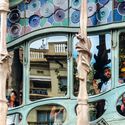
Analyzing Antoni Gaudí's Casa Batlló through neuroarchitecture

Subscriber Access

Casa Batlló, located on the iconic Passeig de Gràcia in Barcelona, Spain, is an architectural masterpiece that embodies a synthesis of creativity, innovation, and architect Antoni Gaudí's deep connection with nature. Built between 1904 and 1906, this residence is a major tourist attraction in the city and an important contribution to architectural history. Here, we analyze Casa Batlló through concepts central to the field of neuroarchitecture.


Analyzing Antoni Gaudí's Casa Batlló through neuroarchitecture - Image 2 of 6Analyzing Antoni Gaudí's Casa Batlló through neuroarchitecture - Image 3 of 6Analyzing Antoni Gaudí's Casa Batlló through neuroarchitecture - Image 4 of 6Analyzing Antoni Gaudí's Casa Batlló through neuroarchitecture - Image 5 of 6Analyzing Antoni Gaudí's Casa Batlló through neuroarchitecture - More Images+ 1

Antoni Gaudí, born in 1852, was known for his revolutionary vision and his profound understanding of the relationship between architecture and nature. His approach was grounded in how the built environment can affect the human mind, which is why he is often considered a precursor of neuroarchitecture, even though the field emerged long after his time.

Content Loader

Image gallery

See allShow less
About this author
Cite: Albuquerque, Ciro . "Analyzing Antoni Gaudí's Casa Batlló through neuroarchitecture" [Analisando a Casa Batlló de Antoni Gaudí a partir da neuroarquitetura] 04 Jul 2026. ArchDaily. (Trans. Romullo Baratto) Accessed . <https://www.archdaily.com/1136414/analyzing-antoni-gaudis-casa-batllo-through-neuroarchitecture> ISSN 0719-8884
Photo by Ruggiero Calabrese, via Unsplash

从神经建筑学视角分析安东尼·高迪的巴特罗之家

You've started following your first account!

Did you know?

You'll now receive updates based on what you follow! Personalize your stream and start following your favorite authors, offices and users.