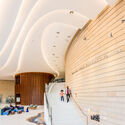
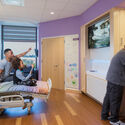
Neuroarchitecture and autism: guidelines for healthy and welcoming designs

Subscriber Access

The contemporary understanding of neuroarchitecture has sparked a renewed focus on inclusive design, emphasizing the creation of environments that respect and respond to people's specific needs. Against this backdrop, the architectural design approach for individuals on the autism spectrum has gained prominence.
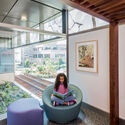
Neuroarchitecture and autism: guidelines for healthy and welcoming designs - Image 2 of 6Neuroarchitecture and autism: guidelines for healthy and welcoming designs - Image 3 of 6Neuroarchitecture and autism: guidelines for healthy and welcoming designs - Image 4 of 6Neuroarchitecture and autism: guidelines for healthy and welcoming designs - Image 5 of 6Neuroarchitecture and autism: guidelines for healthy and welcoming designs - More Images+ 1

According to the World Health Organization (WHO), Autism Spectrum Disorder (ASD) comprises a range of conditions characterized by some degree of difficulty with social interaction, verbal and non-verbal communication, and specific interests in activities performed repetitively.

Content Loader

Image gallery

See allShow less
About this author
Cite: Albuquerque, Ciro . "Neuroarchitecture and autism: guidelines for healthy and welcoming designs" [Neuroarquitetura e autismo: diretrizes para projetos saudáveis e acolhedores] 07 Jul 2026. ArchDaily. (Trans. Baratto, Romullo) Accessed . <https://www.archdaily.com/1136311/neuroarchitecture-and-autism-guidelines-for-healthy-and-welcoming-designs> ISSN 0719-8884
Photo © Emily Hagopian

神经建筑学与自闭症:健康与温馨空间的设计导则

You've started following your first account!

Did you know?

You'll now receive updates based on what you follow! Personalize your stream and start following your favorite authors, offices and users.