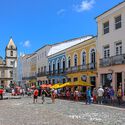
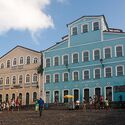
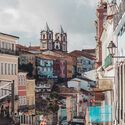
Pelourinho, located in the Historic Center of Salvador, Bahia, is one of the most well-known, publicized, and visited landmarks of the Bahian capital. With an urban and architectural colonial heritage of great cultural significance, it was designated a World Heritage Site by UNESCO in 1985. Spanning over four centuries of history, the district has hosted a wide range of activities, functions, and dynamics, its trajectory deeply intertwined with that of the city itself. Today, it is one of Salvador's primary tourist attractions, hosting a variety of tourism facilities such as hotels, restaurants, and museums in addition to its colonial architecture.
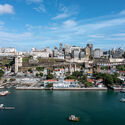

Founded in 1549, Salvador was Brazil's first capital. Due to its rugged topography—marked by a geological fault that creates a significant elevation difference—its urban layout was initially divided into "Cidade Baixa" (Lower City) and "Cidade Alta" (Upper City). "Cidade Baixa," located in the port area, concentrated the city's commercial activities, while "Cidade Alta," atop the elevation where Pelourinho sits, concentrated administrative, political, and residential functions due to its strategic defensive location.