Far beyond the technical knowledge of his engineering background, Eladio Dieste (1917-2000) developed a rare architectural sensibility. He was a pioneer and master of reinforced masonry—essentially a relatively thin "shell" system in which ceramic blocks are compressed, steel bars are tensioned, and concrete binds the assembly together. Structural strength is enhanced through the design of complex spatial geometries that respond precisely to applied loads, thereby minimizing material use. This allows large spans and cantilevers to be achieved, while elegantly transferring loads to the ground.
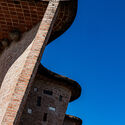
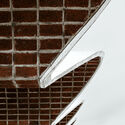
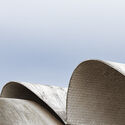
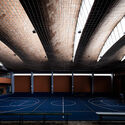

The honesty of the structural and construction system thus takes center stage in his work. Dieste demonstrated mastery through his exquisite control of natural light, regulating its play across the textured surfaces of the ceramic blocks. In doing so, he created varied atmospheres ranging from the mystical to the dramatic, all while remaining highly functional. He left a vast legacy of buildings in Uruguay and other countries, including several in Brazil. By treating secular and sacred spaces with the same level of care, he elevated ordinary work environments, such as factories and warehouses, while simultaneously building masterpieces like the Iglesia de Atlántida Cristo Obrero, among others: