
Spanish studio Nagami used discarded medical equipment to create a portable toilet. The plastic material was melted down for 3D printing. On a large scale, the project could provide an alternative for deploying public toilets wherever needed.
The toilet took only three days to complete. The structure consists of three main parts: the oval-shaped body, a sliding door, and the toilet bowl. Beyond the technology, the project's design is noteworthy. Unlike conventional chemical toilets, this one is “aesthetically pleasing.”



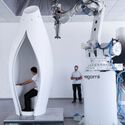


Additionally, this is no ordinary toilet. The seat features a separation system to divert urine and solid waste, which are then composted to be used as fertilizer.

Named "The Throne," the toilet was developed for the To.org foundation, a hybrid between a charitable foundation and a venture capital fund that invests in ethical businesses and funds philanthropic projects.
According to the founders, brothers Nachson and Arieh Mimran, such projects can help bring accessible toilets to locations where this basic human right is not yet guaranteed. According to the UN, the lack of basic sanitation kills 700 children under the age of five every day. Furthermore, it estimates that nearly 50% of the global population lives without sanitation.

However, to become a viable solution in areas such as refugee settlements and low-income communities, production costs must drop drastically. Currently, 3D printing remains an expensive technology, especially for large-scale projects. For this reason, the first prototype of the portable toilet is being tested on a construction site in the Swiss Alps.
Via CicloVivo.
This article was written by Marcia Sousa. The translation is powered by AI.



