Dead End: Street Transformations That Changed the Landscape of Cities

Subscriber Access

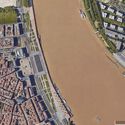
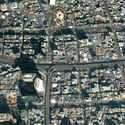
For a long time, cars were the primary protagonists of major cities. This prioritization resulted in territories occupied mostly by highways, leaving them uninviting to people. In recent years, however, many cities have undergone spatial transformations, seeking to reshape their relationship with automobiles and prioritize pedestrians and the human scale. 
Dead End: Street Transformations That Changed the Landscape of Cities - Image 2 of 9Dead End: Street Transformations That Changed the Landscape of Cities - Image 3 of 9Dead End: Street Transformations That Changed the Landscape of Cities - Image 4 of 9Dead End: Street Transformations That Changed the Landscape of Cities - Image 5 of 9Dead End: Street Transformations That Changed the Landscape of Cities - More Images+ 4

Since the beginning of the 20th century, urban territories have gradually transformed to accommodate automobiles. Driven by technological advancements and cultural shifts, cars became the main protagonists of certain cities, whose territories were carved up and bound by major highways, avenues, and overpasses. While the connectivity resulting from this model has become fundamental to society, its negative consequences have also taken a significant toll. 

Content Loader

Image gallery

See allShow less
About this author
Cite: Martino, Giovana. "Dead End: Street Transformations That Changed the Landscape of Cities" [Via sem saída: transformações viárias que mudaram a paisagem das cidades ] 07 Jul 2026. ArchDaily. Accessed . <https://www.archdaily.com/1132534/dead-end-street-transformations-that-changed-the-landscape-of-cities> ISSN 0719-8884
Los Angeles, United States. Image © Vicent Laforet

死胡同:改变城市景观的道路变革

You've started following your first account!

Did you know?

You'll now receive updates based on what you follow! Personalize your stream and start following your favorite authors, offices and users.