
Set in the heart of one of the world's most arid deserts, the Nasca aqueducts form a hydraulic system that, for nearly two thousand years, has demonstrated advanced geological and hydrological knowledge. This system allows water to be sourced for both human consumption and agriculture, creating fertile oases in the desert. The Nasca Aqueducts represent a unique hydraulic system in the Americas, owing to their distinct design, construction technique, location, and function. They serve as an exceptional testament to the capacity of ancient societies to overcome adverse conditions, offering solutions that could be applied to the climate challenges of our time.
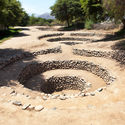

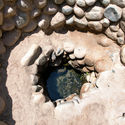
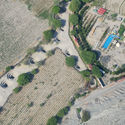

The Nasca Aqueducts are located in the province of Nasca, in the Río Grande basin in the department of Ica, Peru, where the river is fed solely by precipitation falling in the central Andes. Consequently, the river typically flows only from December to March (three months) each year. To address the resulting water scarcity in the region, the inhabitants of the ancient Nasca culture successfully tapped into underground aquifers through the technological innovation of subterranean aqueducts. (Negro, 2018)

