
The city of Brasília, inaugurated in April 1960, is perhaps one of the greatest milestones of how architecture, urbanism, and national politics intertwine. The result of Juscelino Kubitschek's government program, which promised "50 years of progress in 5," the city stands as a testament to modernism, revealing political strategies of the era such as heavy investment in the automotive industry and the widespread use of reinforced concrete. While Brasília is a milestone in global architecture, its very existence stems from political and economic strategies implemented by the government in the late 1950s. With the 2022 elections fast approaching, it is crucial for us, as a professional field, to understand how our profession is impacted by the presidency and what we can demand from the executive branch.
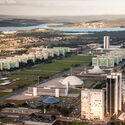

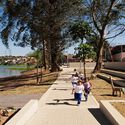


Sixty years ago, JK's rhetoric centered on promoting progress by building a modernist city in Brazil's interior, betting heavily on the automotive industry and highway-centric development. Brasília emerged as a result, along with the satellite cities that make up its periphery and the highway network spanning the Brazilian territory. In a moment of fragmentation and polarization like the one we are living in today, it is essential to recall the successful and failed experiments of the past and look to the future, evaluating which of the candidates' proposals best align with your ideal vision for the country, grounded in concepts, experiences, and core values.


