Combining new and old construction techniques, researchers from the Institute for Advanced Architecture of Catalonia (IAAC) have built a small earthen structure using 3D printing. It is the first project of its kind in Spain.
“This prototype represents a bridge between the past – vernacular earth architecture – and the future – large-scale 3D printing technology – which will not only help reshape the architecture of the future, but will also be highly useful in addressing the current climate and housing crisis worldwide,” states the Institute.
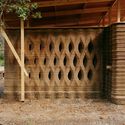
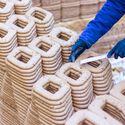
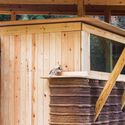



Dubbed TOVA, the structure is made of earth and water sourced on-site, mixed with additives and enzymes. According to the design team, a study of the soil properties was conducted to achieve the proper mix of clay and water percentages. This ensured the structural integrity and material elasticity required for optimized 3D printing.

The foundation was made of geopolymer and the roof of wood. To ensure durability and resistance to different environmental conditions, a waterproof coating made from raw materials like aloe and egg white was applied.
“The walls are designed to be braced with ‘T’ and ‘L’ joints, rather than straight lines. The enclosed interior space is habitable, weather-resistant, and climatically adapted through various design interventions,” explains the project team.

The entire process sought to eliminate waste and pollutant emissions. For instance, the materials used were sourced within a 50-meter radius. Low-carbon construction is crucial today, as current building methods account for 38% of total global energy-related CO2 emissions.
The building's design also took Mediterranean climatic conditions into account. The volume is compact to protect against the winter cold, but expandable during the other three seasons of the year. The walls feature a network of cavities that contain airflow and provide optimal insulation, preventing heat loss in winter and protecting against solar radiation in summer.

The construction took seven weeks to complete. It was carried out in Collserola Park in Barcelona, near the Valldaura Labs research center, by a group of students and professionals from the 3D Printing Architecture postgraduate program at the Institute for Advanced Architecture of Catalonia (IAAC).
New Buildings for a New World
Measuring just 9 m², TOVA is a prototype designed to serve as an example of sustainable housing that could be built anywhere in the world. The fast construction system, which utilizes local materials, could be used to ensure access to housing in vulnerable areas or temporary settlements, for example.

The 3D printing system allows for the development of highly customizable buildings for various uses. “The potential applications of this construction model are endless, ranging from homes to public spaces, interiors, and exteriors. Combined with other construction systems, it can accommodate complex and innovative buildings that would reduce the environmental impact currently caused by construction,” explains the Spanish Institute.
IAAC is constantly researching replicable architectural projects that meet urban needs with lower environmental impact. One example is the solar greenhouse that simultaneously produces food and energy, developed by students at the same institute.

TOVA was built in partnership with WASP, an engineering and construction company responsible for developing a similar project designed by Mario Cucinella Architects.
Via CicloVivo.
This article was written by Marcia Sousa. The translation is powered by AI.