
Italian architect Vittorio Gregotti frequently asserted that “creating the place” is the primordial architectural act, its very origin, since simply placing a stone on the ground already marks the beginning of the “modifications” that will transform a site into architecture. Driven by this urge for transformation, we see ideas materialize into relationships and concepts that often bring the genius loci to the fore through a phenomenological approach, establishing an intimate connection between architecture and context, redefining places, and reaffirming the human connection to the world.
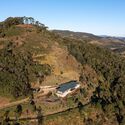

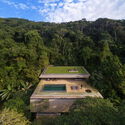
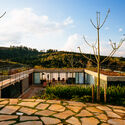

To this end, guided by the desire to anchor ourselves in the universe, we constantly seek to establish a relationship between the artificial and the natural, where topography remains the most prominent concept within the physical environment. Yet, throughout architectural history, the concept of nature has undergone significant shifts in the continuous search for an ideal balance between the natural and built landscape, transitioning from a static backdrop to an active, defining force in architectural design.


