
The first “Urban Life Competition: Ideas for Sustainable Urban Transformation” was launched as part of an initiative by the Spanish Agency for International Development Cooperation (AECID) in collaboration with the Ibero-American General Secretariat (SEGIB), under the framework of the LAIF City Life initiative and with the support of the European Commission. On June 15, 2022, the appointed jury announced the winning ideas, selected from over 90 proposals from 15 Latin American countries.

The competition aimed to “identify innovative proposals that promote urban transformations contributing to improving the quality of life of vulnerable groups in Ibero-America. The goal is to foster joint collaboration between technical teams and local communities to bring visibility to core issues and give citizens a voice.” The solutions had to offer a collective perspective on the territory, focusing on comprehensive and inclusive urban development. Consequently, the proposals were evaluated based on five cross-cutting areas: spatial, social, economic, environmental, and governance.
Below, we present the winning proposals
First Place
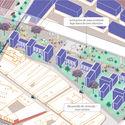
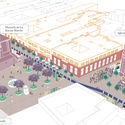
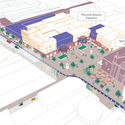
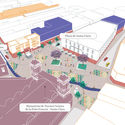
Jirón Ancash Economic-Cultural Corridor: The Barrio Altos Main Street. Lima, Peru

Problem:
Barrios Altos is a central working-class neighborhood located on the upper edge of the Historic Center of Lima. It falls within the sphere of influence of the city's primary metropolitan core, yet it is threatened by urban speculation and social displacement. Despite their privileged location, the residents of this “contested center” live in precarious housing conditions. This is due to the impact of expanding metropolitan-scale commercial activity on neighborhood dynamics, which includes a loss of residential character and heritage value. There is a clear conflict of interest among differing visions of development, which have failed to reconcile the area's diverse values and prioritize local residents as beneficiaries to reduce their vulnerability and poverty.
As one of the main thoroughfares connecting the Historic Center with metropolitan-level flows, Jirón Ancash reflects this wasted potential. Despite concentrating a significant number of community activities and services, the neighborhood's poor accessibility, safety, and habitability prevent the productive use of its facilities, public spaces, and historical monuments, as well as its development potential.

Proposal:
The proposal suggests consolidating Jirón Ancash as a strategic intervention axis for urban regeneration. Through economic reactivation and urban improvement initiatives, it aims to spark inclusive local development driven by the active participation and leadership of Barrio Altos residents, while strengthening the neighborhood's identity, heritage, and tourism value.
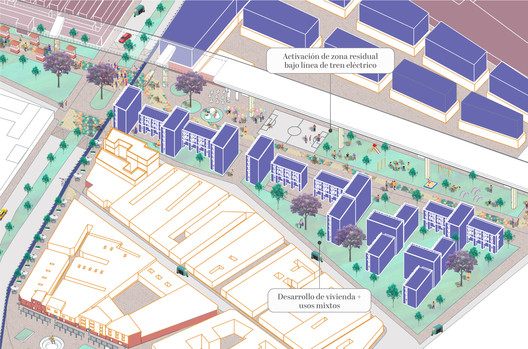
The goal is the economic revitalization of this axis by strengthening local commerce, tailored to the distinct character of each street segment, alongside restructuring the productive system and neighborhood care within an inclusive and sustainable framework. To achieve this, physical-spatial improvements aim to consolidate services and common spaces as anchor nodes for the neighborhood. Subsequently, activating public space and adjacent streetfronts along this structural axis will ensure the street's accessibility and livability. Finally, integrating local institutions and initiatives into a cultural-tourism route will ensure the continuity and sustainability of visitor flows, managed through the reclamation of the neighborhood's urban fabric by empowering its residents.


Second Place:
Reclaiming Pre-Hispanic Water Resources to Promote Urban Life: The Case of Mateo Salado. Lima, Peru.
Problem:
The landscape of metropolitan Lima has deteriorated over time. This is evident in a substantial reduction of public green areas, a decline in quality public space, and a loss of urban biodiversity.
This is particularly visible in the city's archaeological sites—spaces with potential for public use where aridity and urban greenery coexist in an unstable balance, as is the case at the Mateo Salado archaeological site.
In an effort to expand public space, local residents have gradually converted the edges of one of the pyramids into a park, planting grass and trees watered through flood irrigation using potable water, which damages the archaeological heritage. Although the history of the site is connected to water through pre-Hispanic canals, the archaeological site itself also waters its natural surroundings with drinking water, representing an inefficient use of this resource. This distorts the relationship between water and urban vegetation, negatively impacting the use and appropriation of public space while generating various forms of pollution. This issue is further exacerbated by the fact that Peru is highly vulnerable to climate change impacts related to rainfall and water availability.
Proposal:
Through a system of constructed wetlands, the Mateo Salado archaeological site would provide the space to treat water from the pre-Hispanic Maranga canal, facilitating access to a water source for irrigating public green spaces and positively impacting the quality of life of approximately 667,727 citizens in Lima.
The proposal also considers treating wastewater from the surrounding urban area. This would enable a transition from a linear urban metabolism to a circular one. Developed in phases, the project would generate high-quality, sustainable public green areas, reinforce water culture, and restore the landscape.
This article was written by Vania Masalías. The translation is powered by AI.


