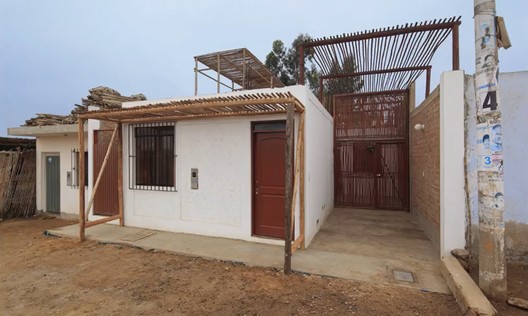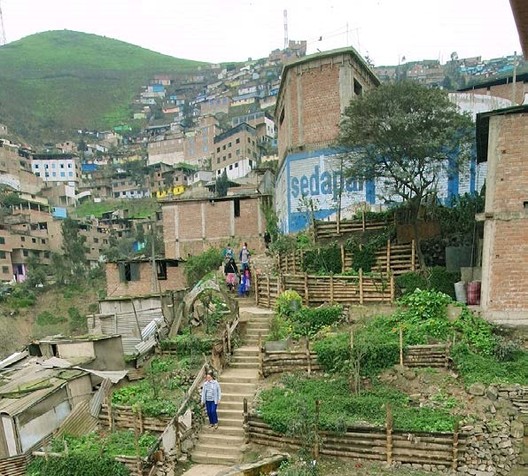
To mitigate the consequences of informal urban growth in the Lima and Callao regions, on April 19, the Colegio de Arquitectos de Perú Regional Lima (CAP RL) launched the program “Valora Nuestro Barrio” (Value Our Neighborhood). Through 21 selected projects, the initiative aims to improve residents' quality of life by recognizing and showcasing successful urban improvement practices in the proposed neighborhoods.
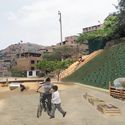
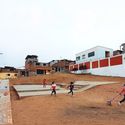
The “Valora Nuestro Barrio” program is an interactive online platform for information and applications. It connects initiatives, collectives, and strategic allies to highlight, support, and secure funding for community-led neighborhood improvement projects. Through this platform, CAP RL collaborates with community organizers and collectives to coordinate urban interventions that promote inclusive, sustainable city development and encourage community participation.
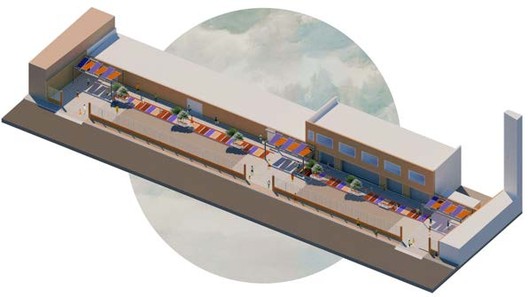
The 21 selected projects for neighborhood improvements in Lima and Callao are located in the districts of San Juan de Lurigancho (4), Villa El Salvador (4), Rímac (3), Cercado de Lima (3), Villa María del Triunfo (3), Comas (1), Independencia (1), El Agustino (1), and Cañete (1). The initiatives focus on urban themes including public and community spaces, environmental management, productive activities, urban equipment, basic services, tourism, ecology, heritage, and restoration.
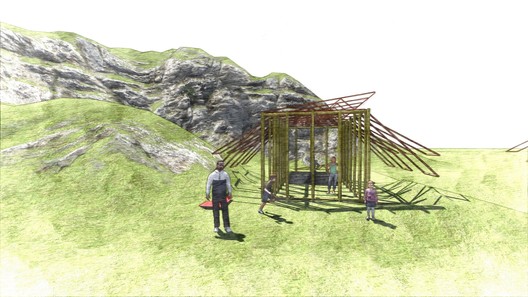
The “Valora Nuestro Barrio” initiative calls on housing and construction companies to support these efforts with financial and material donations. Likewise, it invites professionals and students to contribute their knowledge and experience to the various neighborhood improvement projects. Architect Lourdes Giusti, Dean of CAP Regional Lima, stated: “‘Valora Nuestro Barrio’ is an important program because it highlights civic and urban best practices undertaken by communities to improve their neighborhoods. This creates a positive impact on the citizenry and offers models that can be replicated in similar areas. Now more than ever, we must join forces with private enterprises and citizens to work together and reduce social gaps, making a Lima with more quality public spaces for all residents a reality.”
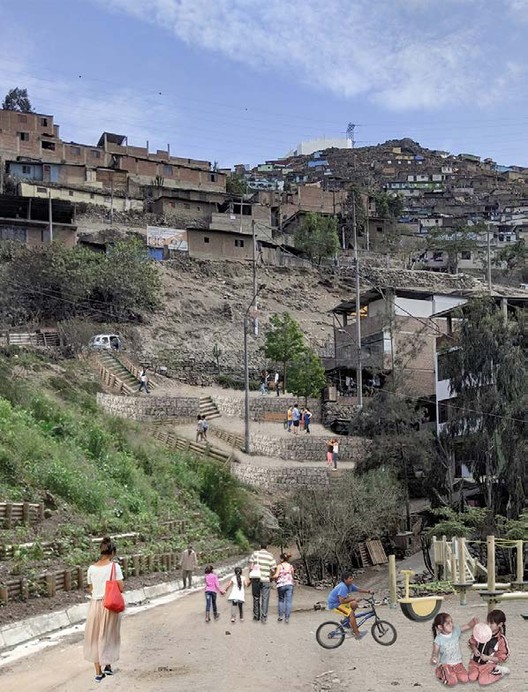
The 21 projects are:
1. Collique Verde Parque Huayna Capac – by Parada Libre
Comas District
Through participatory co-design, this project aims to empower residents regarding their public spaces. It focuses on strengthening and recovering public areas through vegetation regeneration and urban landscaping.

2. Barrios que Cuidan – by Espacio Común
Independencia District
This project aims to evolve the community kitchen model into a multi-use productive facility where women can learn and practice trades. Simultaneously, it addresses the public space to foster comprehensive improvements in living conditions.

3. Recuperación del Local Comunal Comité 9 AA.HH. Santa Isabel – by Iniciativa Libre
El Agustino District
This project seeks to recover the Committee 9 community center as a multi-use collective space. The goal is to strengthen community identity while providing open spaces for education and culture, contributing to skill-building and early childhood development.

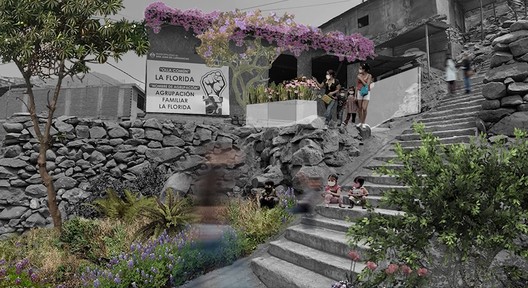
4. Ollas Verdes La Florida – by Aquí Jugamos Todos
San Juan de Lurigancho District
This project aims to plant the seeds for a future of sustainable community kitchens, looking to recover and sustain these community spaces over time. It welcomes residents from the outside in using local vegetation, ventilation, and natural lighting.
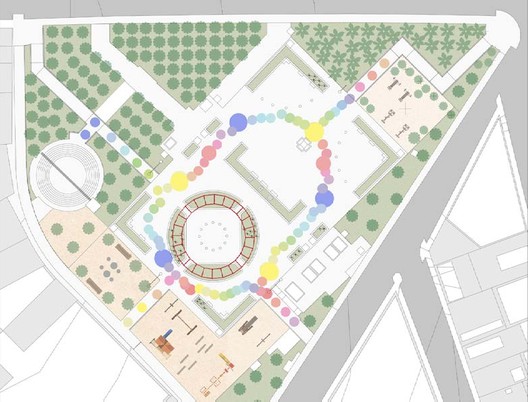
5. Plaza Santa María, lugar para la infancia como lazo social – by Has Tu Mundo Verde
San Juan de Lurigancho District
Using tactical and participatory design focused on children, caregivers, and older adults (childhood as a social bond), this project aims to transform spaces into playful, educational, and healthy environments that promote play as a key driver of learning and change.
6. Ruta integradora paradero Los Postes - Lomas El Mirador – by Haz Tu Mundo Verde
San Juan de Lurigancho District
The project aims to create a clear visual route from the Los Postes station (on Lima Metro Line 1) to Lomas El Mirador, serving as a quick-access guide from the city to the hills.
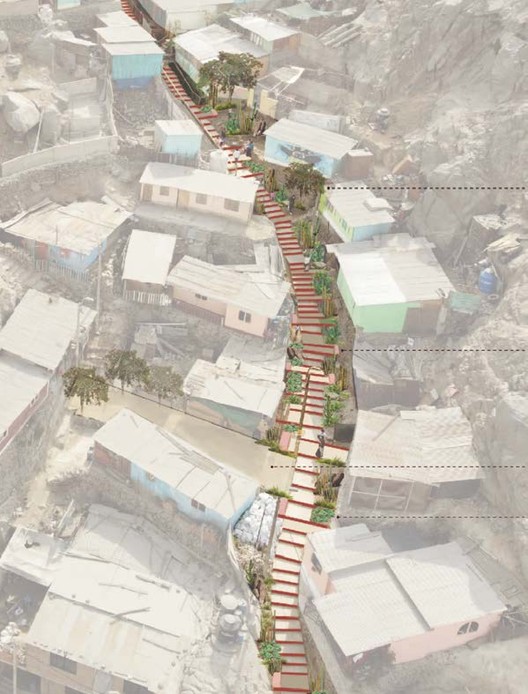
7. Proyecto Niños Guerreros de Jesús – by Habitable
San Juan de Lurigancho District
This project focuses on the participatory design and co-construction of a community staircase and recreational common areas, connecting the path between the community kitchen and the community school. It aims to raise awareness about the importance of inhabited space while promoting democratic urban improvement processes.
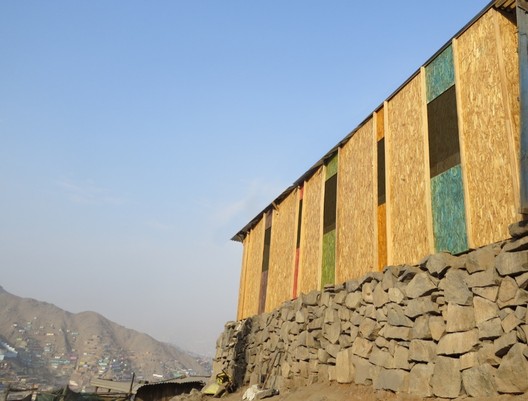
8. Mercados Locales Resilientes: Mejoramiento del espacio público de ingreso de Los Mercados Mercedarias – by Know Lima
Cercado de Lima
This project aims to transform the local markets of Barrios Altos, revitalizing public spaces by improving common areas and fostering neighborhood life.
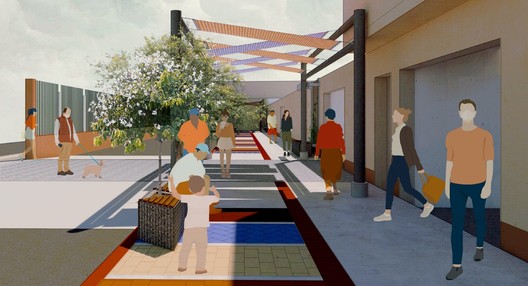
9. Cuido mi Quinta El Jaime etapas 1 y 2 – by Habitar Construcción Colectiva
Cercado de Lima
The overall objective of this project is to improve the habitability, safety, and sanitation of Quinta El Jaime. The first phase involved replacing old staircases, while the second rehabilitation phase focuses on improving the quality of the complex's common spaces.

10. Cuido mi Quinta Virgen de Fátima etapas 1 y 2 – by Habitar Construcción Colectiva
Cercado de Lima
The “Cuido mi Quinta” project is a progressive urban rehabilitation strategy developed through the association's experience in social management support, participatory diagnosis, and strengthening neighborhood networks. Its overall objective has been to improve the habitability, safety, and sanitation of Quinta Virgen de Fátima since 2018.

11. La Escalera de Las Lomas – by Ama Amancaes
Rímac District
This project aims to connect one of the neighborhood's busiest pedestrian routes. By improving accessibility from the lower areas to the upper parts of Flor de Amancaes, it creates green spaces for sitting and contemplation. It also implements landslide mitigation using low-cost bamboo construction systems.
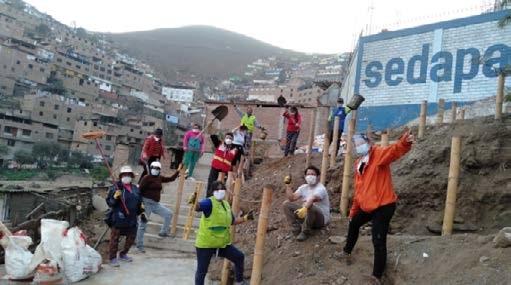
12. Parque N1 de Flor de Amancaes – by Ama Amancaes
Rímac District
This project aims to provide the neighborhood with a public gathering and recreational space, offering diverse activities open to people of all ages, including urban gardens integrated with the surrounding Lomas ecosystem.
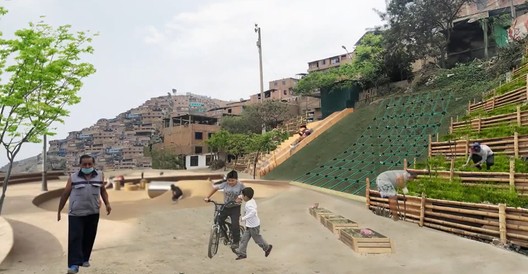
13. Comuna Amancaes – by Colectivo Más Ciudad
Rímac District
This project aims to establish the Lomas de Amancaes community center as a landscape landmark, providing infrastructure for educational and cultural activities before the start of the Lomas de Amancaes tourist route. It seeks to protect the fragile Lomas de Amancaes ecosystem through participatory ownership and public awareness, strengthening local responsible tourism strategies.
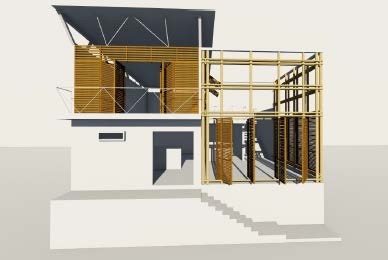
14. Adopta un Huarango – by Comando Ecológico
Villa María del Triunfo, Pachacámac, and Carabayllo Districts
This project aims to conserve the Lomas of Lima through native species reforestation, raising community awareness and encouraging involvement from local authorities and private companies. The project spans three locations: Lomas de Lúcumo (Pachacámac), Lomas de Paraíso (Villa María), and Lomas de Primavera (Carabayllo).

15. Mirador Cristo El Salvador – by UDEAL
Villa El Salvador District
This project aims to restore and highlight the Cristo El Salvador monument, a district icon. It also seeks to reclaim the surrounding public space, building on the area's distinct identity.

16. Proyecto del Parque de La Amistad – by Iniciativa Libre
Villa El Salvador District
This project aims to improve the quality of life for local children and residents through participatory design and management that offers diverse ways to experience public space. Simultaneously, it seeks to reduce local insecurity, strengthen community identity, and foster active citizenship.
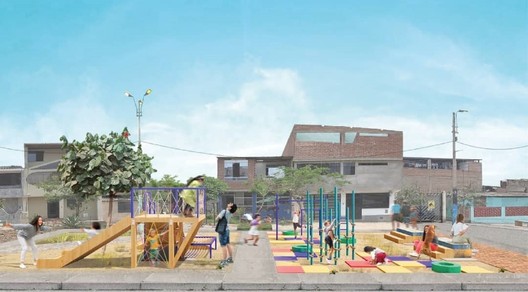
17. Juguemos en la rotonda espacio de color para la infancia de Príncipe de Asturias – by Paisajes Educativos
Villa El Salvador District
This project focuses on early childhood in the AA.HH. Príncipe de Asturias community, aiming to create spaces that facilitate exploration, physical activity, and social and psychomotor development.

18. Pacha- Biohuerto Comunitario en Príncipe de Asturias – by Paisajes Educativos
Villa El Salvador District
Currently being implemented, this project aims to create productive green gathering spaces for the AA.HH. Príncipe de Asturias community.
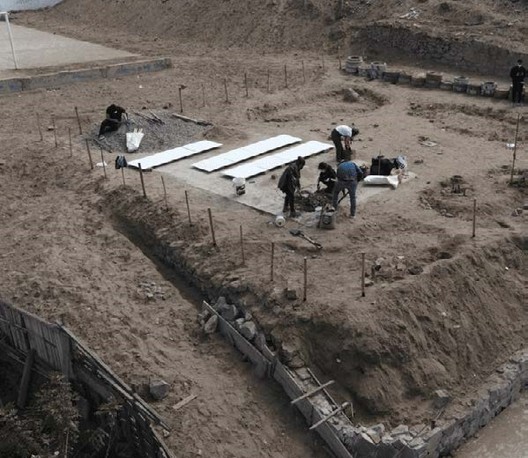
19. Activación del Espacio Público en Bellavista, Mirador Estratégico – by Colectivo Más Ciudad
Villa María del Triunfo District
This project seeks to reclaim underutilized areas and turn them into active public spaces where residents and visitors to Lomas de Paraíso can engage in diverse social activities centered around the coastal hills.
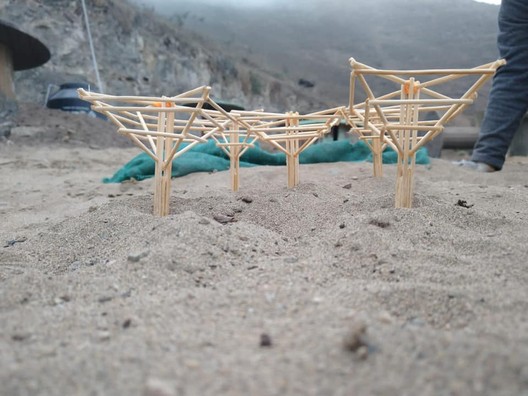
20. Biohuerto en Lomas de Paraiso – by Colectivo Más Ciudad
Villa María del Triunfo District
By connecting the organic garden with the community kitchen, this project aims to create a permaculture circuit, establishing the site as a model for ecological practices and urban agriculture.
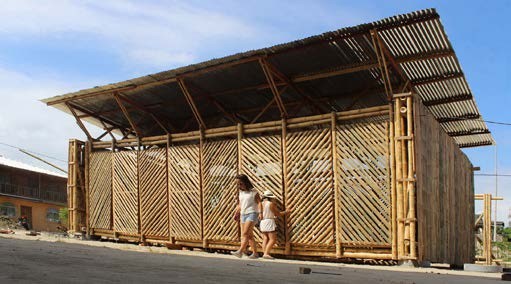
21. Casa Productiva Cañete – by Tandem Arquitectura
Cañete
This project aims to implement a productive housing prototype through assisted self-construction, using passive energy and local artisanal construction processes. The home also serves as a model for developing future low-income housing projects in Pisco and Nazca.
This article was written by Vania Masalías. The translation is powered by AI.