
The ARQUITECTURA Awards, organized by the Higher Council of Colleges of Architects of Spain (CSCAE) and officially sponsored by COMPAC, concluded their inaugural edition with a celebration at CaixaForum Madrid, where the nine winning projects were announced. The awards recognized and celebrated social, cultural, and sustainable values in architecture and urbanism, with a particular focus on the projects' impact on human health, well-being, and safety, as well as planetary sustainability.
David Lucas, Secretary General for Urban Agenda and Housing, spoke during the event, highlighting that the recently approved Architecture Quality Act in Spain values architecture as an instrument for social cohesion to combat climate change, balance inequalities, and contribute to social well-being and cultural heritage. He also noted that the administration aimed to reinforce the exemplary role of the public sector, which must safeguard the quality and capacity of the industry. He concluded by praising the awards and the talent of the architects, as well as the work of CSCAE president Marta Vall-llosera, and particularly her predecessor, Lluís Comerón, for promoting the importance of architecture that serves citizen well-being.
21 Finalists for the CSCAE ARQUITECTURA Awards
The president of the CSCAE also spoke, paying special tribute to her predecessor, highlighting how he drove the redesign of the awards. She announced that, in recognition of his work, the Lluís Comerón Award will be established—a distinction to be awarded to individuals or institutions that stand out in their defense of architecture and demonstrate unquestionable ethical values. She also shared her assessment of the awards presented.
COMPAC CEO Paco Sanchis also spoke at the event, emphasizing that architecture is one of the most powerful levers for social transformation and that his company is proud to participate in these awards, which support professional excellence in Spain.
The nine winning projects were selected by the jury from among 650 submissions. Winners received the "TOTIS" award sculpture, designed by architects Jesús de los Ojos Moral, Jairo Rodríguez Andrés, Manuel Fernández Catalina, and Ana Muñoz López, which is crafted from Obsidiana COMPAC, a 100% recycled and recyclable material.
Below, we present the six projects awarded for their values and the three special distinctions.
SUSTAINABILITY AND HEALTH AWARD: Universal Values
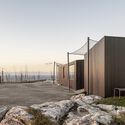
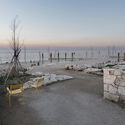
Refurbishment of Public Spaces at Explanada del Horizonte - Porticelo, Pontevedra / María Fandiño Iglesias
According to the jury, the intervention at the Explanada del Horizonte illustrates a new way of working with territory and landscape in harmony with climate change mitigation and adaptation strategies. It represents a method of intervening in natural and cultural landscapes that can identify ecological and heritage qualities erased by an insensitive 1970s intervention, while simultaneously addressing contemporary needs.
NEW BAUHAUS AWARD: Cultural and Artistic Values




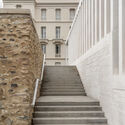
Helga de Alvear Museum of Contemporary Art - Cáceres / Emilio Manuel Tuñón Álvarez
The jury selected the Helga de Alvear Museum for its exemplary integration into the site, the articulation between the new and the existing, and the clear expression of its function. The project aims to listen to the site and imagine a possible city capable of preserving the way the city breathes, without renouncing our own era. The museum establishes a new venue of high spatial quality from both an architectural and urban planning perspective, enabling collective engagement between the public and the collection.
COMMITMENT AWARD: Social and Ethical Values

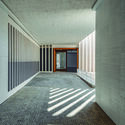


6x6 Block - Girona / Ramon Bosch i Pagès, Elisabet Capdeferro i Pla
This project stands out for the precision and clarity of its cross-laminated timber (CLT) construction system, adapted to different facades. It features 35 housing units designed with program flexibility and carbon footprint reduction in mind throughout the building's lifecycle. In doing so, it reclaims the discipline of architecture as a generator of domestic atmospheres and optimal microclimates for human life, configured through the efficient management of available material and natural resources.
PROFESSION AWARD: Professional Values

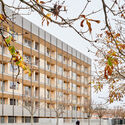

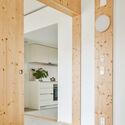

ICU-COVID Building at Parc Sanitari Pere Virgili - Barcelona / Patricio Martínez González, Maximia Torruella i Castel, and Luis Miguel Gotor Navarra
The jury praised this project as an excellent demonstration of architecture's ability to provide efficient solutions to exceptional social needs through sound planning and technological innovation, while preserving traditional values of habitability. Developed through joint research with the Catalan Health System in response to the COVID-19 pandemic, the building was designed to support the existing healthcare network, with the capacity to adapt its function based on the evolving needs of its affiliated medical facility.
HABITAT AWARD: Basic Values of Architecture and Urbanism

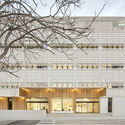


Son Caulelles Geriatric Care Home - Portol, Mallorca / Santiago Vives i Sanfeliu, Tomás Montis Sastre, and Adrià Clapés Nicolau
This project was recognized for showcasing architecture's potential to create communal spaces with close attention to environmental quality—such as materials, natural elements, and light. The design features a building arranged around four landscaped interior courtyards, optimized in scale to suit its residents, representing a social, sustainable, and community-oriented commitment.
RE- AWARD: Values Associated with Rehabilitation, Renovation, and Regeneration

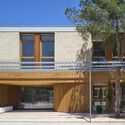

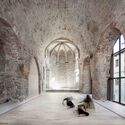
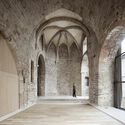
Espai Santa Eulàlia - Gironella, Barcelona / Carles Enrich i Giménez
Espai Santa Eulàlia recovers architectural heritage that has undergone numerous changes over time. It does so through a highly restrained intervention focused equally on the building's inherent qualities and its relationship with its surroundings. The project transforms a former church in Gironella, Barcelona, into a performing arts center. Having undergone several changes of use throughout its history, the design reads and respects all historical layers. As a result, the space—now dedicated to music, theater, and dance—is reconfigured by reclaiming the central nave, inserting necessary services, and integrating the surrounding urban landscape.
2021 ARCHITECTURE AWARD - Special Distinction



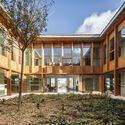
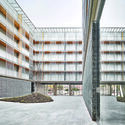
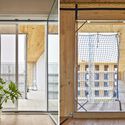
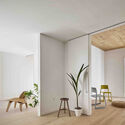
Social Housing - Cornellà / Marta Peris Eugenio and José Manuel Toral Fernández (Peris + Toral Arquitectes)
This social housing building develops contemporary, low-impact construction solutions within a structure designed for rationality and flexibility, striving to foster a sense of community among residents. It also stands out for its layout based on a matrix of communicating rooms, the use of timber, improved construction quality, and a reduction in construction times and CO2 emissions, achieving a 55% smaller carbon footprint than a conventional equivalent building.
2021 SPANISH URBANISM AWARD - Special Distinction


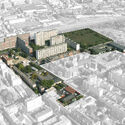
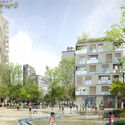
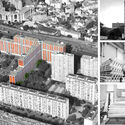
Agrocity Gagarine Truillot - Ivry-sur-Seine, France / Miquel Àngel Lacasta i Codorniu, Carmen Santana Serra, Marc Chalamanch i Amat (Atelier Archikubik)
This project is a paradigmatic example of integrated urban regeneration in a working-class housing district near Paris. It excels in its approach to built volume, the reassignment and mixing of uses, and its commitment to climate change adaptation and mitigation. The project utilizes citizen participation methodologies to support the circular economy in an environmentally challenged neighborhood. It also introduces genuine agricultural landscapes into the urban environment within a network prioritizing pedestrian mobility, proposing interventions that build collective memory throughout the plan's execution.
2021 PERMANENCE AWARD - Special Distinction


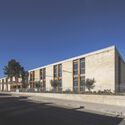
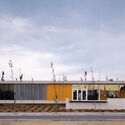
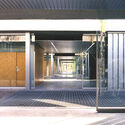
Lecture Hall Building 3 at the University of Alicante / Javier García-Solera Vera
The jury praised this work both for how well it has aged and for its ongoing relevance. The project stands out for the enduring validity of its design solutions, such as reusing an existing foundation, managing environmental conditioning through a courtyard system, and utilizing an orderly, precise structural and construction system. Designed as a large grove of trees interspersed with seven pavilions that float above the ground, the project forms an architecture that envelops and accompanies its users without seeking the spotlight.

This article was written by Mili Sánchez Azcona. The translation is powered by AI.


