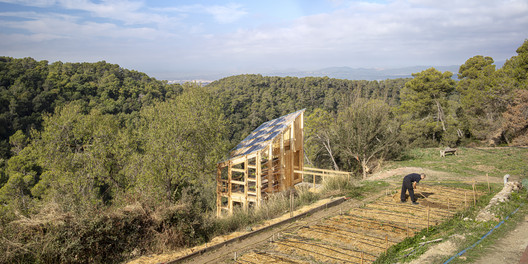
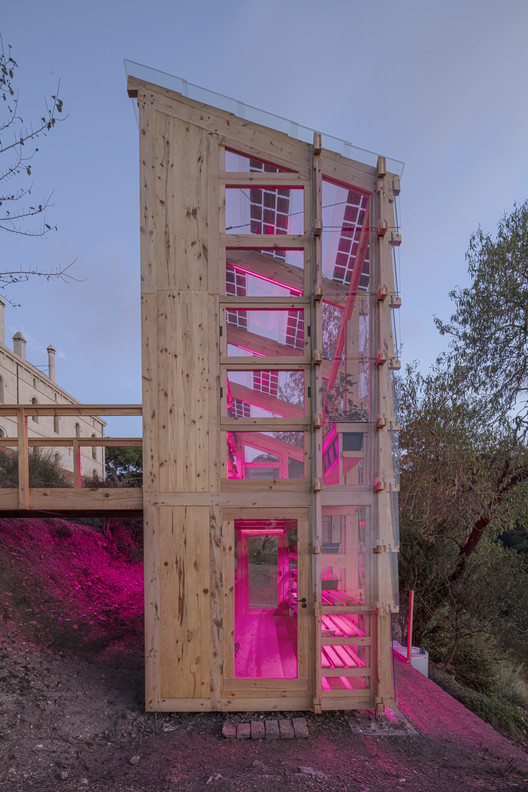
Solar Greenhouse is a greenhouse designed for energy generation and self-sufficient food cultivation. Its creators define it as the next step toward a greener agricultural transformation and an advancement in the fight against food and energy poverty. The project was carried out by a group of students, professionals, and experts from the Master in Advanced Ecological Buildings and Biocities (MAEBB) at the Institute for Advanced Architecture of Catalonia (IAAC) Valldaura Labs, and was built in the Collserola Natural Park on the outskirts of Barcelona.
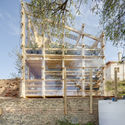
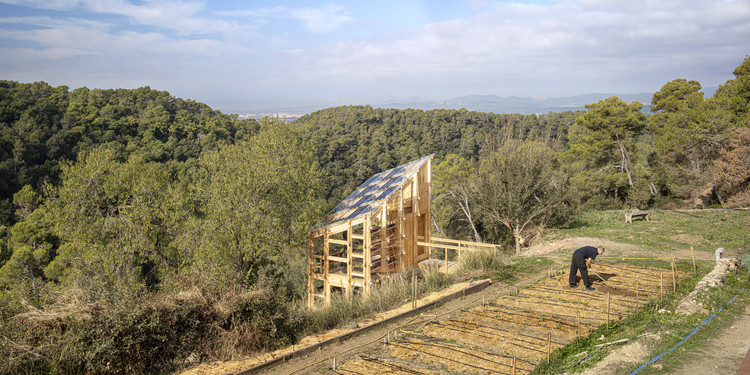
The project proposes a space for self-sufficient cultivation as a solution to produce food and energy in cities, moving toward the Zero Emissions city model proposed by the EU for 2050. The goal was to design and build a system that could be replicated in both rural and urban environments.
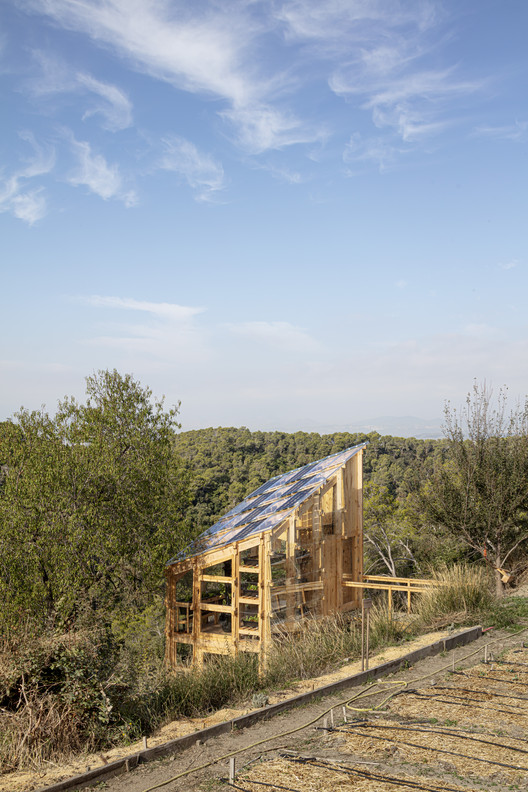
Valldaura Labs is the campus created by the Institute for Advanced Architecture of Catalonia (IAAC), oriented toward research and education on self-sufficient habitats. The campus has developed this project, which stems from research into new ways of adapting to modern life and resisting future food and energy crises, reinterpreting how we meet our most basic social needs in a more ecological way.
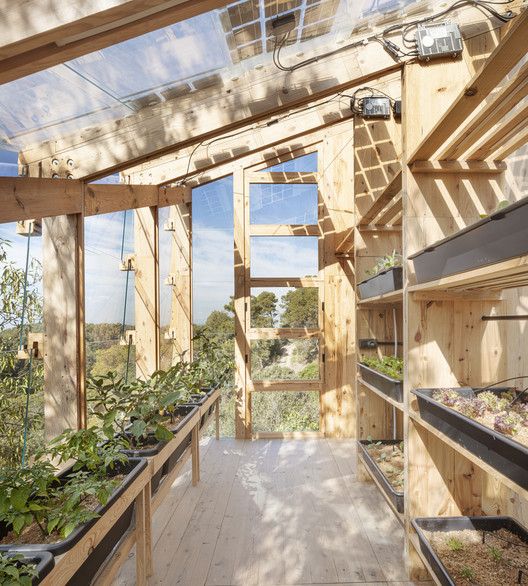
Description from the project team.
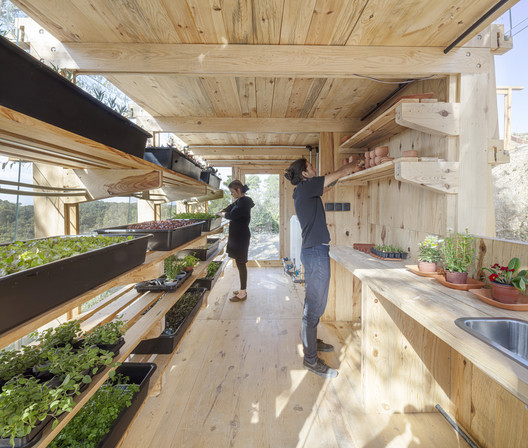
From its construction to its final use, the Solar Greenhouse project aligns with the KM 0 philosophy. Water, substrate, and building materials are sourced from the surroundings, while the cultivated food goes directly from production to consumption, bypassing the distribution chain.
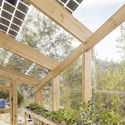
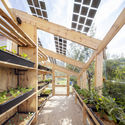
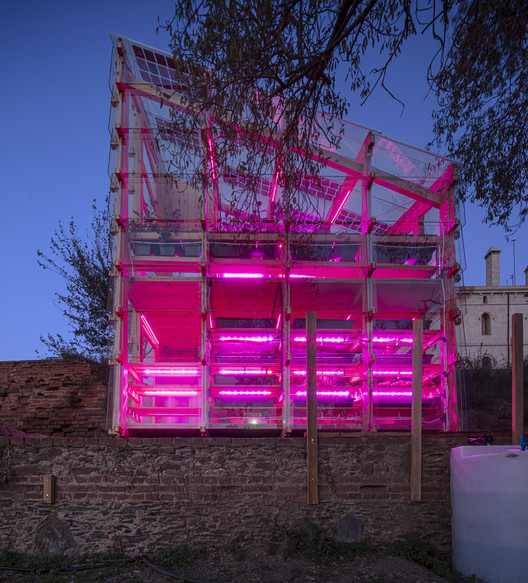
The structure of the greenhouse was built using sustainably harvested pine, collected and processed in the Valldaura area. The greenhouse also features a nutrient supply system distributed through storage tanks, nutrient inlets, and pipes to feed the plants. Additionally, an array of LED light strips facilitates growth cycles with the support of Luz Negra.
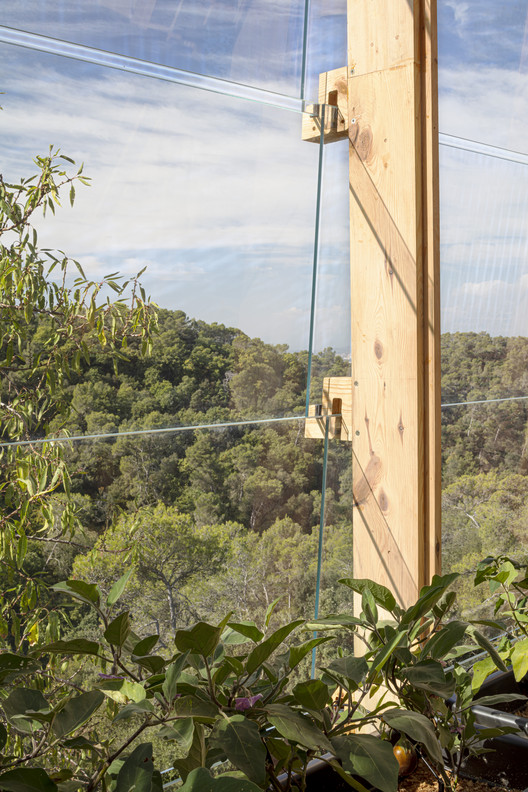
The roof of the greenhouse is made of glass and arranged in a "diamond" shape to enable full solar capture. This allows sunlight to fall directly onto the solar panels and ensures that the plants cultivated inside receive direct light.
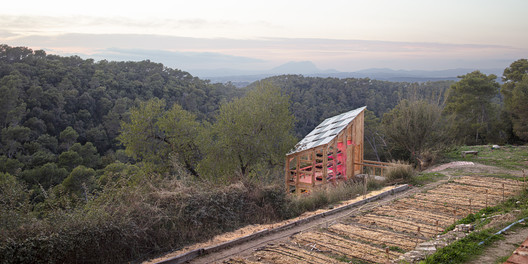
The layout consists of two levels. The ground floor houses the germination area, while the upper level is dedicated to cultivation. This setup produces a substantial harvest, achieved in part through advanced hydroponic techniques that allow plants to grow without agricultural soil. In this case, the substrate in the planting beds contains recycled sawdust, a waste product from the Green Fab Lab, another of IAAC's laboratories in Valldaura.
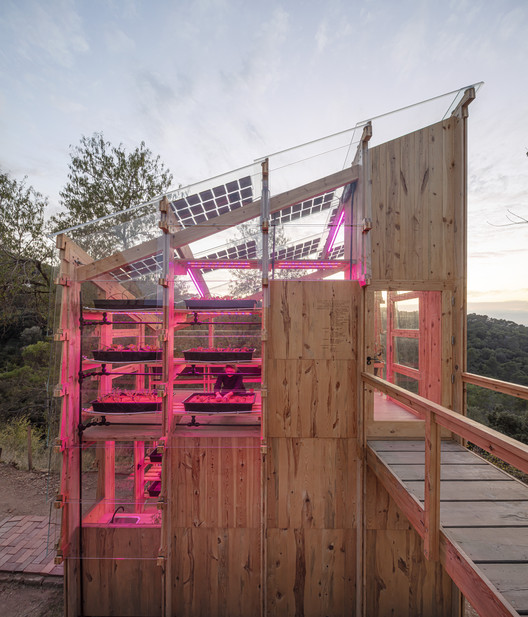
The ultimate goal is for locally acquired knowledge and systems to be applied on a global scale; in this sense, the Solar Greenhouse represents a valuable step forward.
Credits
Directors: Vicente Guallart and Daniel Ibañez.
Developed by: The students of the Master in Advanced Ecological Buildings and Biocities (MAEBB), class of 2020/21: Bartłomiej Najman, Dafni Vakalopoulou, Rebecca Baierwick, Ignacio Reyes Solis, Paulina Sevilla, Yangchuan Tian, Fatemeh Nejatii, Marilia Sofia Fernández Lockwood, Amrithavarshini Prabhuram, Kevin Xi Lim, Akshay Sunil Mhamunkar, Mona El batrik, Engjëll Rodiqi, Philipp Wienkämper, Christa Hörburger.
Project manager: Ignacio Reyes Solis.
Host: Valldaura Labs at the Institute for Advanced Architecture of Catalonia.
Valldaura Management: Laia Pifarré.
Sponsors: Cricursa, Luz Negra, Tallfusta.
Supported by: Ajuntament de Cerdanyola del Vallès.
Advised by: Miguel Urrestarazu, Oscar Rodriguez, Daniel Podmirseg, Oscar Aceves, Javier García-German, Miquel Rodriguez, Jochen Scheerer, Elena Orte, Guillermo Sevillano, Ignasi Caus.
Assisted by: Bruno Ganem, Marc Garcia, Gustavo Escudero.
Volunteer: Diego Díaz.
Photography: Adrià Goula.
Products: Onyx Solar, Ritec, Alberch, Aluminios Ada.
This article was written by Elías Barczuk Pasamán. The translation is powered by AI.


