From cultural landmark to urban void: what we can learn about the history of street cinemas

Subscriber Access

Territorial occupation responds to a series of factors; indeed, it is through economic development and the distribution of income, labor, and services across the territory that we see cities grow and expand. Neighborhoods and regions are gradually transformed in response to current economic models. This logic creates urban voids in the form of fully completed buildings, equipped with complete infrastructure, yet remaining vacant or underutilized. The trajectory of historic centers and street cinemas illustrates this logic, prompting us to reflect on how to address these challenges in the contemporary city.


From cultural landmark to urban void: what we can learn about the history of street cinemas - Image 2 of 6From cultural landmark to urban void: what we can learn about the history of street cinemas - Image 3 of 6From cultural landmark to urban void: what we can learn about the history of street cinemas - Image 4 of 6From cultural landmark to urban void: what we can learn about the history of street cinemas - Image 6 of 6From cultural landmark to urban void: what we can learn about the history of street cinemas - More Images+ 1

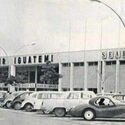
Between the 1900s and 1930s, street cinemas began opening in Brazilian cities, such as Belo Horizonte's first movie theater at the Teatro Paris in 1906, and the Cine Art Palácio in São Paulo in 1936. Geographically, these spaces were located in city centers on highly valued land and featured imposing architecture. Present in both state capitals and inland towns, these spaces for gathering and socializing reached their peak between the 1930s and 1960s.

Content Loader

Image gallery

See allShow less
About this author
Cite: Martino, Giovana. "From cultural landmark to urban void: what we can learn about the history of street cinemas" [De marco cultural a vazio urbano: o que podemos aprender sobre a história dos cinemas de rua] 06 Jul 2026. ArchDaily. (Trans. Baratto, Romullo) Accessed . <https://www.archdaily.com/1128182/from-cultural-landmark-to-urban-void-what-we-can-learn-about-the-history-of-street-cinemas> ISSN 0719-8884
Cinema da Praça / Arquipélago Arquitetos. Image © Pedro Napolitano Prata

从文化地标到城市空白:关于街头影院的历史,我们能学到什么

You've started following your first account!

Did you know?

You'll now receive updates based on what you follow! Personalize your stream and start following your favorite authors, offices and users.