
Territorial occupation responds to a series of factors; indeed, it is through economic development and the distribution of income, labor, and services across the territory that we see cities grow and expand. Neighborhoods and regions are gradually transformed in response to current economic models. This logic creates urban voids in the form of fully completed buildings, equipped with complete infrastructure, yet remaining vacant or underutilized. The trajectory of historic centers and street cinemas illustrates this logic, prompting us to reflect on how to address these challenges in the contemporary city.

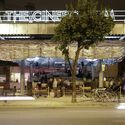

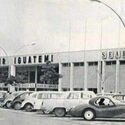

Between the 1900s and 1930s, street cinemas began opening in Brazilian cities, such as Belo Horizonte's first movie theater at the Teatro Paris in 1906, and the Cine Art Palácio in São Paulo in 1936. Geographically, these spaces were located in city centers on highly valued land and featured imposing architecture. Present in both state capitals and inland towns, these spaces for gathering and socializing reached their peak between the 1930s and 1960s.


