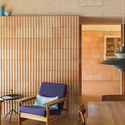
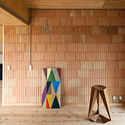
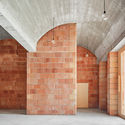
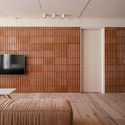

Generally, termoarcilla blocks are ceramic bricks made from clay and secondary aggregates (typically expanded polystyrene beads or other granular materials). These secondary aggregates play a key role in manufacturing: during firing (at temperatures exceeding 900 °C), they undergo a gasification process that creates pores in the material, reducing the block's density and making it lightweight (hence why in some countries they are commonly called lightweight clay blocks). This porous structure enhances the block's thermal and acoustic insulation performance, offering significant advantages over similar materials.
Although the earliest experiments with this material are believed to have originated in Germany, its use spread and gained prominence across other European nations during the 20th century, including Spain, Italy, Denmark, Austria, and Switzerland. In Spain, for instance, the "Termoarcilla Consortium" has existed since 1988. This association brings together all Spanish manufacturers of lightweight clay blocks, establishing production standards while promoting technological development and the material's application nationwide.


.jpg?1624139214 "What are thermo-clay blocks? Details and examples of exposed applications")