.jpg?1605191876)
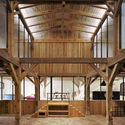
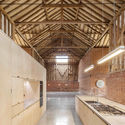
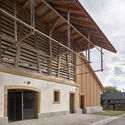
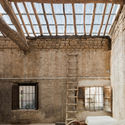
.jpg?1605191876)
The barn, closely related in nature to silos and sheds, is an essential building typology in rural and agricultural landscapes. Featuring highly simple and functional design solutions, barns serve specifically as storage spaces for large volumes of livestock feed and are commonly characterized by high ceilings, generous spans, and relative spatial flexibility, protecting hay and grain from the sun, rain, moisture, and animals.
In the past, it was common practice for individual families or communities to manage their own food production, utilizing barns and other storage structures to preserve provisions for times of scarcity. However, the modernization and mechanization of farming over recent decades—including the use of heavy machinery, modern soil fertilization and irrigation systems, and seed selection and manipulation—led to a gradual increase in land productivity and yields, rendering traditional methods and structures obsolete. Consequently, monoculture spread like wildfire across the globe, bringing an agricultural approach that demands an extremely high degree of mechanization throughout its processes, from planting to shipping. As a result, small and medium-sized farmers were forced to abandon their traditional practices and methods, ultimately leaving their land to migrate to cities.

.jpg?1605191876 "From Barns to Homes: Adaptive Reuse Projects in Europe's Rural Landscapes")