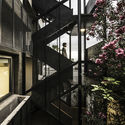
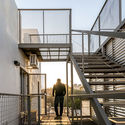
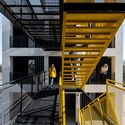
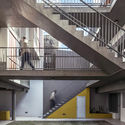

In collective housing projects, apartments, and residential complexes, design intentions regarding spatial qualities and atmospheres typically focus on the spaces where residents spend most of their time: the interiors of the housing units and, when available, common areas like gyms or multipurpose rooms. Circulation spaces, by contrast, are often treated merely as “transitional areas,” meaning they frequently address functional requirements rather than spatial experiences.