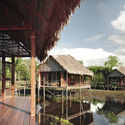

Historically, natural elements were often the only raw materials indigenous populations used to build their temporary shelters or permanent dwellings. Today, environmental awareness and an interest in ecological construction methods have given rise to more sustainable practices that adapt these procedures to contemporary requirements. In this way, by incorporating biodegradable and low-environmental-impact materials into their projects and blending them with modern resources to enhance their physical properties, architects have successfully revived the ancestral techniques of their regions, forging a path toward green building.
From hand-woven roofs made of ichu—a grass native to the South American Andes—to roofs composed of palm leaves and dry vegetative elements such as thatch, reed, sedge, rush, heather, and fiber, communities have long harnessed the malleability and lightweight nature of these natural elements. By layering or weaving them, they achieve highly effective protection against rainfall and solar radiation.