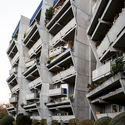
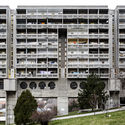
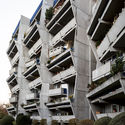
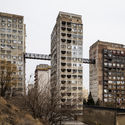

While there is a certain lack of theoretical definition regarding the limits and scope of the term "Brutalist," there are certain constants in its aesthetic parameters that allow us to establish a relatively concrete line of analysis. In this context, Brutalist buildings—a style of the Modern Movement that experienced its boom between the 1950s and 1970s—are characterized by their tectonic honesty, exposing the materials of construction along with their structural and building logic, geometric forms, and rough surfaces. Reinforced concrete emerges as the primary material of choice; both the textures left by rough timber formwork and the imperfections of the concrete itself are no longer concealed by plaster or paint, but are deliberately displayed to highlight the building processes.
In his book *The New Brutalism: Ethic or Aesthetic?*, Reyner Banham establishes what he considers to be one of the key moments in defining the semantic root of Brutalism: "there is one indisputable architectural fact: Le Corbusier's work in concrete, the Unité d'Habitation at Marseille. And if there is any one verbal formula that has made the concept of Brutalism acceptable in so many languages of the Western world, it is Le Corbusier's own description of this work as 'béton brut' (raw concrete). The term and the building thus emerged together."