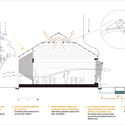
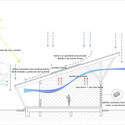
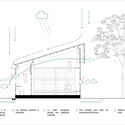
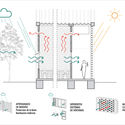

Cross-ventilation, solar radiation control, rainwater harvesting, indirect natural lighting, graywater treatment and reuse, and solar energy harnessing through panels are some of the passive strategies that allow for greater thermal and environmental comfort at low energy costs. When based on a proper understanding of a site's geographical and climatic conditions, these bioclimatic principles can significantly optimize building performance and foster the development of better interior spaces.
“Architecture must adapt not only to the geographical, morphological, or climatic conditions of the site, but also to the cultural and social conditions of the community, supporting the project throughout the entire process. The inauguration of the building is just the beginning of a development process, where the school serves as a gathering space for the entire community. It is a space that allows youth and adults alike to dream again and embark on the path toward their desired future.” — excerpt from the project description for 'Santa Elena High School'.