
On Thursday, June 13, the new Cinemateca Distrital de Bogotá opened its doors to the public, bringing the seventh art to the edge of the Colombian capital's historic center.
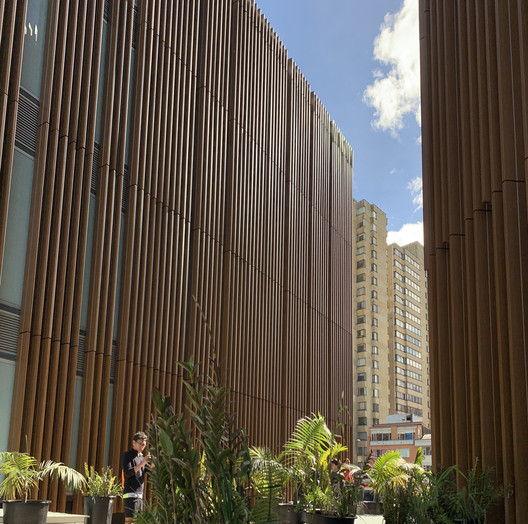
National contemporary architecture has been boosted by public works competitions, and this building is no exception. Designed by Colectivo 720, the 8,500-square-meter space houses not only three movie theaters, but also a multifunctional auditorium and spaces dedicated to the creation, editing, and development of audiovisual works.
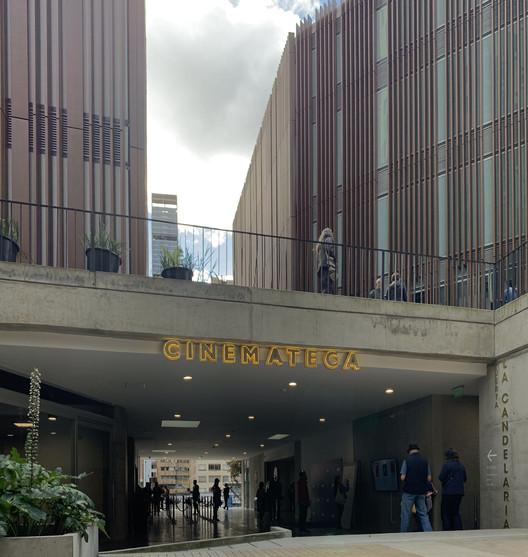
While the project's program centers on a film library, it offers broader urban benefits through both its location and its transitional spaces. Strategically positioned as a key element of the Triángulo de Fenicia, the Cinemateca sits adjacent to the roundabout connecting major traffic arteries: Avenida El Dorado, Calle 19, and the Circunvalar highway, which routes traffic from the north. These thoroughfares exert a significant impact on both the immediate area and the city as a whole. At a pedestrian scale, the building is nestled within the downtown academic hub, near institutions such as Universidad de los Andes, Universidad Jorge Tadeo Lozano, and Universidad Central, among others. Culturally, it is situated just one block from Bogotá's historic center.
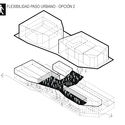
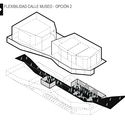
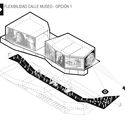
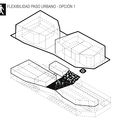

The project also acts as a connector for the student housing complex located between the Cinemateca and Universidad de los Andes, facilitating pedestrian circulation in multiple directions: north-south along the “museum street”—as the architects call it—and east-west through the main entrance on Carrera 3, which leads past the ticket booths and toward the residential buildings.
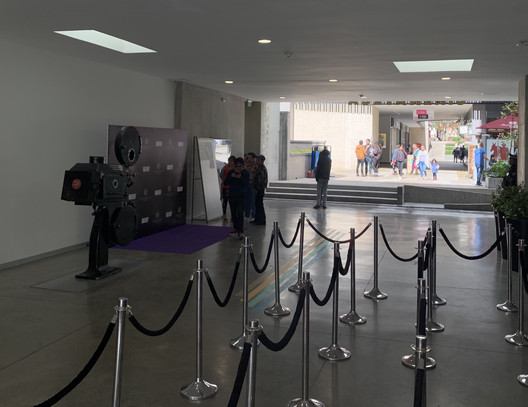
This perspective, which highlights the impact of a project on its surrounding environment, reflects the direction in which contemporary Colombian architecture is moving. This shift is being driven by public design competitions organized by the Sociedad Colombiana de Arquitectos (SCA). The vision will be further explored at the Bienal de Espacio Público de Bogotá (BEPBOG), under the theme “20 Years of Public Space: Recognizing the Transformation of Our City.”
This article was written by Santiago Baraya. The translation is powered by AI.


