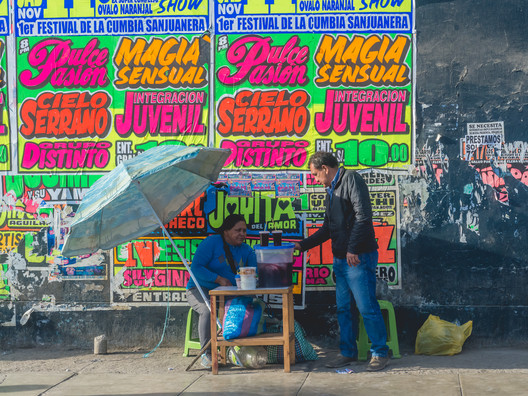
It is best to remember a diverse Lima, rather than the centralized capital. To remember that this very centrality has turned it into a meeting ground for Peru's diverse cities. Everyone comes to the capital, yes, but in this city, the three regions (coast, highlands, and jungle) blend while preserving their essence like nowhere else. "Todas las sangres" (All Bloods) is the title of the most ambitious novel (1964) by Peruvian writer José María Arguedas—an attempt to portray the whole of life through the representation of geographical and social settings from across the country. This expression, which remains relevant today, points to the racial, regional, and cultural variety of our society. Speaking of "all bloods" unites and blends us: it contains and integrates our diversity. Speaking of "all colors" evokes this colorful and intercultural nature.
In this article, we present the **First Place** winning project of the **2018 Photo-Essay Contest on Habitat and Territory** organized by the Housing Institute of the University of Chile (INVI) in December, which was open to participants from all over the world. The objective of the competition was to address and identify issues and realities surrounding territory and residential habitat. Through photography, participants were invited to bring visibility to themes such as quality of life and habitability, migration and ethnicity, mobility and migration, habitat production, disability, older adults and inclusive residential habitats, urban, neighborhood, and community conflicts, and forms and experiences of dwelling, among other topics.


