
Can you imagine five school design models adapted to the country's diverse bioclimatic conditions? In response to its territorial diversity, Peru will soon realize what began as a dream for better education. To this end, the First International Architectural Design Competition for Modular School Catalogs launched a search for the best architectural school designs in five bioclimatic zones: Coast, Rainy Coast, Highlands, Frost, and Rainforest. This addresses the challenge of closing the educational infrastructure gap for the bicentennial.

The National Program for Educational Infrastructure (Pronied) of the Ministry of Education (Minedu) has signed a contract with the winning team of the competition's five categories: FD Arquitectos Urbanismo + Arquitectura, comprised of an alliance of architects and specialists with extensive experience in each zone. Out of 163 registered participants, 27 proposals were submitted by prominent national and international architects. Following a rigorous deliberation, everyone can agree that Peru is the true winner.
Each of the five winning proposals will form a catalog of technical specifications to be used in developing new educational projects. This catalog of systemic designs will generate significant cost savings, accelerate project formulation timelines, and guarantee a high standard of quality, especially during the technical design stage. In a few months, around August, regional and local governments will be able to use this systemic catalog according to the bioclimatic zone of their school, streamlining their design and construction processes.
The winning proposals are architectural designs built on three pillars: nature, community, and identity. They reflect the characteristics of their territories, creating relevant local learning ecosystems with a global reach. These new schools will feature highly flexible, folding pedagogical spaces that can be subdivided and adapted. The design allows classrooms to connect, transforming into workshops or multipurpose rooms (SUM), enabling the school to be used day and night by both students and the local community. Find the details of each project below.
Coast


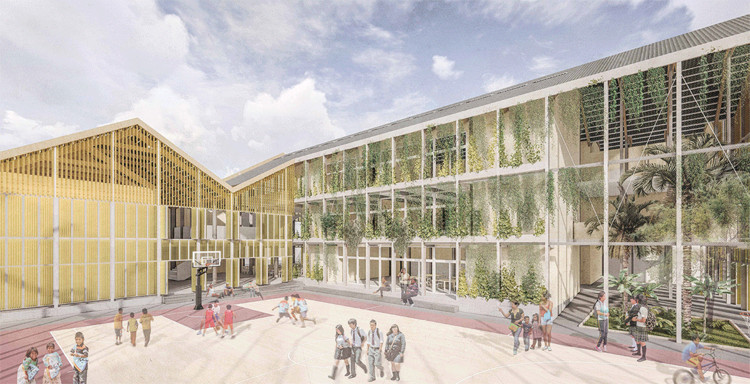
Rainy Coast
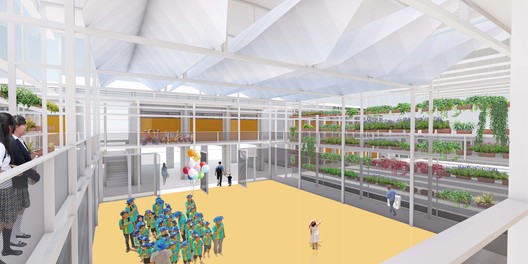


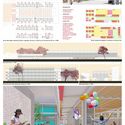
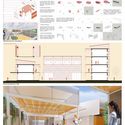
Highlands


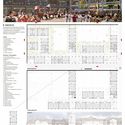

Frost


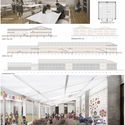
Rainforest


The jury was composed of economist Cecilia Balcázar, General Director of Educational Infrastructure at MINEDU; architects Frederick Cooper, José Antonio Vallarino, and Sebastián Irarrázaval; and engineer Alejandro Muñoz.
View all the images and panels for each bioclimatic zone in the gallery below:
This article was written by Delia Bayona. The translation is powered by AI.


