Heidegger wrote that humanity should dwell poetically.
Yet in a society driven by materialism, uniform residential buildings dominate the landscape. Is there a way of living that is better suited to human nature? This remains a question we cannot help but explore.
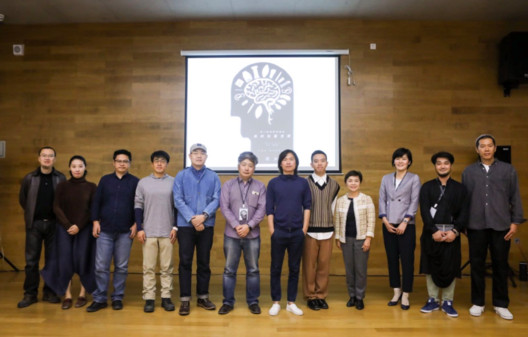
From October 12 to 15, World Architecture magazine, in partnership with Aranya, hosted the second Aranya Architecture Forum. Prominent Chinese and international architects, alongside cross-disciplinary leaders, gathered by the sea to discuss the relationship between architecture, art, life, and humanity.
Under the theme “My Perceptual Space,” the main forum was complemented by sub-forums featuring dialogues between architects and cross-disciplinary figures. The event also marked the launch of the Aranya Architect Debut Award, China’s first-ever award dedicated to architects’ debut projects. Additionally, a diverse program of cultural activities offered fresh perspectives on understanding architecture and space.
Aranya Architecture Forum Main Forum: My Perceptual Space
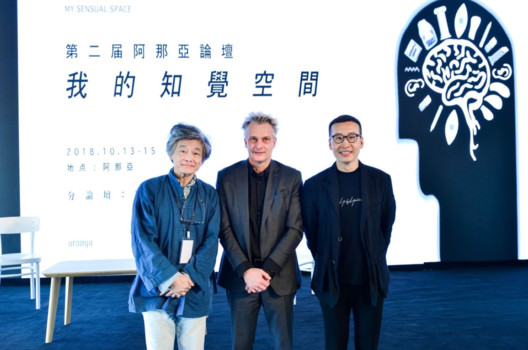
On the morning of October 13, the forum opened with its first session of presentations and panel discussions. The keynote speakers included Xia Zhujiu, Emeritus Professor at the Graduate Institute of Building and Planning of National Taiwan University and Professor at the International School of Architecture of Southeast University; Boris Schade-Bunsow, Editor-in-Chief of the German magazine Bauwelt; and Ma Yin, Co-founder of the Aranya brand.
Professor Xia Zhujiu spoke on the theme of “The Body,” blending history and philosophy to explore the relationship between humanity and architecture. He argued that architecture should bring satisfaction and show consideration for people, rather than functioning merely as a machine. “Architecture must be for the people; only when we are capable of experiencing human-centric architecture can we truly understand the civic city. A city belongs to its citizens, not to engineers, architects, or great leaders.”
Boris Schade-Bunsow, Editor-in-Chief of Bauwelt, focused on the theme of “living space.” He began with data-driven insights into Germany’s growing housing and elderly care crises, leading into a deeper discussion on how architects must design in response to societal needs. He urged professionals to take greater responsibility for energy consumption and living spaces to design a better future.
Aranya founder Ma Yin began his presentation by outlining the four key parties that make a successful building: the architect, the contractor, the user, and the client. Sharing his experience of founding Aranya, Ma expressed his understanding of architecture from a client’s perspective. He noted that as consumer history has evolved from scarcity to material abundance and now to personalized lifestyles, human demands on architecture have shifted. Through this community, Ma hopes to foster human connections, express an aesthetic philosophy, and establish a new set of values and lifestyle.
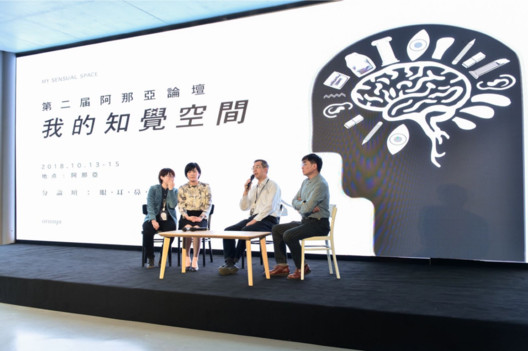
On the afternoon of October 13, the second half of the presentations featured Shi Weiliang, Chief Planner of the Beijing Municipal Commission of Planning and Land and Resources Management and President of the Beijing Institute of City Planning and Design; Chang Yung Ho, founder of Atelier FCJZ and Professor of Architecture at MIT; and special guest Yoshie Miura, President of the Women’s Association of House-Builders and Architects (WHAIS) in Japan.
From an urban planning perspective, Shi Weiliang analyzed the current challenges, history, and merits of Beijing’s streets. He proposed several recommendations for street management in Beijing: regulating green parking, narrowing road intersections, optimizing bicycle parking, standardizing delivery vehicles, promoting open sharing, and unlocking the potential of micro-spaces. He emphasized that only when everyone participates in municipal governance can the living environment be improved for all.
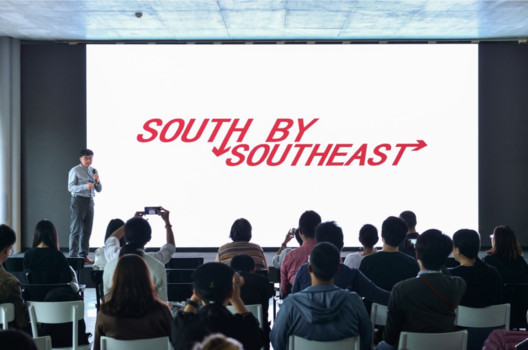
Professor Chang Yung Ho delivered a lecture titled “South-Southeast,” analyzing the architectural and spatial characteristics of the vastly different living environments of the North and the South. He shared a series of his projects across different regions, explaining how he tailored his design choices to these distinct contexts. Concluding with his core philosophy, he remarked: “I believe that the most important aspect of architecture is not creating an enclosed box, but rather considering its interface with the city. Ultimately, the goal is to generate more high-quality, functional public spaces.”
The final speaker, special guest Yoshie Miura, traveled from Japan to present the Tsubaki Tea Garden in Mie Prefecture, designed by her namesake firm. Following her presentation, members of her team hosted a traditional tea ceremony performance as part of the forum’s activities.

Aranya Forum Sub-Forums: Eye, Ear, Nose, Mouth, Skin, Body
Each sub-forum began with a keynote by a “cross-disciplinary guest,” followed by a panel discussion with architects. The intersection of diverse perspectives from various industries sparked dynamic conversations throughout the event.
- Body: Immersion, Stillness, and Motion -
Cross-disciplinary Guest: Gu Jiani, founder of UNTITLED GROUP and contemporary dance choreographer;
Panelists: Md. Ishtiaque Zahir, architect and urban designer; Duo Ning, Principal of Dot Architects and founder of Dianzao; Shui Yanfei, Principal of Naturalbuild; Wei Chunyu, Dean and Professor at the School of Architecture, Hunan University; 臧峰,Partner and Principal of People’s Architecture Office (PAO) & People’s Industrial Design Office (PIDO)
To open, choreographer Gu Jiani interacted with the audience, offering a unique perspective on the relationship between architecture, people, and space. Bangladeshi architect Md. Ishtiaque Zahir used his projects in Bangladesh as case studies to explain how spatial creation can serve diverse social functions. Duo Ning introduced his “three-body” theory, comprising the individual, the physical body, and the prosthetic body. Professor Wei Chunyu emphasized spatial metaphors, suggesting that we should experience space through an “out-of-body” consciousness. Zang Feng likened architecture to the human body, explaining their relationship through temperature, posture, communication, and environment. Finally, Shui Yanfei shared his project for the Shanghai Urban Space Art Season along with his design insights.
- Skin: Contact -
Cross-disciplinary Guest: Ge Huichao, performing arts producer, public project and arts festival curator, founder of Beijing Body On&On Culture Center, and founder and executive director of the Touch Contact Improvisation Art Festival;
Panelists: Fan Beilei, Principal of Genarchitects; Mu Jun, Professor at Beijing University of Civil Engineering and Architecture; Yang Ming, Deputy Chief Architect of East China Architectural Design & Research Institute (ECADI); Zhu Xiongyi, Principal of CCDI•East-West Studio
“Skin” holds multi-layered meanings, referring to both human skin and the architectural envelope. The cross-disciplinary guests and architects shared their rich interpretations of “skin,” spanning the human body as well as the materials, tactile qualities, and textures of architecture.
- Ear: Listening -
Cross-disciplinary Guest: Fan Yitang, jazz singer and performing artist;
Panelists: Feng Lu, founder and Principal of Wuyang Architecture; Wang Yanshi, founder and Principal of xiān Architecture; Zhang Hua, President of Arcplus Group PLC; Zhang Xinnan, Assistant Dean and Associate Professor at the School of Architecture, Tianjin University; Zhuang Shen, Co-founder of Atelier Archmixing
Beginning with singer and performing artist Fan Yitang’s insights on music, the participating architects presented how they integrated acoustic elements into their projects, collectively discussing the importance of acoustic design in architecture.

- Eye: Seeing and Reading -
Cross-disciplinary Guest: You Yang, Deputy Director of UCCA, columnist, and curator;
Panelists: Fang Musheng, Chief Designer of China Rural Heritage Studio and founding partner of Fang Musheng Landscape Studio; Hu Zheng, Principal and Co-founder of CCDI•Boundary Studio; Kong Yuhang, Executive Deputy Dean and Professor at the School of Architecture, Tianjin University; Tao Lei, founder and Principal of Tao Lei (Beijing) Architecture Design; Zhuang Ziyu, Partner and Principal of RSAA/Büro Ziyu Zhuang
While noting that he does not come from an architectural background, UCCA Deputy Director You Yang introduced a visual framework of “from seeing to reading.” This framework helps observers interpret visual and cultural works. Fang Zhenning then shared his experiences with micro-reading and micro-writing, introducing several classic works that have deeply influenced architecture and art. Inspired by the guests from the art world, the session leaned toward discussing architecture through the lenses of philosophy and visual studies, culminating in a lively Q&A session between the panelists and the audience.

- Nose: Smelling -
Cross-disciplinary Guest: Zeng Hong, founder of AROMAG, curator, and fashion brand director;
Panelists: Qing Feng, Associate Professor at the School of Architecture, Tsinghua University, and Deputy Editor-in-Chief of World Architecture; Song Yehao, Professor at the School of Architecture, Tsinghua University; Zhang Jiajing, Principal of GOMU Atelier; Zhang Tianjun, Design Director of the Architectural Creation Studio at East China Architectural Design & Research Institute (ECADI)
- Mouth: Expression and Taste -
Cross-disciplinary Guests: Yao Yang, founder and head chef of the Aranya design restaurant y•sea; Phil, founder of Soloist Coffee Co.;
Panelists: Guan Fei, Deputy Chief Architect of the Land-Based Rationalism Design and Research Center at China Architecture Design & Research Group (CADG); Li Danfeng, Principal of Yes.Design; Long Hao, Professor at the Faculty of Architecture and Urban Planning, Chongqing University
This article was written by Winnie Wu. The translation is powered by AI.